

Let's cut through the noise: 60% of restaurants fail within their first year, and 80% close their doors before their fifth anniversary. You've heard the stats. You've probably watched competitors shutter. Maybe you've even lain awake at 3 AM wondering if you're next.
Here's the uncomfortable truth nobody wants to say out loud, it's probably not your food. Your carbonara is amazing. Your staff? Top-notch. Your ambiance? Chef's kiss.
The problem is your tech stack. Or more accurately, your lack of one.
While you're still counting inventory on clipboards and pricing menu items based on "what feels right," your competitors are using systems that tell them exactly where every penny goes. They're sleeping soundly at night because their software is working while they're not.
Ready for some tough love? Let's walk through the seven tech mistakes that are bleeding your restaurant dry, and how Restaurant Systems Pro is saving operators thousands of dollars every single month.
Mistake #1: You're Still Counting Inventory Like It's 1987
Remember those clip-on roller skates from the '80s? They were innovative once. Now they're a liability lawsuit waiting to happen.
That's what your clipboard inventory system is.
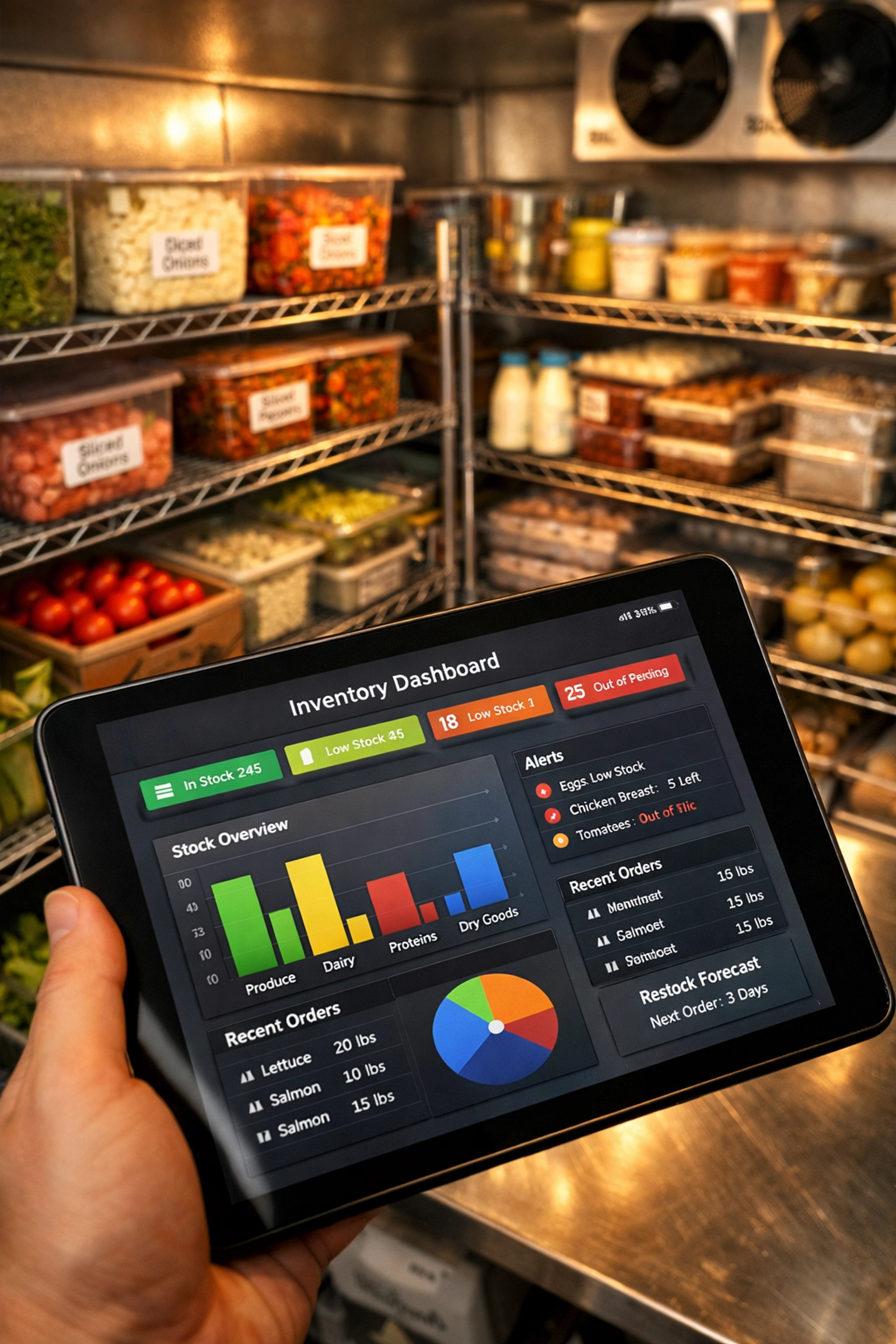
The shelf-to-sheet inventory method (which Restaurant Systems Pro uses) organizes counts by storage location instead of forcing your team to jump around a chaotic spreadsheet. This isn't just about convenience, it's about catching variance before it becomes a hemorrhage.
According to industry data from the National Restaurant Association, inventory shrinkage costs restaurants between 2-10% of total sales annually. When you're tracking by hand, you're flying blind. You can't identify theft, over-portioning, or spoilage patterns because you don't have consistent data.
The Fix: Live inventory tracking that updates in real-time. One Restaurant Systems Pro user reported identifying a $30,000 savings opportunity in their first year just through better menu analysis and pricing optimization. That's not magic, that's math.
Mistake #2: Your Food Costs Are a Mystery (And It's Killing You)
Pop quiz: What's your current food cost percentage? Don't check your records. Just tell me right now.
Can't answer? You're not alone. But you're also not going to survive long-term.
Prime cost (your combined food and labor costs) should live between 60-65% of revenue for most concepts. Restaurant Systems Pro users report achieving 0.5–2.0 percentage point improvements in prime cost after implementation. On a restaurant doing $2 million annually, that's $10,000-$40,000 straight to your bottom line.
Here's what kills restaurants: they think they're making money on a dish when they're actually losing 15 cents every time it leaves the kitchen. Multiply that by 200 orders a week, and you've just explained why your bank account doesn't match your busy dining room.
Mistake #3: You're Scheduling Labor Based on Vibes
"We were slammed last Tuesday, so I scheduled extra staff this Tuesday."
Cool story. Except last Tuesday was Valentine's Day, and this Tuesday is… Tuesday.
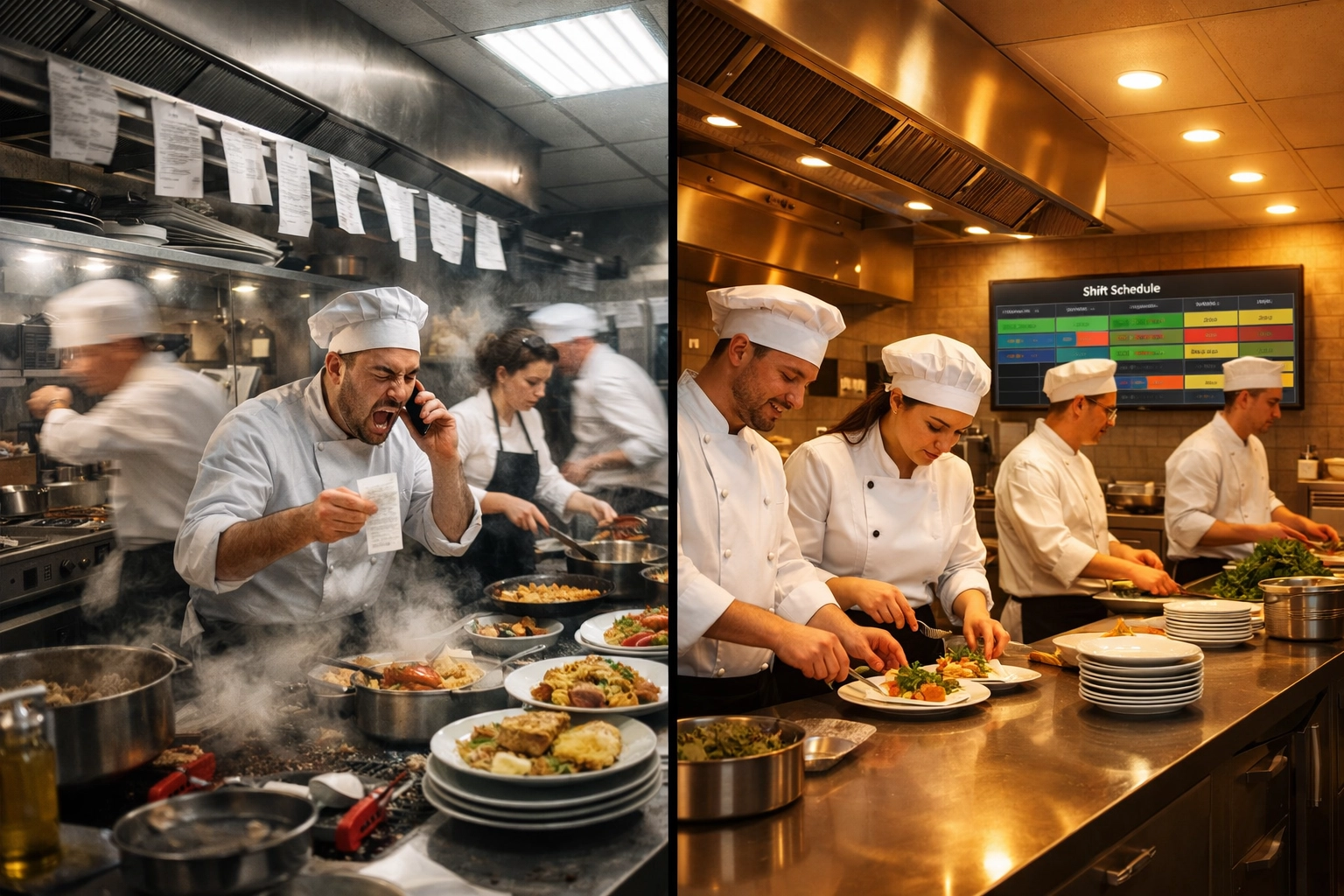
Forecasted scheduling isn't rocket science, it's restaurant science. Restaurant Systems Pro's drag-and-drop scheduling interface calculates labor costs against forecasted sales, helping you avoid the dreaded overtime death spiral.
According to Toast's 2024 Restaurant Success Report, labor costs have increased by an average of 28% since 2020. You can't afford to wing it anymore. One operator noted they can now "check prime cost every Monday and stay within expected ranges" because their scheduling actually aligns with business patterns.
The Real Cost: Every hour of unnecessary labor is money you'll never see again. Every understaffed shift is a customer experience you can't redo and online reviews you can't unwrite.
Mistake #4: Your Recipe Costs Are Stuck in Amber
Your supplier just raised the price of chicken thighs by 12%. Did you adjust your menu prices? Did you even know they raised prices?
This is where restaurants die quietly, death by a thousand tiny cuts that nobody notices until the cumulative bleeding is fatal.
Live recipe costing automatically updates your menu profitability when vendor prices change. It's not just a nice feature, it's financial survival. Without it, you're pricing based on outdated assumptions while your margins evaporate.
Restaurant Systems Pro's menu engineering tools optimize contribution margins across your entire menu. This means you're not just tracking costs, you're actively making smarter decisions about what to promote, what to reposition, and what to 86 permanently.
Mistake #5: Ordering Without a System (The $500 Tomato Crate Incident)
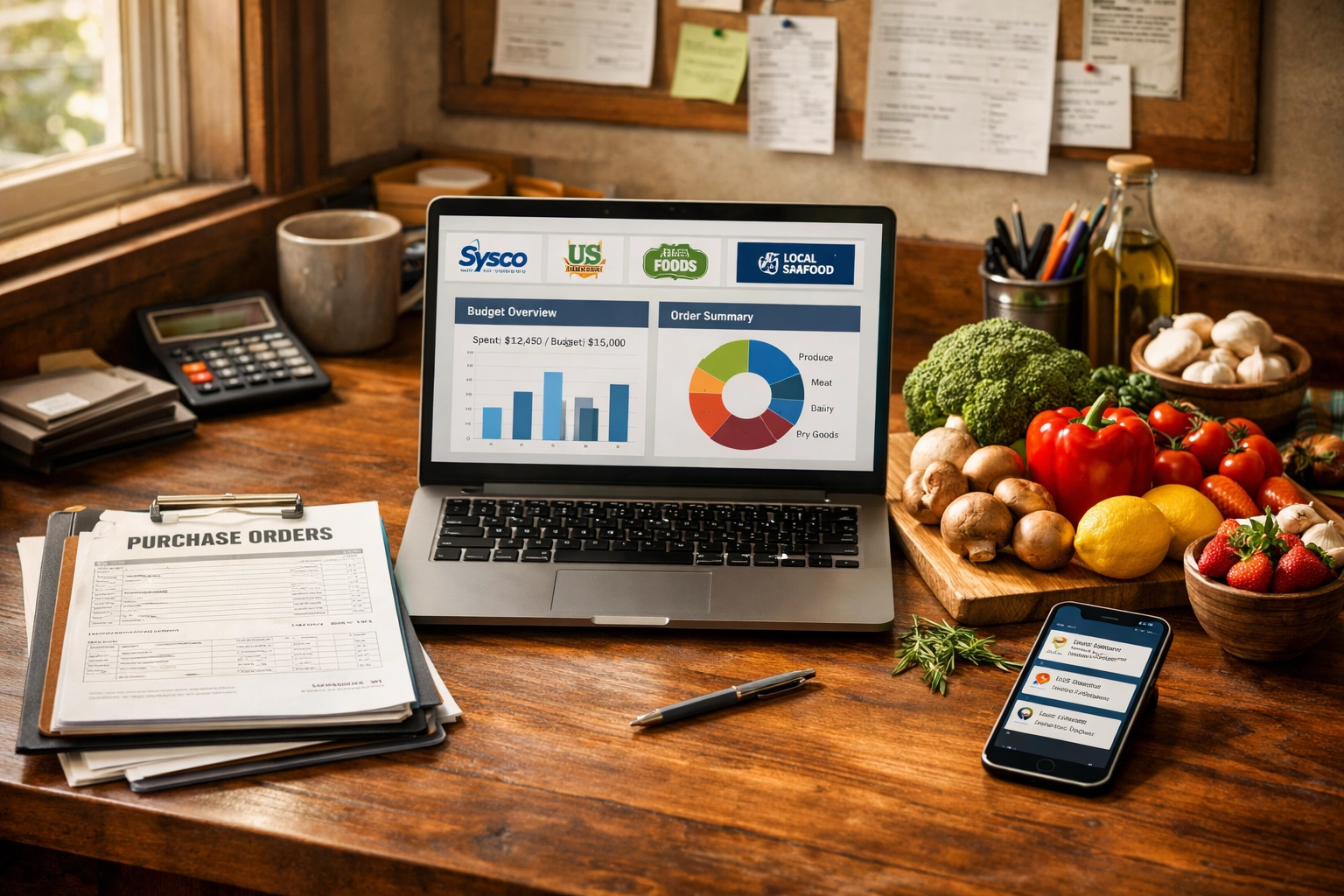
Let me guess: your ordering process involves a mix of phone calls, text messages, emails, and occasionally yelling at a sales rep in your walk-in cooler.
Someone orders too many tomatoes. Someone else forgets to order eggs entirely. Your Sunday brunch implodes, and you're paying a staffer $25/hour to make an emergency Costco run for 60 dozen eggs.
Restaurant Systems Pro's ordering functionality creates purchase orders, notifies vendors, and monitors budget compliance. This prevents the costly chaos that comes from seven different people ordering from thirteen different vendors with zero coordination.
The National Restaurant Association reports that restaurants using proper inventory and ordering systems reduce food waste by up to 30%. That's not just good for your bottom line, it's good for the planet (and your sanity).
Mistake #6: You Don't Know Your Prime Cost Until It's Too Late
Here's a fun game: guess your prime cost for last week.
Now wait three weeks, compile all your data manually, and check if you were right.
Spoiler alert: by the time you know you have a problem, you've already bled thousands of dollars.
One Restaurant Systems Pro user specifically mentioned checking their prime cost "every Monday." Not every month. Not every quarter. Every single Monday. That's the difference between reactive crisis management and proactive profit optimization.
Your prime cost is the single most important metric in your restaurant. If you're not tracking it weekly (at minimum), you're steering a ship without instruments in foggy waters at midnight.
Mistake #7: You're Pricing Based on Gut Feeling (Your Gut Is Wrong)
"I think we can charge $18 for this pasta dish."
Why $18? Why not $17? Why not $19?
If your answer involves phrases like "feels right," "seems fair," or "that's what the place down the street charges," you're leaving money on the table. Or worse, you're charging too much for low-margin items while practically giving away your profit drivers.
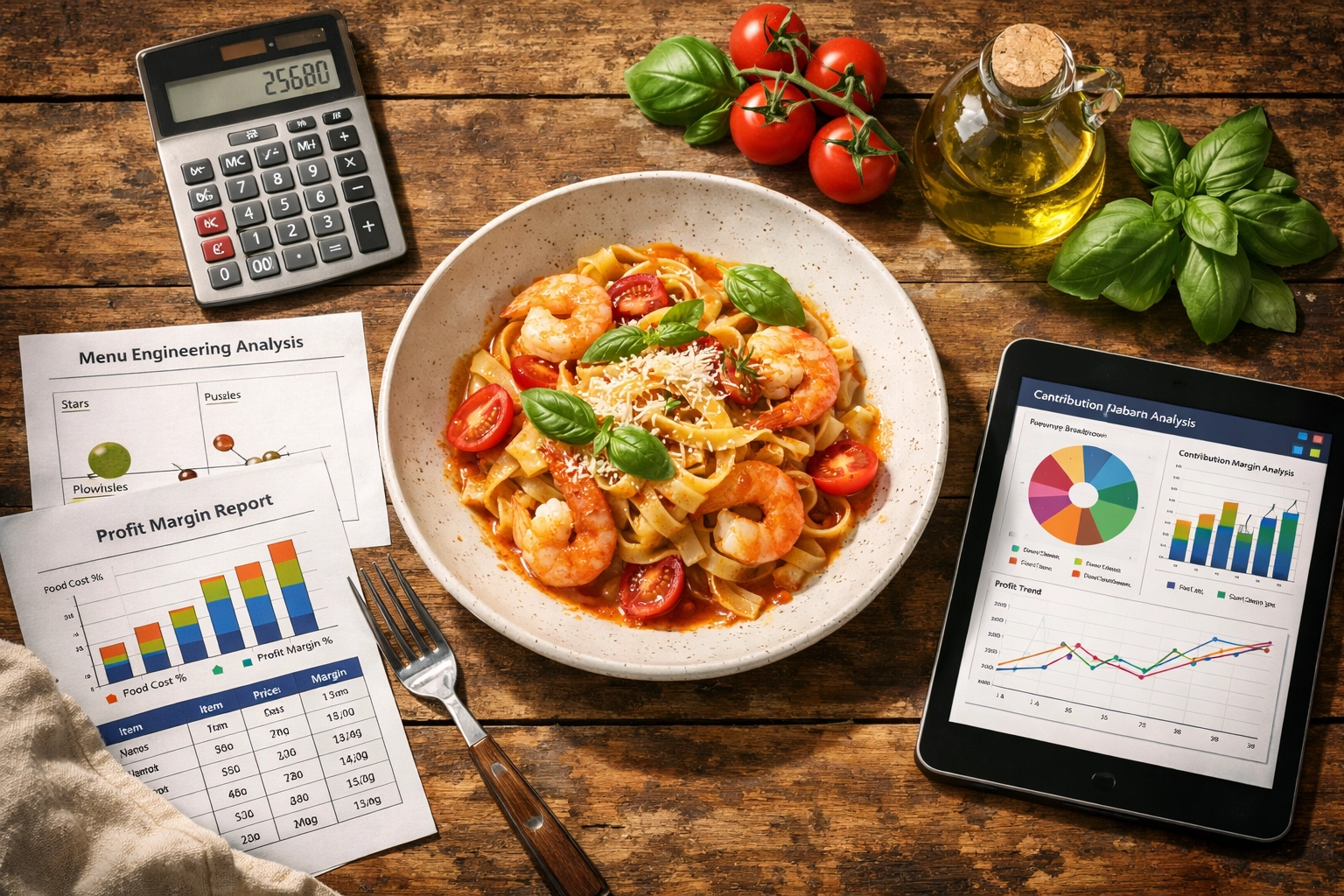
Menu engineering isn't guesswork. It's science. Restaurant Systems Pro's contribution margin analysis shows you exactly which items are worth promoting and which are quietly bankrupting you, one delicious plate at a time.
The Brutal Truth: Your competitors aren't smarter than you. They just have better data.
So… What's This Going to Cost You?
Here's where I drop the other shoe: Restaurant Systems Pro starts at $99 per month for the basic tier. The Winner Circle membership runs $399 per month and includes 100 days of guided onboarding (because software is only valuable if you actually use it correctly).
Additional locations are $149 each.
Now do this math: If you're operating a restaurant doing $1 million annually and you improve your prime cost by just 1 percentage point, you've added $10,000 to your bottom line. That's a 25x return on your annual software investment.
But let's be real: most operators see improvements of 1.5-2 percentage points. One user saved over $30,000 in the first year. At that point, we're not talking about software costs. We're talking about one of the smartest investments you'll ever make.
The Dragon You're Actually Fighting
Restaurant failure isn't about bad luck or tough markets or the wrong location (though those don't help). It's about information asymmetry. Your business is generating data every single day: covers, costs, labor hours, waste, theft, inefficiency: but you can't see it.
You're fighting a dragon blindfolded.
Systems like Restaurant Systems Pro remove the blindfold. They don't solve your problems for you, but they give you the visibility to solve them yourself. And that's honestly more powerful.
Your Move
Look, you can keep doing what you're doing. Plenty of restaurants survive (for a while) on manual processes, gut instinct, and the occasional panic-induced Excel session at midnight.
But surviving isn't thriving. And in an industry with margins this thin and competition this fierce, the gap between those two states is where restaurants go to die.
Technology isn't the enemy. Ignorance is.
Want to see how Kuypers Creative helps restaurants implement systems that actually work? We've been in the trenches. We know what works, what's hype, and what's worth your limited budget.
Because at the end of the day, your carbonara might be amazing: but amazing food doesn't pay the bills if you don't know what it actually costs to make.
Keywords: restaurant failure statistics, restaurant technology mistakes, Restaurant Systems Pro review, restaurant inventory management, prime cost calculation, restaurant labor scheduling software, food cost tracking, menu engineering tools, restaurant management software, why restaurants fail, restaurant profitability tips, reduce restaurant food costs
Long-tail Keywords: how to prevent restaurant failure with technology, best restaurant inventory management system 2026, calculate restaurant prime cost accurately, reduce restaurant labor costs with forecasting, live recipe costing for restaurants, restaurant ordering system with budget compliance, improve restaurant profit margins with data
Tags: #RestaurantTechnology #RestaurantManagement #FoodCostControl #RestaurantSystems #RobertKuypers #RobertWilliamKuypers #WilliamKuypers #RobKuypers #RestaurantProfitability #PrimeCost #InventoryManagement #RestaurantSuccess
External References:
Internal Links:
- About Kuypers Creative
- Top 100 Independent Restaurants: What They Do Differently
- Restaurant Leadership Resources
Written by the team at Kuypers Creative – where strategy meets execution in the restaurant industry.