
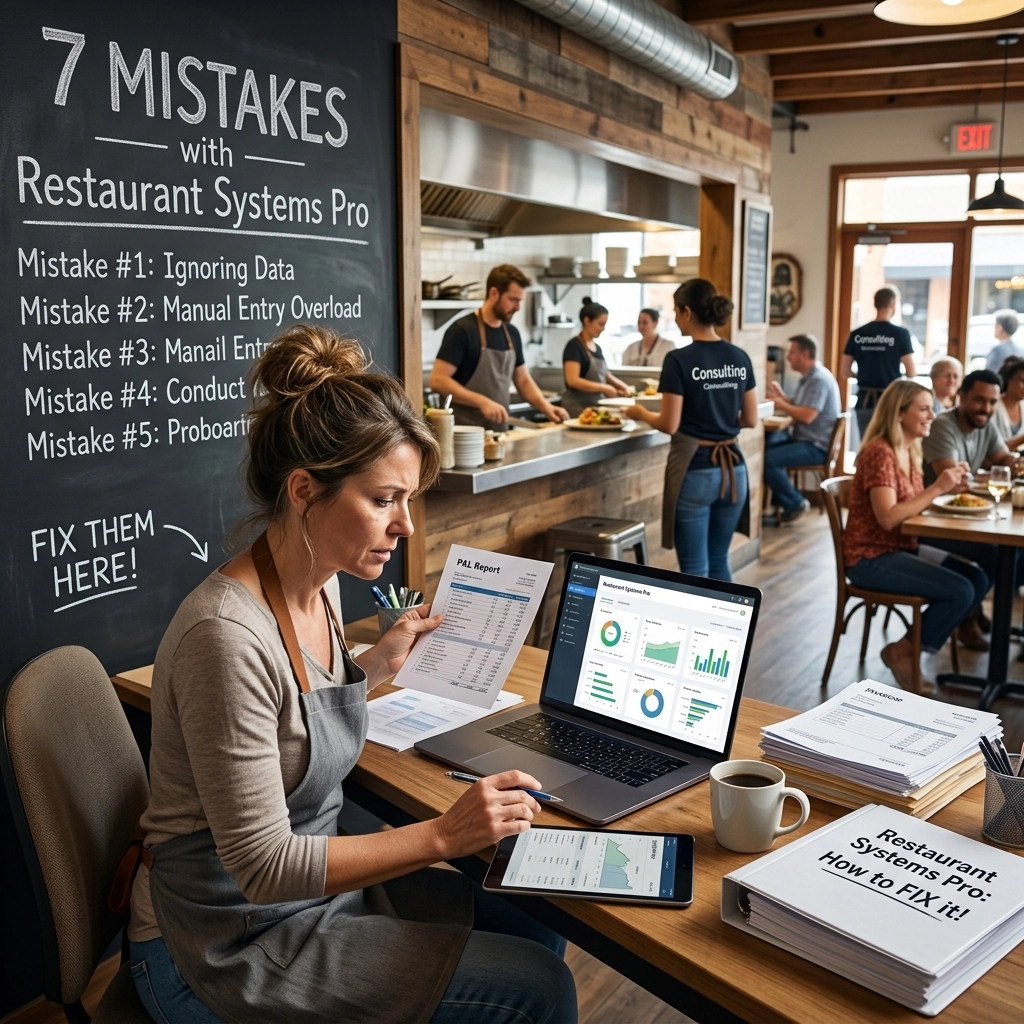
Let’s be honest: owning a restaurant is a lot like trying to keep a kite flying in a hurricane. You’ve got staff calling out because their goldfish has a "personal emergency," a walk-in cooler that sounds like a dying tractor, and a food cost percentage that seems to fluctuate based on the phase of the moon.
You bought Restaurant Systems Pro (RSP) because you wanted to stop the bleeding. You wanted to be the "data person." But here’s the cold, hard truth: a Ferrari won’t get you to the grocery store faster if you’re trying to drive it in reverse.
According to the National Restaurant Association, the industry is tougher than a three-day-old sourdough crust. Most restaurants don't fail because the food is bad; they fail because the owner treats the business like a hobby and the numbers like a suggestion.
If you’re using RSP but still feeling the squeeze, you’re likely making one (or all) of these seven deadly mistakes. Let’s fix them before you end up as another cautionary tale in a Why Do Restaurants Fail seminar. Ready? Aprons on.
1. You’re Still Counting Inventory Like It’s 1987
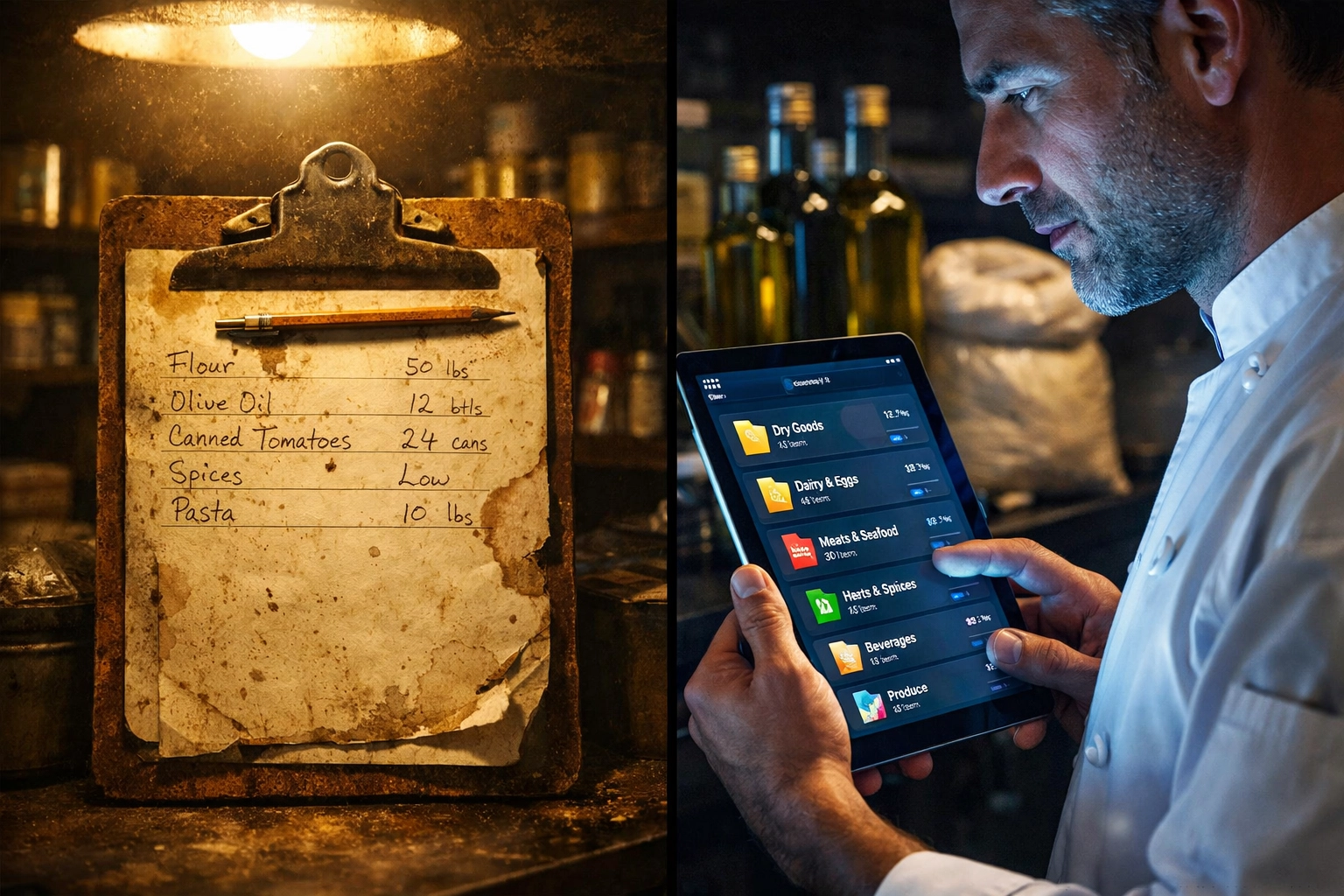
I see it every day. A manager walks into the freezer with a soggy clipboard, a half-chewed pencil, and a look of pure despair. If you are taking inventory by "eyeballing it" or writing things down on paper to "input later" (spoiler: "later" never comes), you are burning money.
The Mistake: Manual, disorganized inventory tracking leads to shrinkage, theft, and a massive amount of "where did the calamari go?" mysteries.
The Fix: Use the Shelf-to-Sheet method inside RSP. Organize your digital inventory list to match the physical layout of your shelves. If the flour is on the top left of the rack, it should be the first item on your digital count sheet. This reduces counting time by 50% and eliminates the "I forgot the walk-in under-counter" errors.
2. Choosing Your Setup Based on "Price" Instead of "Process"
Robert Kuypers often says on LinkedIn, "The most expensive system is the one that doesn't work for your specific workflow." Many owners get RSP and then try to force it to work with a cheap, 2012-era POS system they found on eBay.
The Mistake: You’re focusing on upfront costs rather than the ROI of a seamless integration. If your systems don't talk to each other, you’re spending hours on manual data entry, and your time is worth way more than the $50 a month you "saved."
The Fix: Audit your tech stack. If your POS isn't providing the granular data RSP needs to give you accurate theoretical food costs, it’s time to upgrade. Check out our 2025 Restaurant POS Buyers Guide to see what actually works with modern management platforms.
3. The "Vibe-Based" Labor Schedule
"Well, last Tuesday was busy because of the rain, so I should probably staff up this Tuesday just in case."
Stop it. Just stop.
The Mistake: Scheduling labor based on "feelings" or what happened exactly one week ago. This leads to the "overtime death spiral" where you’re paying time-and-a-half for people to stand around and polish silver that’s already clean.
The Fix: Use RSP’s Forecasted Scheduling. Look at your sales trends over the last eight weeks, account for holidays, and use the labor-to-sales ratio targets. Boring wins. Boring pays. Boring is the new sexy when it comes to your P&L.

4. Ignoring the "Theoretical vs. Actual" Gap
This is where the magic (and the tragedy) happens. RSP tells you what you should have spent on food based on what you sold (Theoretical) versus what you actually spent (Actual).
The Mistake: Most owners look at their food cost percentage at the end of the month, see it's high, and just shrug. They don't dig into the "Gap."
The Fix: If your Theoretical food cost is 28% but your Actual is 34%, you have a 6% "Gap." That’s not a market fluctuation; that’s waste, over-portioning, or someone walking out the back door with a crate of ribeyes. (Trust me, the ribeyes didn't just evaporate). Address the gap weekly, not monthly.
5. Pricing Your Menu Based on the Guy Down the Street
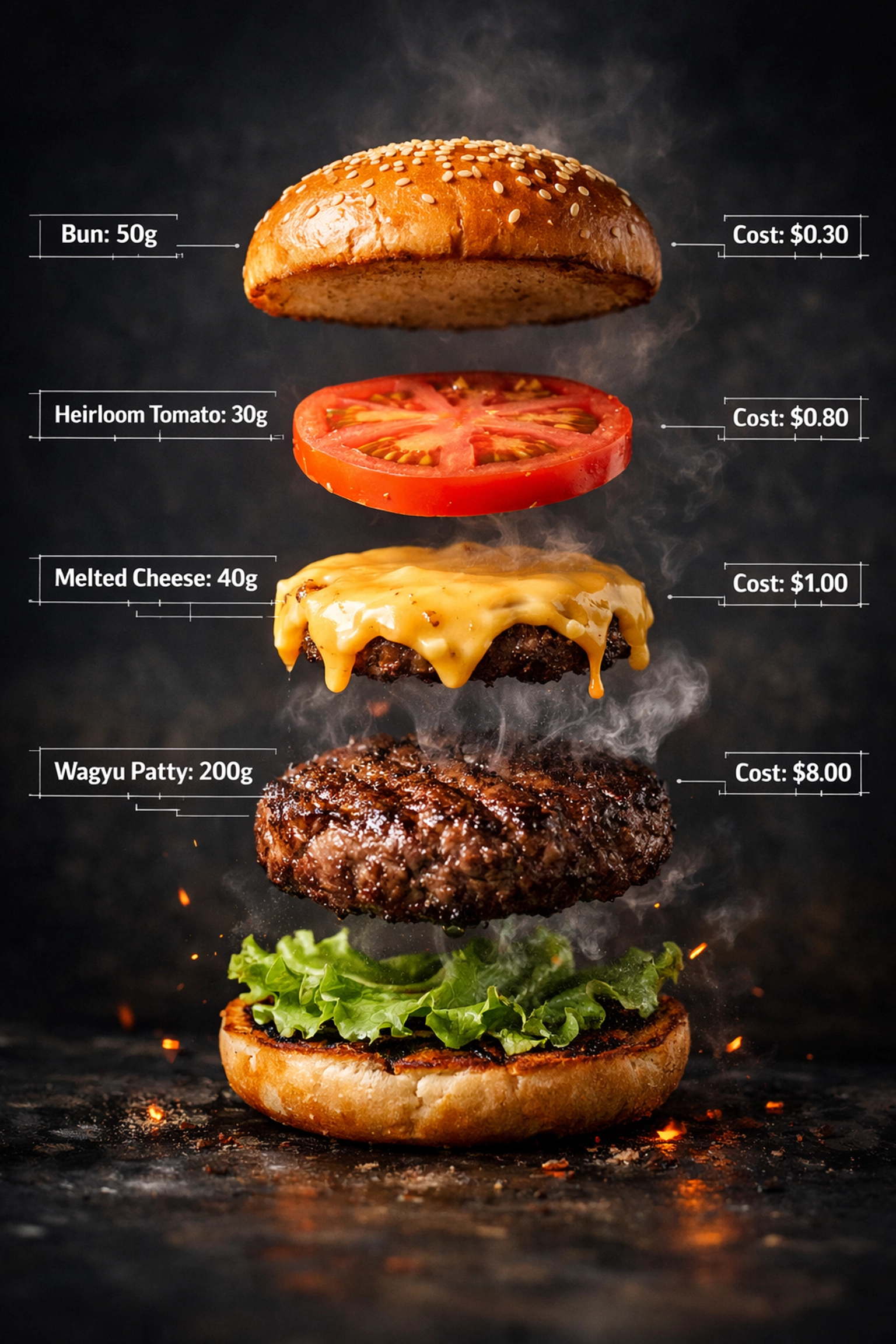
Your competitor, "Big Al’s Burger Shack," might be charging $12 for a burger. That doesn't mean you should. Maybe Big Al owns his building and you’re paying $10k a month in rent. Maybe Big Al uses grade-D meat and you’re using Wagyu.
The Mistake: Pricing based on "market average" instead of Menu Engineering.
The Fix: Use the Recipe Costing tools in Restaurant Systems Pro. Every single garnish, sauce, and bun must be accounted for. Once you know your exact cost, you can use a Data Analytics approach to see which items are your "Stars" (high profit, high popularity) and which are your "Dogs" (low profit, low popularity). If a dish isn't making you money, kill it. No mercy.
6. The "Post-Mortem" Prime Cost Syndrome
Prime Cost (Total Food Cost + Total Labor Cost) is the heartbeat of your restaurant. Ideally, it should live between 60% and 65%.
The Mistake: Calculating your Prime Cost three weeks after the month ends. At that point, you’re performing an autopsy on a dead business. You can’t fix a labor leak that happened 21 days ago.
The Fix: Move to Real-Time Prime Cost tracking. With RSP, you should know where your Prime Cost stands by Tuesday morning for the previous week. This allows you to make "Strategic" adjustments (there’s that Kuypers Creative word!) before the bleeding becomes a gusher.
7. Treating Training Like a One-Time Event
You showed your manager how to use RSP once in a frantic 20-minute session between the lunch rush and a liquor delivery. Now you’re wondering why the data looks like a toddler typed it.
The Mistake: Failing to foster a Team Leadership & Culture that values data. If your team thinks the system is "just more work for the boss," they will half-ass it every time.
The Fix: Training is a marathon, not a sprint. Schedule monthly "deep dives" into specific RSP modules. Show your managers how the data helps them: like how accurate scheduling means they aren't stuck working a double because they were understaffed. As Robert Kuypers often posts, "Empowered managers don't just follow systems; they own them."
The "Why Restaurants Fail" Reality Check
According to data cited by Forbes, the failure rate for restaurants is often exaggerated, but the margin for error is razor-thin. You aren't failing because you aren't working hard enough; you’re likely failing because you’re working hard on the wrong things.
By fixing these seven mistakes in your Restaurant Systems Pro implementation, you aren't just "buying software": you’re building a predictable, scalable, and actually profitable business.
If you’re feeling overwhelmed by the data-pocalypse, don't go it alone. Whether you need a Restaurant Growth Strategy or a complete tech overhaul, the team at Kuypers Creative is here to turn your "vibes" into "victories."
Ready to stop guessing? Contact us today and let’s get your systems in check.
Metadata & SEO Optimization
Keywords: Restaurant Systems Pro mistakes, Why do restaurants fail, restaurant prime cost, restaurant inventory management, restaurant labor forecasting, Kuypers Creative, restaurant consulting, menu engineering, restaurant tech integration.
Long-tail Keywords: How to fix restaurant food cost gaps, benefits of shelf-to-sheet inventory, real-time prime cost tracking for restaurants, avoiding restaurant failure statistics 2026.
Tags: Robert Kuypers, Robert William Kuypers, William Kuypers, Rob Kuypers, Restaurant Innovation, Operational Excellence, Tech Strategy.
Description: Are you struggling with Restaurant Systems Pro? Discover the 7 common mistakes restaurant owners make and how to fix them to improve your prime cost and avoid becoming a restaurant failure statistic. Expert advice from Kuypers Creative.