

The Psychic Server Effect (And Why You're Already Behind)
Picture this: A regular walks through your door. Before their butt hits the seat, their favorite booth is ready, their usual drink is already being poured, and the kitchen's already got their ribeye, medium rare, extra chimichurri, on the flat top.
Magic? Telepathy? A really, really good server with a photographic memory?
Nope. It's AI-driven predictive ordering, and if you're not using it in 2026, you're basically running a telegraph service in an age of instant messaging. (Spoiler: Nobody's sending telegrams anymore, friend.)
Welcome to the era where your POS system knows your customers better than they know themselves, and where the restaurants making bank aren't just feeding people, they're making them feel like the restaurant was built just for them.
Ready? Aprons on. Let's talk about how to be psychic without being creepy.
The Data Doesn't Lie: 2026 Is About Experience Over Everything
Here's the thing that's keeping traditionalists up at night: According to the Paytronix 2026 Trends & Predictions Report, consumers aren't just looking for cheap eats anymore. They want to be known. They want to feel special. They want an experience that remembers them.
Translation? Your rock-bottom happy hour specials aren't enough if the service feels robotic and the experience is forgettable.
The Food Institute's research on AI in restaurants backs this up: AI isn't just a productivity hack anymore. It's a growth enabler across your entire value chain, from demand forecasting to menu engineering to making every guest feel like a VIP. McKinsey calls it "personalization as the key frontier," and they're not wrong.
But here's where most operators faceplant: They think personalization means blasting every customer with the same tired "20% off your next visit!" email. That's not personalization. That's spam with your logo on it.
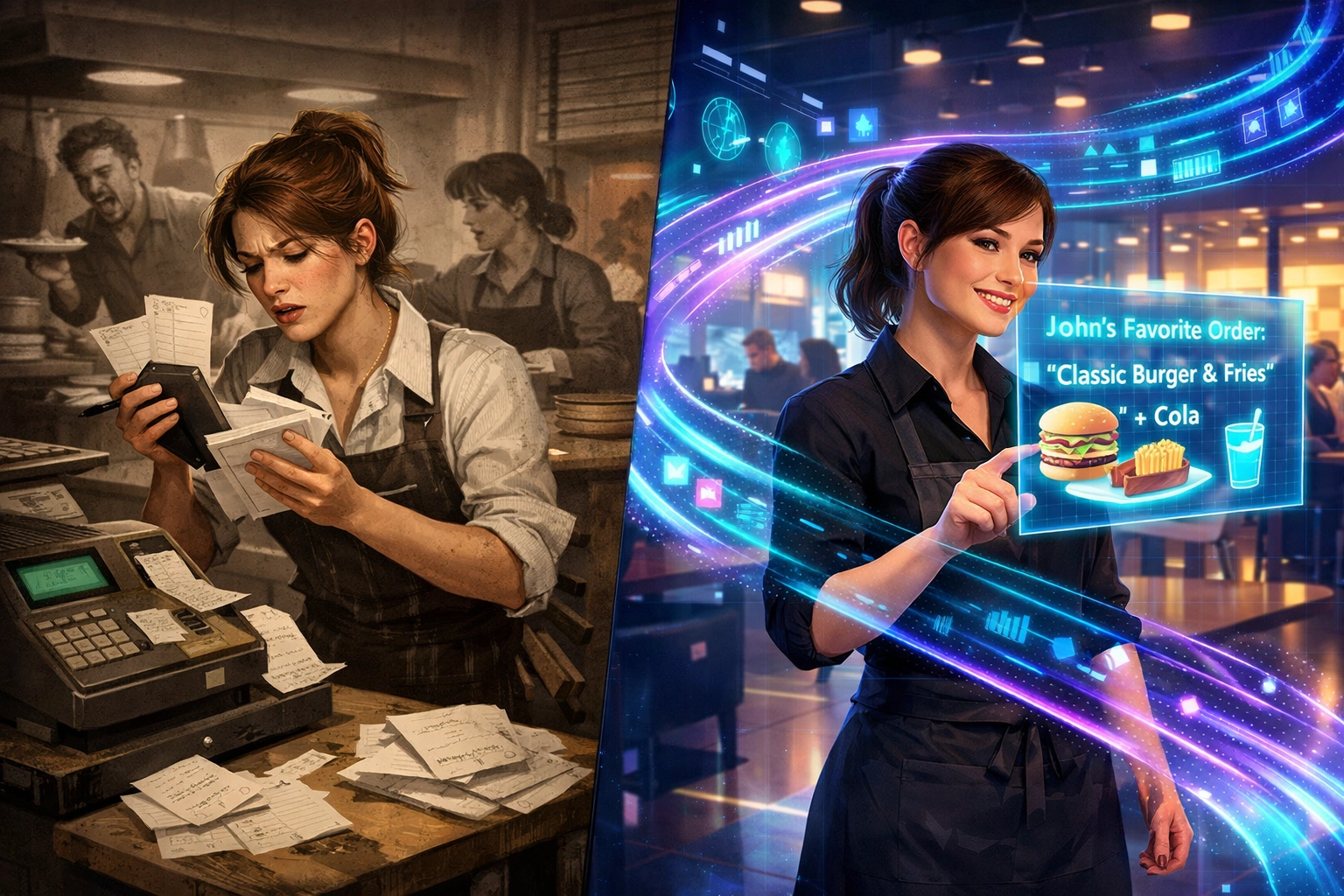
Enter 'Zebra Striping': When Humans and AI Actually Work Together (Novel Concept, I Know)
Let's talk about the sexiest trend in hospitality tech that nobody's named properly until now: Zebra Striping. (Yes, I just made that up. Yes, it's sticking.)
Zebra Striping is the art of blending human instinct with AI precision, black stripes (human) and white stripes (AI) working together to create something beautiful. Your AI handles the boring, soul-crushing stuff:
- Sentiment analysis on reviews before they go nuclear
- Inventory predictions so you're not 86-ing half the menu by 7 PM
- Predictive prep lists based on weather, local events, and historical data
- Dynamic pricing adjustments that don't feel like highway robbery
And what does that free up your humans to do? Be actual humans. You know, that thing guests actually want when they leave their house and spend $75 on dinner?
Stop trying to turn your servers into order-taking robots. We have apps for that. Your servers should be relationship builders, vibe-creators, and problem-solvers. Let the tech stack handle the grunt work so your people can focus on the emotional labor that creates loyalty.
(Because newsflash: Nobody posts on Instagram about how efficiently their order was taken. They post about how the server remembered it was their anniversary and brought them free dessert without being asked.)
The Three Moves That Separate Predictive Wizards from Tech-Stack Disasters
Alright, enough philosophy. Let's get tactical. Here's how you implement predictive dining without turning into Big Brother with breadsticks:
1. Own Your First-Party Data (Stop Letting OTAs Steal Your Gold)
Every time a guest orders through a third-party app, you're basically handing over customer intelligence to someone else. They get the data. They get the relationship. You get a delivery fee and a margin squeeze.
The fix? Build your own loyalty program. Incentivize direct ordering. Collect emails, phone numbers, birthdays, and ordering preferences yourself. That data is your competitive moat in 2026.
Use your POS to track:
- Order frequency and patterns
- Average check size and preferred price points
- Day/time preferences
- Dietary restrictions or allergies
- Special occasions (birthdays, anniversaries)
Then actually use that data. If Sally orders the vegan bowl every Tuesday at 12:30 PM for the past three months, maybe, just maybe, you should have it ready when she walks in at 12:28. Revolutionary, right?
2. Deploy Sentiment Analysis Before Problems Become One-Star Reviews
Here's a fun fact: By the time a guest leaves a bad review, you've already lost them and every person who reads that review. The average unhappy customer tells 9-15 people about their bad experience. (Thanks, social media.)
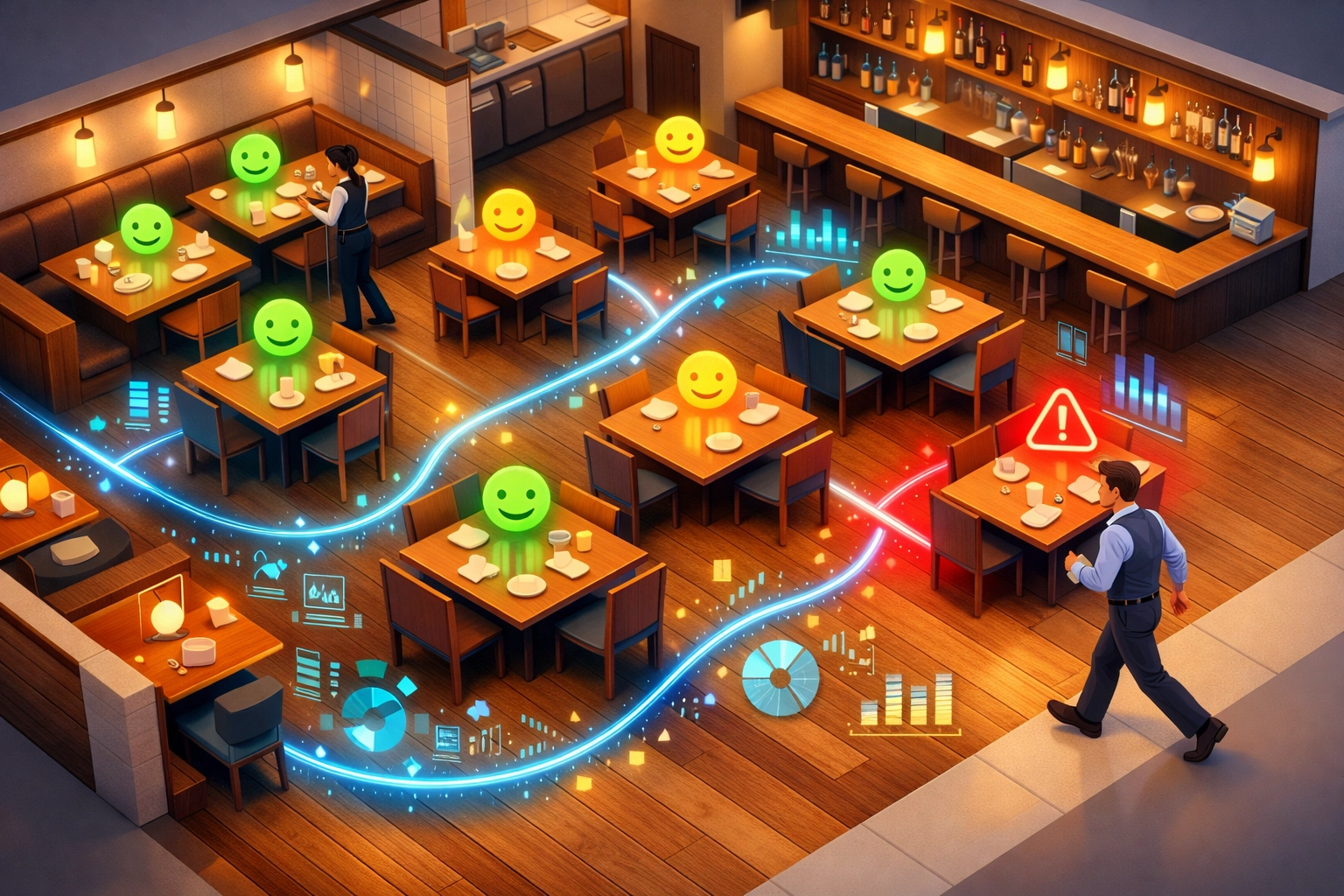
The smarter play? Use AI-powered sentiment analysis to catch problems while the guest is still at the table.
Modern POS systems can track:
- Order modification patterns (red flag: lots of changes might mean menu confusion)
- Time between courses (red flag: 25-minute wait for entrees)
- Staff interaction frequency (red flag: guest hasn't seen a server in 20 minutes)
- Check abandonment rates (red flag: they left without paying or ordering)
Set up alerts so managers can swoop in before the guest leaves angry. Comp the dessert. Send over the GM to apologize. Fix it now, not in a Yelp response three days later.
3. Gamify the Experience for Gen Z (They Live for Digital Quests)
If you think Gen Z just wants cheap food, you're missing the entire plot. They want experiences. They want shareability. They want to feel like they unlocked something special.
Enter: Gamification through your loyalty program and predictive ordering.
Ideas that actually work:
- "Streak Rewards" for consecutive visits
- "Hidden menu" items that unlock after X orders
- Points multipliers for trying new dishes (helps you move inventory and gets them out of their comfort zone)
- "Surprise and delight" algorithms that randomly upgrade sides or add a free drink
- Social sharing bonuses ("Post your meal, get 2X points")
The beauty? Your AI can personalize these challenges based on individual behavior. If someone always orders the same burger, challenge them to try three new items for a reward. If someone's a menu adventurer, give them early access to limited-time offerings.
It's not manipulation, it's meeting your customer where they are and making the experience fun.
The Kuypers Creative Philosophy: Humanizing the Data
Look, we get it. You didn't open a restaurant to become a data scientist. You did it because you love hospitality, great food, and creating experiences that matter.
But here's the reality in 2026: The restaurants winning aren't choosing between tech and humanity. They're using tech to amplify humanity.
At Kuypers Creative, we bridge the gap between your engineering vision (the tech stack, the integrations, the AI tools) and your executive growth goals (margins, loyalty, scale). Because scaling a tech platform isn't just about the code, it's about humanized data.
It's about using predictive analytics to make guests feel seen, not surveilled. It's about deploying AI so your humans can be more human. It's about building systems that scale your hospitality, not just your transaction volume.
We help restaurants implement these systems without the creepy factor. We help you ask the right questions of your data. We help you build loyalty programs that actually drive repeat business instead of just cluttering up people's email inboxes.
The Bottom Line: Be Psychic, Not Creepy
The future of restaurants isn't about replacing humans with robots. It's about giving humans superpowers.
Your POS should know orders before guests do, but only so your staff can deliver moments of delight that feel personal, not algorithmic. Your AI should predict problems, but only so your managers can solve them with a human touch. Your data should drive personalization, but only in ways that make guests feel valued, not violated.
The restaurants crushing it in 2026 understand this balance. They're not tech companies that happen to serve food, and they're not analog holdouts pretending it's 1995. They're hospitality businesses using every tool available to do what they've always done best: make people feel good.
So yeah, be psychic. Know what your guests want before they do. But do it with heart, not just hard drives.
Because at the end of the day, nobody remembers the algorithm that predicted their order. They remember how you made them feel.
And that's the only metric that truly matters.
Keywords: AI Predictive Ordering 2026, Restaurant Personalization Trends, Customer Data Analytics for Restaurants, Hospitality Tech Integration, Restaurant Operational Efficiency AI, Zebra Striping Restaurant Trend, First-Party Data Strategies, Sentiment Analysis Restaurants, Gen Z Restaurant Marketing
#PredictiveDining #RestaurantTech #AI2026 #HospitalityInnovation #KuypersCreative #ZebraStriping #DataHumanization