

You know that feeling when you're closing out for the night, staring at your POS report like it personally insulted your grandmother? The numbers say one thing. The cash in the drawer says another. And your tips? Well, they've apparently entered the witness protection program.
You're not losing your mind. (Probably.) This is actually one of the most common headaches in restaurant operations, and with the IRS ramping up compliance enforcement this year, it's a headache that could turn into a full-blown migraine real fast.
Let's break down why this happens and, more importantly, what you can actually do about it before your accountant starts stress-eating your breadsticks.
The Compliance Crackdown Is Real
Here's your timely wake-up call: The IRS has been increasingly focused on tip income reporting in the hospitality industry. According to the National Restaurant Association, tips represent a massive portion of server income, often 50-70% of total earnings, and the government wants its cut.
In 2024 alone, the IRS collected over $2.8 billion in additional taxes from tip-related audits. That's not pocket change, folks. That's a whole lot of restaurants getting very uncomfortable letters in the mail.
As Restaurant Technology News has been reporting, operators are scrambling to get their tech stacks in order before the next round of compliance reviews hits. And honestly? The smart ones started yesterday.
#RestaurantTech #TipCompliance
The Usual Suspects: Why Your Numbers Don't Add Up
Before you start accusing your Tuesday night closer of skimming (they're probably not, by the way), let's look at the actual culprits behind the great tip discrepancy mystery.
1. Unsettled Tips Are Playing Hide and Seek
Here's something that catches a lot of operators off guard: many POS systems don't immediately reflect tips in your standard reports. If you're using paper receipts with a "reopen and keep" setting, those tips can stay pending for up to 36 hours before they settle.
That means your 6 PM report might be missing tips from transactions that closed at 2 PM. It's not fraud, it's just annoying timing logistics.
The fix: Use real-time reporting features to see ALL sales, including those sneaky unsettled tips. Most modern POS systems have this; you just need to know where to look. (Hint: It's usually not the default report view because that would be too easy.)

2. Cash Tips: The Wild West of Restaurant Accounting
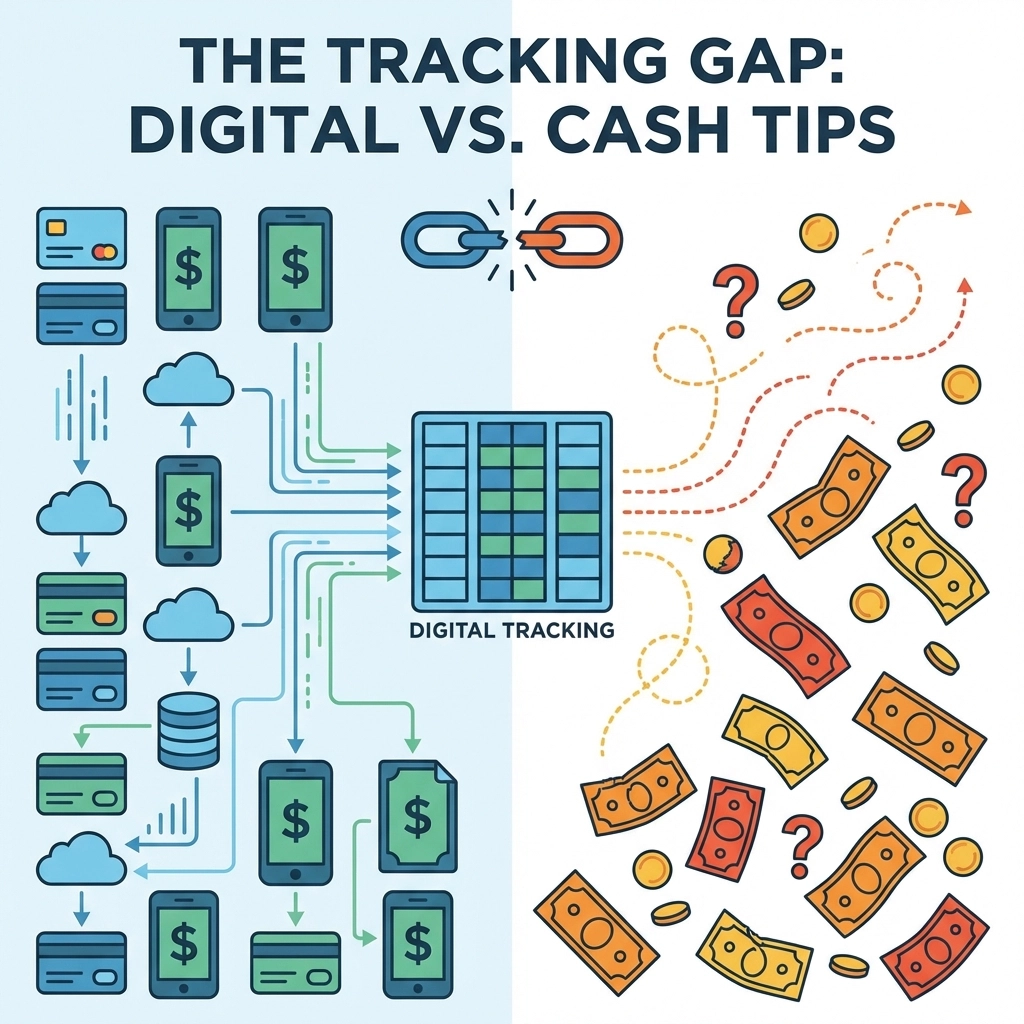
Your POS system is great at tracking digital payments. It's absolutely useless at tracking the $20 bill Grandma Betty slipped under her coffee cup.
Here's the uncomfortable truth: the responsibility for reporting cash tips falls entirely on your employees. And while most are honest, humans are human. Some forget. Some "forget." Some genuinely can't remember if table 12 left $5 or $15.
According to industry estimates, unreported cash tips account for roughly 40% of all tip discrepancies. That's a big gap, and it's one that makes the IRS very, very interested in your business.
3. Good Old-Fashioned Human Error
Your team isn't trying to mess up your books. They're just tired, rushing between tables, and occasionally punching in $15 when they meant $50.
The most common errors include:
- Wrong transaction amounts (fat fingers happen)
- Incorrect change given
- Forgetting to record cash payments entirely
- Skipping end-of-shift data updates (because everyone wants to go home)
A study by the Restaurant Loss Prevention Association found that unintentional employee errors account for nearly 60% of cash register discrepancies. Not theft. Just mistakes.
4. Your Closing Procedures Are… Suggestions?
Be honest with me here. When's the last time your closing checklist was actually followed to the letter?
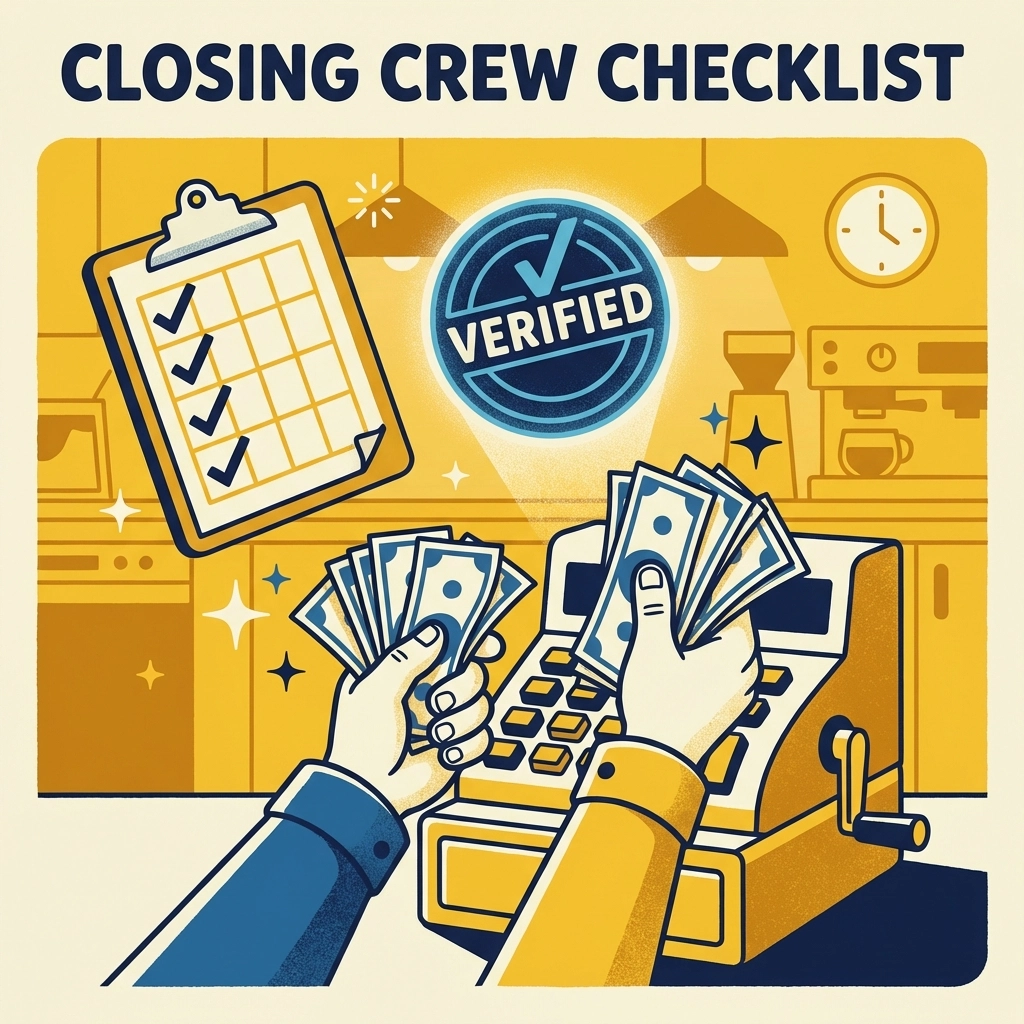
Without standardized end-of-shift routines, proper cash counts, cross-checks between staff, complete transaction records, discrepancies slip through the cracks like water through a pasta strainer.
What the Smart Operators Are Doing
I recently saw a fantastic post from Danny Meyer's team on LinkedIn (yeah, I name-drop Shake Shack's founder because his operational insights are chef's kiss) about how they've reduced tip discrepancies by over 35% across their properties. The secret? Not rocket science, just relentless consistency in three areas.
Here's what's working:
Embrace Digital Tipping Like Your Audit Depends On It
(Because it might.)
Tip tracker apps and digital payment solutions don't just make life easier for your customers, they create an automatic paper trail. Every dollar is documented, timestamped, and reconcilable.
Operators who've moved to predominantly digital tipping report:
- 40% reduction in end-of-day discrepancies
- 25% faster closing procedures
- Significantly easier tax compliance documentation
Yes, there are processing fees. Yes, it's worth it. (Your accountant will send you a thank-you card.)
Create Closing Procedures That Actually Get Followed
The best closing checklist in the world means nothing if your team treats it like terms and conditions on a website.
Here's what actually works:
- Two-person verification on all cash counts (trust, but verify)
- Digital sign-offs at each step (accountability is beautiful)
- Immediate escalation protocols for discrepancies over $20 (don't let small problems become big ones)
- Regular training refreshers (quarterly, not annually)
Make the checklist short enough to be practical but thorough enough to catch problems. If it takes longer than 15 minutes, it won't get done right.
Track Inventory Alongside POS Data
This one's especially important for bars: compare actual consumption with POS records. If your system says you sold 50 beers but your inventory shows 65 missing, you've got a problem that isn't just about tips.
Cross-referencing data sources catches issues your POS alone never would.
The Quick Wins: Your Action List for This Week
Alright, let's make this actionable because I know you've got a dinner rush to prep for.
Today:
- Check if your POS has a real-time reporting feature (and learn how to use it)
- Review your tip settlement timing settings
This Week:
- Audit your closing procedures against actual practice
- Implement two-person verification on cash counts
- Research digital tipping solutions for your setup
This Month:
- Train your team on tip reporting requirements (seriously, most don't know)
- Create a discrepancy escalation protocol
- Consider a POS integration audit with your accountant
#RestaurantOperations
The Bottom Line
Look, tip discrepancies aren't going away entirely. Restaurants are chaotic, humans make mistakes, and cash is inherently messy. But the gap between "acceptable variance" and "IRS audit trigger" is real: and it's smaller than you think.
The operators who are winning right now are the ones treating tip tracking like the compliance issue it actually is, not just an annoying bookkeeping task to deal with later.
Need help getting your operations buttoned up before the next compliance wave hits? That's literally what we do. Reach out to Kuypers Creative and let's make sure your numbers tell the story you want them to tell.
Now go reconcile that drawer. Your accountant is waiting.
Meta Keywords: POS tip discrepancies, restaurant tip tracking, tip compliance, restaurant POS reports, cash tip reporting, IRS tip audit, restaurant operations, tip reconciliation, digital tipping solutions, restaurant compliance, tip tracking software, restaurant accounting