
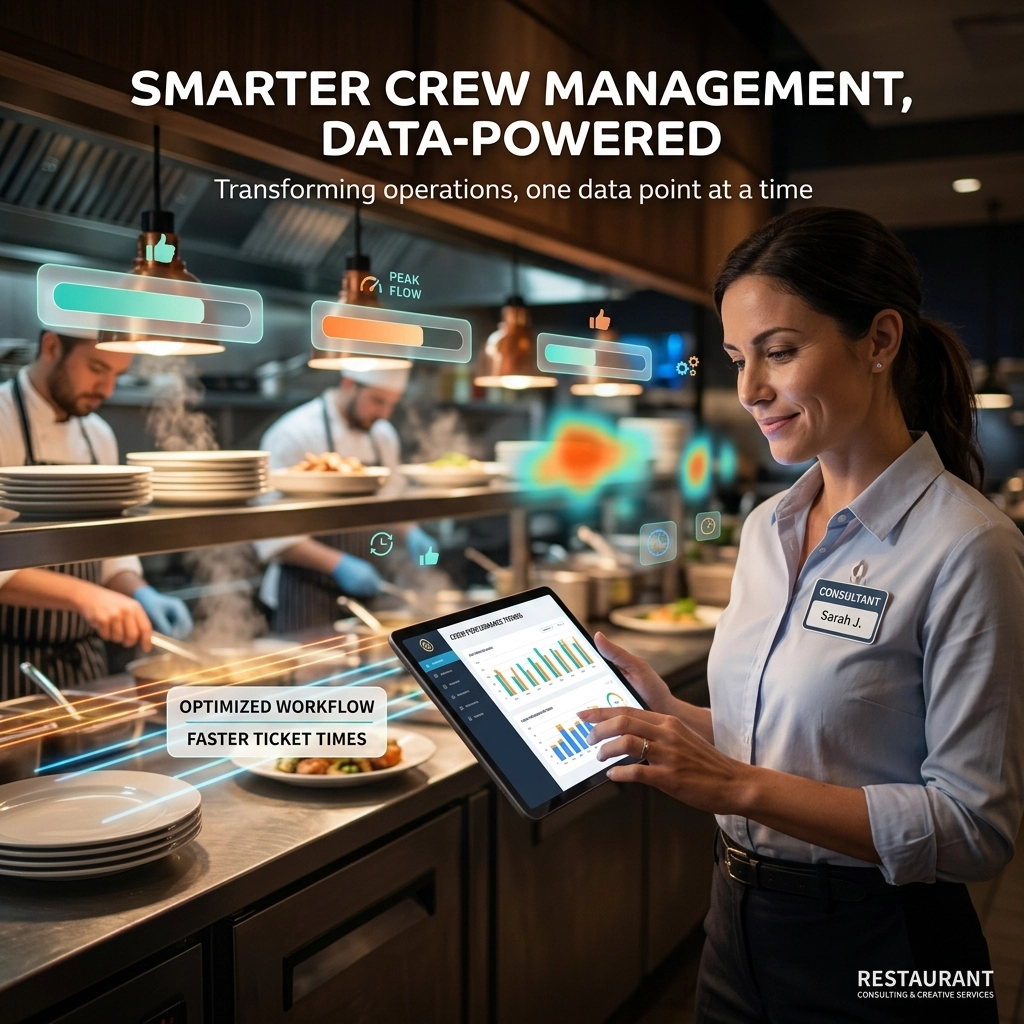
Let’s be real: most restaurant owners use their security cameras for two things: catching the guy who tried to walk out on a $100 steak dinner and checking if the night shift remembered to mop the walk-in. It’s reactive. It’s defensive. And honestly? It’s a bit like being a digital hall monitor.
But there is a new wave of tech, Video Analytics, that is turning those dusty lenses into the smartest "employees" on your payroll. And no, we’re not talking about some Orwellian "Big Brother" nightmare where you’re counting how many blinks your servers make. We’re talking about using AI to actually make your team’s lives easier.
Ready? Aprons on. Let’s dive into why your cameras are about to become your favorite management tool.
It’s Not Surveillance; It’s Strategy
First off, let’s address the elephant in the walk-in: the "creepy" factor. If you tell your crew you’re installing "Advanced Video Analytics," they’re going to think you’re watching them eat fries in the corner. (Which, let's be honest, we've all done).
The shift here is moving from surveillance to operational data. Modern systems don’t care who is doing the work; they care how the work is flowing. It’s about patterns, not people. As I’ve mentioned before in our look at restaurant technology trends, the goal is to remove friction, not add pressure.

A graph showing the conversion of raw video footage into actionable data points like wait times and heat maps.
1. Real-Time Workload Balancing (The "Anti-Burnout" Metric)
We’ve all seen it: the front counter is getting slammed, the POS line is out the door, and your star cashier is drowning while the prep team in the back has no idea the "lunch rush from hell" has arrived.
Video analytics can track customer-to-staff ratios in real-time. Instead of you having to run out from the office screaming, the system detects a bottleneck at the POS and sends an alert. It identifies when one person is attending to too many guests, allowing you to redeploy staff before someone has a meltdown.
Pro-tip: This is a huge win for team leadership and culture. When your crew knows the tech is there to get them backup before they drown, they stop seeing the camera as a spy and start seeing it as a lifeline.
2. Predictive Scheduling (Throw Away the Magic 8-Ball)
"I think Tuesday might be busy because there's a local dog show." Stop it. Guessing is for the lottery, not for your labor margins.
By analyzing months of video data, AI identifies the exact moment your "rush" starts. It correlates foot traffic with actual kitchen output. This allows for optimized shift schedules that actually align with demand.
- Overstaffed? You’re hemorrhaging money (a "lullaby of dying margins," as I like to call it).
- Understaffed? You’re losing customers and burning out your best people.
Data-driven scheduling is the secret sauce to maintaining sanity. Check out more on restaurant growth strategy to see how these margins add up.

A visual representation of an AI-detected "heat map" showing where customers linger vs. where staff are positioned.
3. Smashing Operational Bottlenecks
Why is the salmon taking 22 minutes to hit Table 4? Is it the line cook? The expeditor? Or is it because the kitchen layout forces the server to walk through a narrow "death trap" hallway?
Video analytics tracks the time from order placement to delivery. It pinpoints pressure points: like long waits at the pick-up window: without you having to stand there with a stopwatch like a weirdo. It turns subjective complaints ("The kitchen is slow!") into objective data ("The prep station is unstaffed 15% of the time during peak hours").
4. Safety, Hygiene, and the "Boring" Stuff That Saves Millions
Compliance is boring until the health inspector shows up or someone slips on a wet floor. Video AI can now monitor for:
- Hygiene Compliance: Are gloves and hairnets being used?
- Absence Detection: Is the fry station left unstaffed for too long?
- Safety Hazards: Is there a spill that’s been sitting there for 10 minutes?
According to reports from National Restaurant Association, safety and labor costs remain the top two concerns for operators. Using tech to catch a spill before it becomes a lawsuit isn't just smart: it's essential for your data analytics strategy.
The Robert Take: Boring is the New Sexy
I know, I know. You got into this business because you love food and people, not because you wanted to look at data dashboards. But here’s the tough love: Boring wins. Boring pays.
Managing a crew by "feel" is how you end up in a Chili's-style turnaround story (and not the good part). Using video analytics to support your team isn't about being a robot; it’s about being a leader who provides the right tools for the job.
As I often say on LinkedIn, "The best leaders don't just watch their team; they clear the path for them." Video analytics is just a high-tech machete for the operational jungle.

Infographic showing the 4 pillars of Video Analytics: Safety, Speed, Scheduling, and Support.
Ready to Upgrade?
If you're still managing your floor based on "vibes" and a 20-year-old CCTV system, it's time to evolve. Managing a restaurant is hard: one of the hardest businesses on earth: so why wouldn't you want an extra set of AI eyes helping you out?
Ready? Aprons on. Let’s get to work.
Keywords & Metadata
Keywords: Restaurant Video Analytics, AI Restaurant Management, Crew Management Tech, Operational Efficiency, Restaurant Staffing Solutions, Predictive Scheduling, Foodservice Technology 2026.
Long-tail Keywords: How to use video analytics for restaurant safety, reducing restaurant labor costs with AI, non-creepy employee monitoring in kitchens, optimizing restaurant workflow with cameras.
Meta Description: Discover how video analytics is transforming restaurant crew management by providing real-time data on workload balancing, predictive scheduling, and safety: without the "creepy" surveillance factor.
Tags: Robert Kuypers, Robert William Kuypers, William Kuypers, Rob Kuypers
External Outbound Links
- National Restaurant Association – Industry Trends
- Restaurant Business Online – Tech Section
- Nation's Restaurant News – Operations Advice
References & Inspiration
- LinkedIn: Robert Kuypers on Digital Transformation in Dining (Search: "Robert Kuypers Restaurant Tech")
- Industry News: AI-driven absence detection and hygiene monitoring systems for 2026.