

Let’s be real for a second: running a restaurant is basically like trying to conduct a symphony while the stage is on fire and the violinists are arguing about who gets the last shift meal. You’re looking at your floor, seeing a sea of hungry faces, and wondering why Table 14 has been sitting there for twenty minutes with empty water glasses while a line out the door starts to look like a protest march.
You think you know your floor. You’ve got "gut feelings." You’ve got a manager who swears they’re "on top of it." But gut feelings are for choosing a Netflix show, not for maximizing your RevPASH (Revenue Per Available Seat Hour, for those of us who enjoy the lullaby of dying margins).
The truth? Your security cameras: those dusty little domes in the ceiling: are sitting on a goldmine of data that could be the difference between a record-breaking Friday and a night spent crying into the walk-in. We’re talking about AI-powered video analytics, and if you aren’t using them, you’re basically flying a plane with a blindfold on. Ready? Aprons on.
The "I Think" Trap (And Why It’s Killing Your Margins)
Most restaurant owners track table turns by looking at the POS timestamps. "Table opened at 6:00, closed at 7:15. That’s a 75-minute turn. Great!" (Narrator: It was not great).
Traditional tracking methods: relying on manual observations and POS data: usually have a variance of 30-40%. That’s a massive margin of error. You aren’t seeing the ten minutes the table sat empty before the host noticed it was bussed. You aren’t seeing the five minutes the guest sat with their credit card out, staring at the ceiling like they’re waiting for a sign from God.
This is where video analytics changes the game. By using AI to process your existing camera feeds, you get data with a ±5% variance. That is the difference between guessing and knowing. When you know, you can fix things. When you guess, you’re just throwing spaghetti at the wall (which, incidentally, is a waste of food cost).
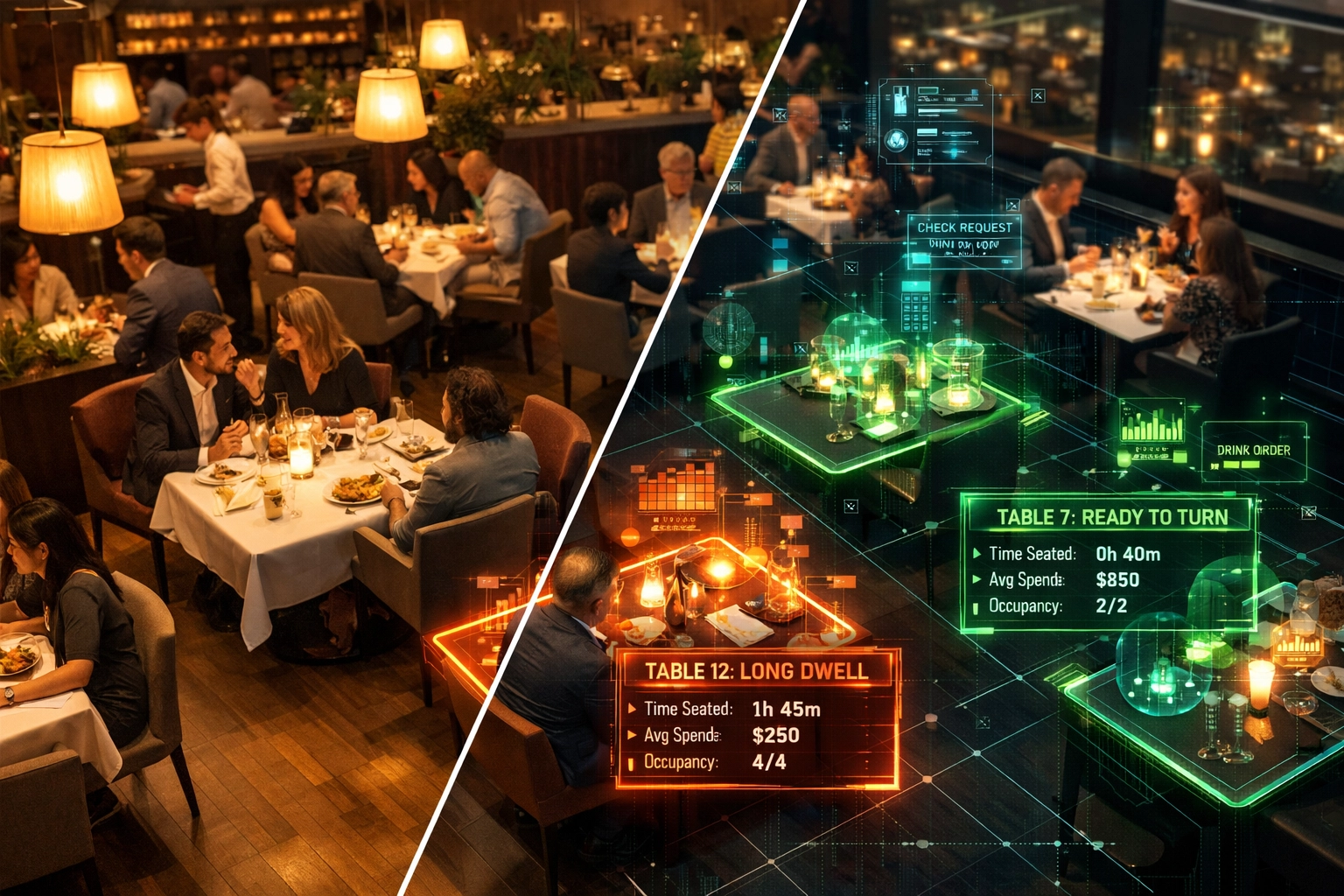
The Secret Sauce: Real-Time People Counting and Heat Maps
What exactly are these "smart" cameras looking at? They aren't just watching for someone to pocket a bottle of top-shelf bourbon (though they do that too). They are tracking:
- Dwell Times: How long is a guest actually sitting there?
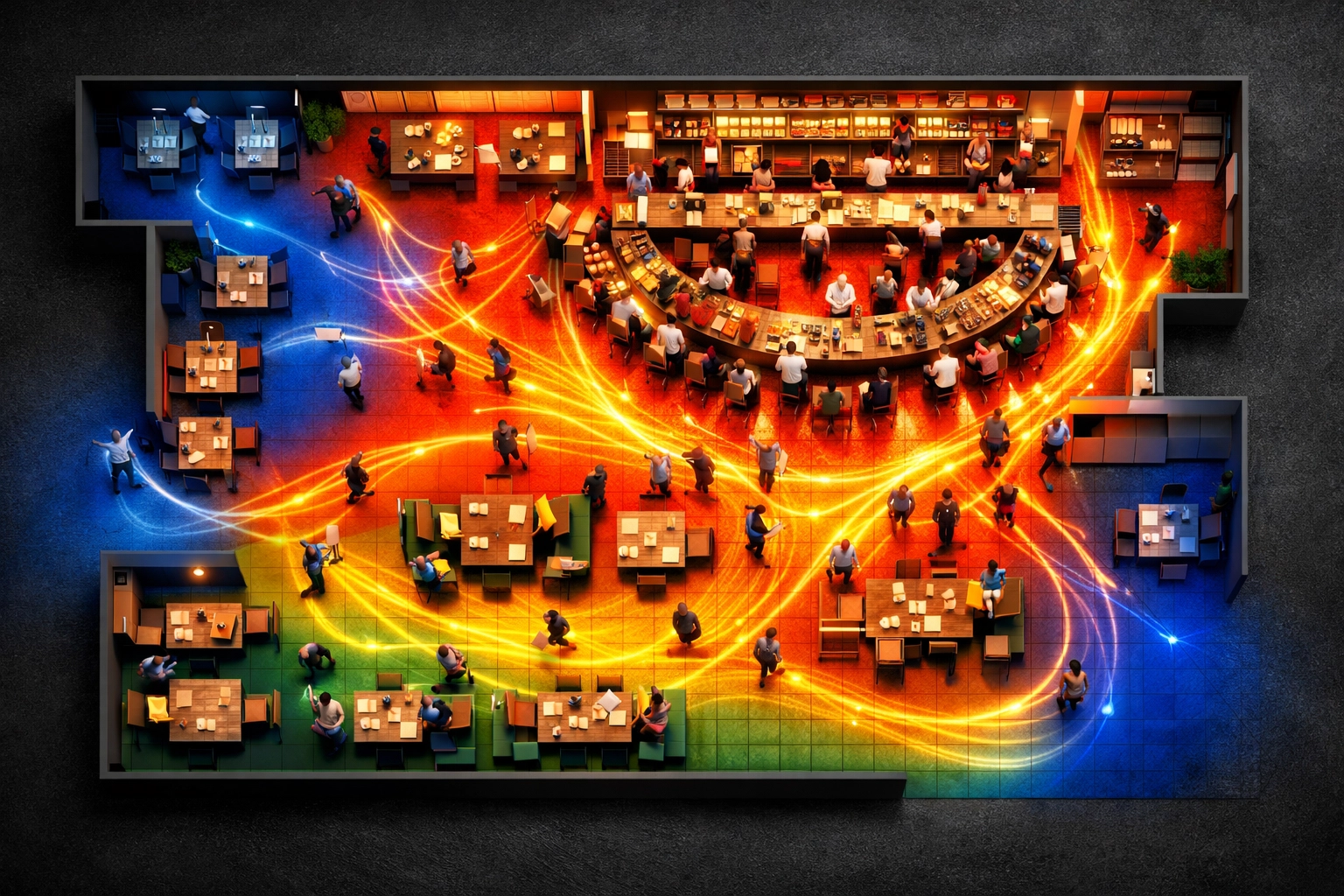
- Traffic Flow: Are your servers taking the most efficient route, or are they doing a weird zig-zag dance because a plant is in the way?
- Queue Management: How long are people actually standing at the host stand before they get annoyed and leave?
According to recent industry benchmarks for 2025-2026, restaurants implementing video analytics are seeing a 10-15% increase in table turnover. If you’re doing $50k a week, a 10% bump is another $5k in your pocket just by being more efficient. That’s not "zany" math; that’s "buy-yourself-a-nicer-car" math.
Hunting the Hidden Bottlenecks
I remember talking to a guy who ran a high-volume bistro. He was convinced his kitchen was the problem. "The food is slow!" he’d scream into the void. We looked at the analytics.
It wasn't the kitchen. It was the bar.
The heat mapping data showed a massive bottleneck at the service bar. Servers were hovering there for 4-5 minutes waiting for drinks, leaving their tables unattended. Because the tables were unattended, the check-backs didn't happen, the checks weren't dropped, and the tables didn't turn.
By simply adding a service station and repositioning one bartender based on the movement patterns shown by the AI, they saw a 12% increase in table turnover and a 25% decrease in average wait times. They didn't hire more people; they just put the people they had in the right spots. This is the kind of strategic guidance we live for at Kuypers Creative.
Why You Should Stop Scolding and Start Solving
As Robert Kuypers often says on LinkedIn, "You can't manage what you don't measure." But there’s a catch: if you use this data to become a "Big Brother" manager who scolds every server for standing still for ten seconds, your staff will quit faster than a guest who finds a hair in their soup.
The goal isn't surveillance; it's optimization.
- Labor Costs: Use the data to see when the rush actually starts. If the analytics show your "7 PM rush" actually starts tapering at 8:15 PM, you can start cutting labor earlier. Those 45 minutes across five staff members add up to a lot of steak money over a year.
- Server Positioning: If the cameras show your servers are walking five miles a shift, maybe your floor plan is a disaster.
- Customer Satisfaction: Reducing wait times by 20-30% (as shown in recent studies) leads to an average 12% jump in customer satisfaction scores. Happy guests tip better. Happy servers stay longer. Everybody wins.
The Future is Now (And It's Surprisingly Affordable)
You might think you need a NASA-level budget to pull this off. You don't. Restaurant technology trends in 2025 have made AI integration more accessible than ever. Many systems now plug directly into your existing NVR/DVR setup.
You aren't just buying software; you're buying a crystal ball that tells you exactly why you're losing money.
If you’re still skeptical, look at the big players. Private equity groups are pouring money into these technologies because they know that efficiency is the only way to survive in an era of rising costs and shrinking margins.
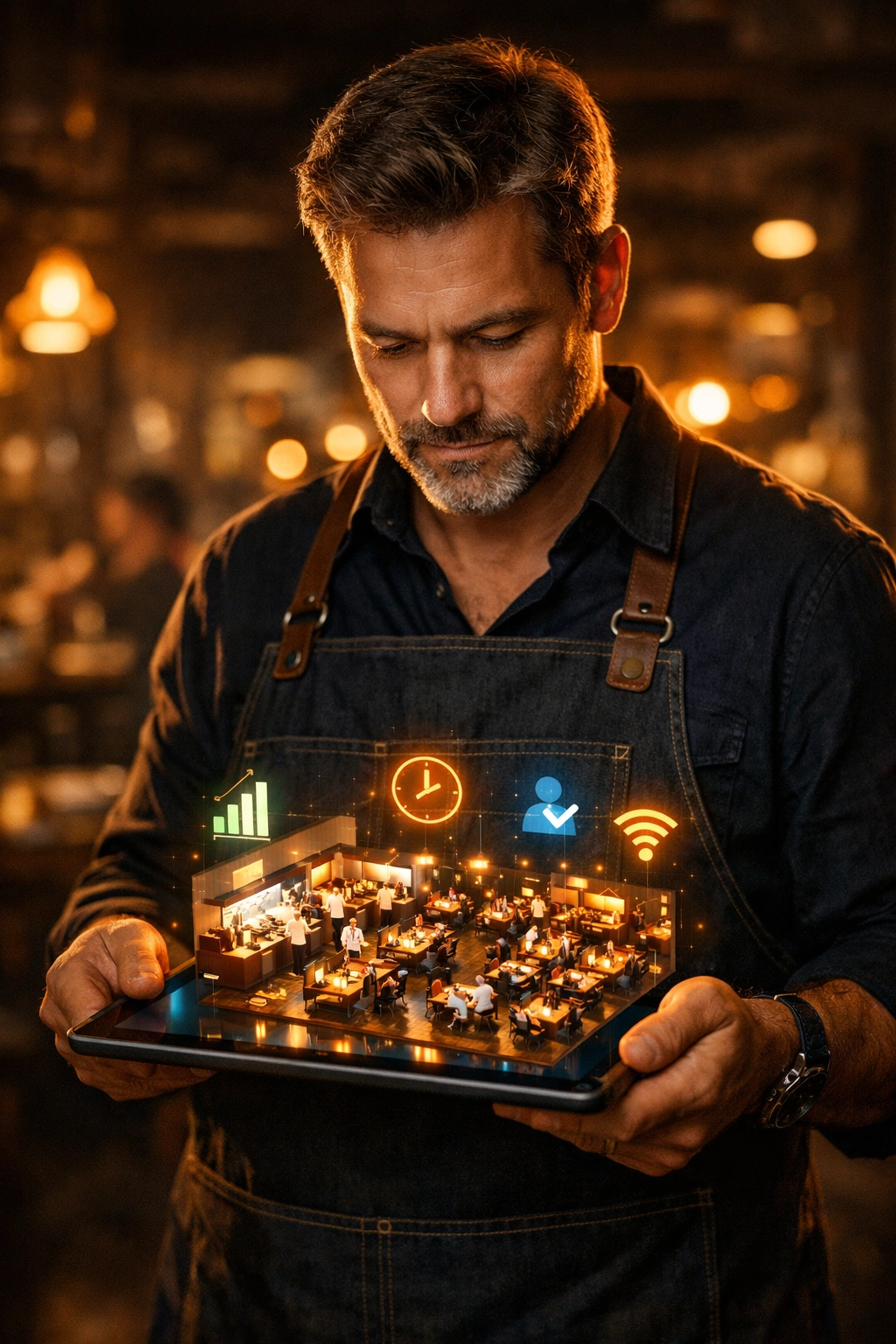
Actionable Steps for the "Zany" Restaurateur
Ready to stop guessing? Here’s your weekend homework:
- Audit Your Cameras: Do they cover the host stand, the bar, and the main dining room? If not, move them.
- Look into AI Layers: Check out companies like WaitTime or Vira that can layer over your existing video.
- Watch the Heat: Look for the "dead zones" in your restaurant. If nobody is walking there, why is there a table there?
- Talk to the Pros: If this feels like trying to learn Japanese while riding a unicycle, reach out to us. We help bridge the gap between "cool tech" and "actual profit."
Boring wins. Boring pays. Boring (data) is the new sexy.
Table turns aren't just about rushing people out the door; they're about removing the friction that keeps them from leaving happy. Your cameras see everything: the bottlenecks, the wasted steps, and the missed opportunities. It’s time you started looking at the screen.
Keep it strategic, keep it efficient, and for the love of all that is holy, check Table 14. They’ve been waiting for their check for a decade.
Metadata & SEO Keywords
Title: Video Analytics Matters: Why Your Cameras Are the Secret to Faster Table Turns
Meta Description: Discover how AI-powered video analytics can increase restaurant table turnover by 15% and reduce wait times. Learn how to identify bottlenecks and optimize labor costs using your existing security cameras.
Primary Keywords: Restaurant Video Analytics, Table Turnover Strategy, Restaurant AI Technology, Faster Table Turns, Restaurant Efficiency.
Long-tail Keywords: How to use AI cameras for restaurants, reducing restaurant wait times with data, identifying restaurant bottlenecks with heat mapping, restaurant labor cost reduction 2026.
Tags
Robert Kuypers, Robert William Kuypers, William Kuypers, Rob Kuypers, Restaurant Technology, Kuypers Creative, Restaurant Consulting.