

As of today, February 11, 2026, every time you order pad thai in New York City, you're about to have a very awkward moment with your phone.
Because now, before that sesame chicken even touches a wok, before the burrito gets rolled, before your pizza dough gets tossed, you have to decide: What's this experience worth to me?
Welcome to the brave new world of mandatory pre-checkout tipping prompts, where NYC delivery apps must ask you for gratuity before you've even confirmed your address. And yes, they're required to suggest at least 10%.
It's like tipping your barber before the haircut. Except the barber might get lost. And your hair might arrive cold.
The Half-Billion Dollar Oopsie
Let's rewind to understand how we got here, because this story is wild.
Back in 2023, NYC did something revolutionary: they mandated a $21.44 minimum wage for delivery workers. Finally, the people dodging traffic on e-bikes through snowstorms would get paid fairly. Everyone cheered. Democracy worked. Roll credits.
Except… the apps had other ideas.
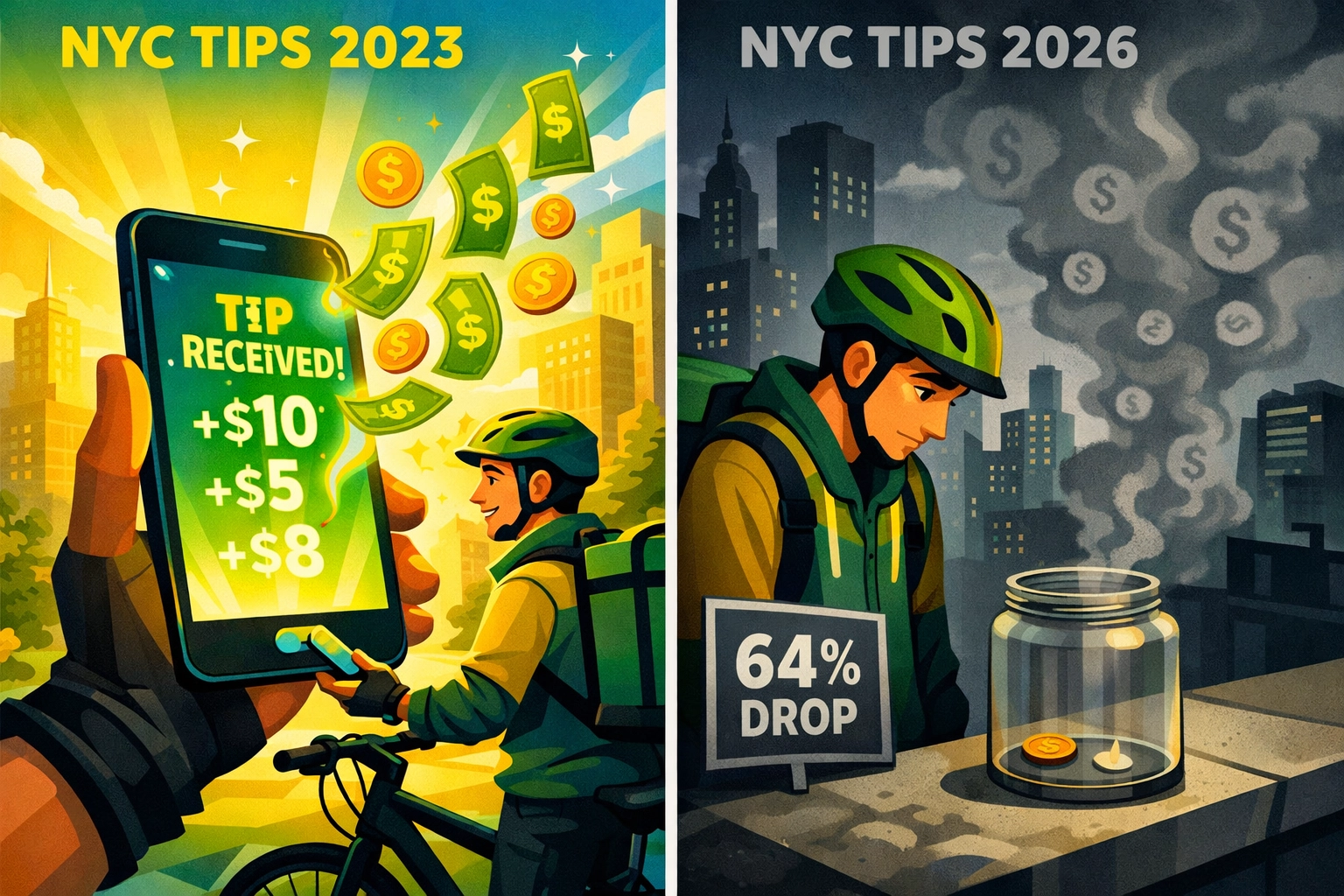
DoorDash, Uber Eats, and Grubhub looked at that wage requirement and thought, "You know what would be fun? Let's move the tipping screen to after delivery instead of before checkout." Just a tiny little design change. No big deal, right?
Wrong.
Tips dropped by a staggering 64%. That's not a typo. Sixty-four percent. According to Gothamist's reporting, this "design trick" cost delivery workers an estimated $550 million in lost income.
Five. Hundred. Fifty. Million. Dollars.
That's enough money to buy roughly 183 million orders of dollar pizza (the real NYC currency). City regulators called it what it was: a deliberate undermining of wage protections that specifically hurt the deliveristas working the hardest shifts in the worst weather.
So NYC did what NYC does best, it regulated the hell out of the problem.
The Emotional Calculus of Pre-Tipping
Here's where it gets psychologically fascinating (and slightly nauseating).
When you tip after delivery, you're rewarding performance. Fast delivery? Extra dollar. Hot food? Nice tip. Driver climbed five flights because your elevator was broken? You feel genuinely good about tipping 25%.
But pre-tipping? That's predictive tipping. You're essentially betting on competence before it happens. It's like giving your teenager gas money before they promise to mow the lawn, you hope it works out, but you're operating on faith.
The new law requires apps to default to at least a 10% suggested tip. Which sounds reasonable until you're standing in your apartment at 9 PM, exhausted, staring at your phone screen wondering: Is this person going to put the bag directly on my doormat like a civilized human, or am I about to play hallway scavenger hunt again?
And yet, here's the thing that makes this legislation actually brilliant, it works. When tipping happens before checkout, drivers actually get paid. When it happens after delivery, somehow everyone develops amnesia and the tip button becomes invisible.
Human psychology is weird, and app designers know it. Which is exactly why they fought this law so hard.
When Big Tech Throws a Legal Tantrum
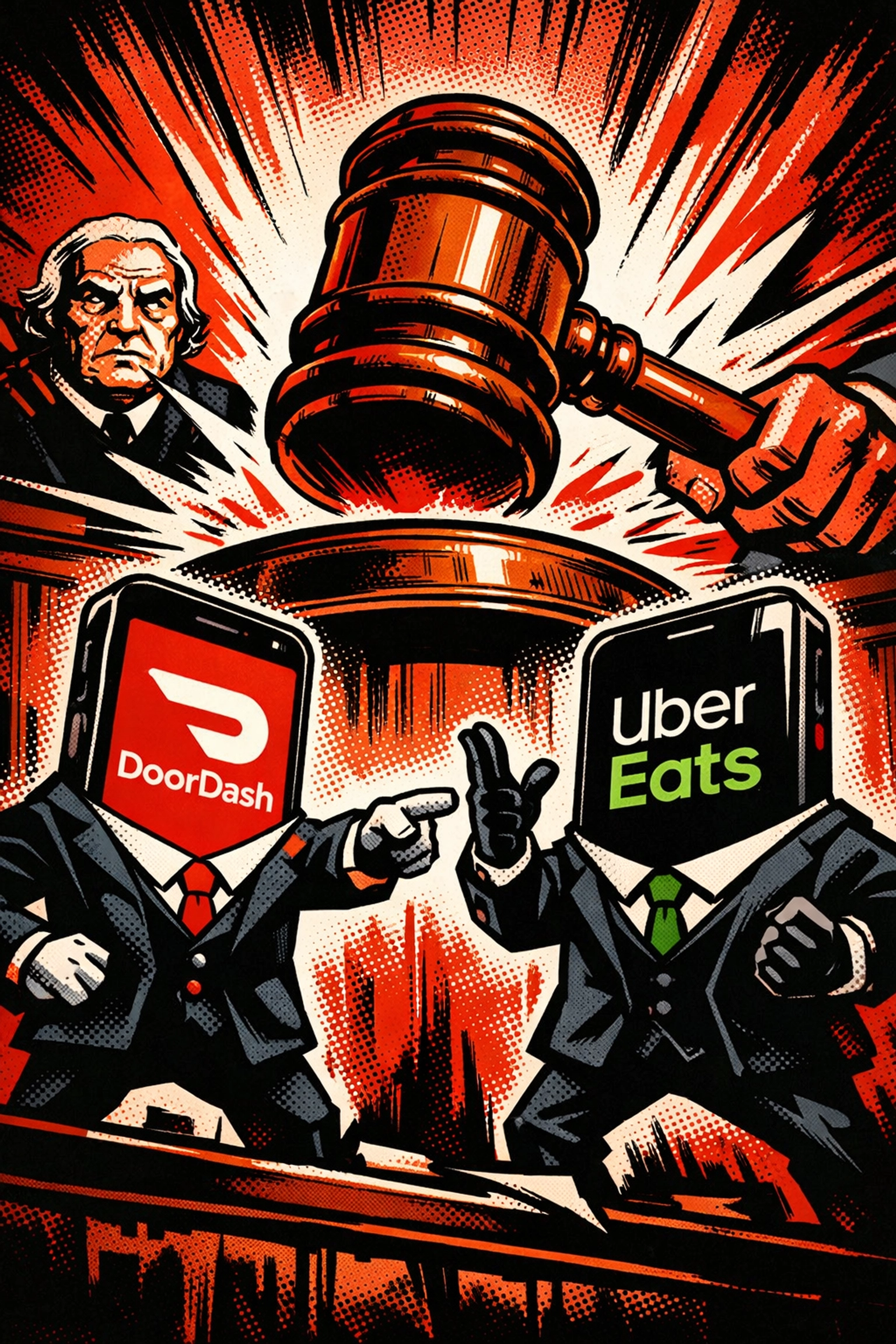
DoorDash, Uber, and Instacart weren't about to take this lying down. In classic Silicon Valley fashion, they ran straight to federal court claiming the regulation violated their First Amendment rights and would cause "sticker shock" that would absolutely, definitely, without-a-doubt kill order volumes.
(Side note: Imagine explaining to the Founding Fathers that one day, corporations would argue their constitutional right to free speech includes the freedom to hide tipping screens. James Madison would need a strong drink.)
According to Restaurant Business Online, the platforms filed an emergency injunction request the Friday before the law took effect, arguing it was unduly burdensome and would tank their business model.
U.S. District Judge George B. Daniels was not impressed.
He denied the injunction, ruling that the regulation "serves the public interest" and isn't actually that burdensome, you know, considering we're talking about paying people for work they've already agreed to do. The law went into effect as scheduled, though the lawsuit continues to lumber through the courts like a very expensive, very slow delivery order.
Is This the Death of Delivery?
Let's address the elephant in the digital room: Will this actually kill order volumes?
The apps certainly think so. Their argument goes like this: customers will see the higher upfront cost (base price + tip + fees), experience "sticker shock," and abandon their carts faster than you can say "just go pick it up yourself."
And you know what? They might be partially right.
Patch reports that some customers are already adjusting their ordering habits. When your $15 burrito suddenly looks like a $25 commitment before you've even confirmed the order, it hits different.
But here's the strategic reality check: The delivery economy was already broken.
Apps take 30% commissions. Restaurants operate on razor-thin margins. Drivers were making poverty wages. Customers were subsidizing a fundamentally unsustainable business model with their guilt-tips and acceptance of cold food.
Something had to give. This law is essentially forcing price transparency, showing customers the actual cost of having someone bike through Manhattan traffic to bring you lunch. And maybe, just maybe, that's not such a bad thing.
Strategy Time: What Restaurants Should Actually Do
Alright, if you're running a restaurant in NYC (or watching this trend spread to other cities, which it absolutely will), here's your playbook:
1. Own Your Delivery Experience
Stop treating delivery like a necessary evil. If you're on these platforms, your delivery experience is your brand experience. That soggy container with the leaking sauce? That's your Yelp review waiting to happen. Invest in packaging that travels well. Test your delivery radius. Know your limits.
2. Communicate Value Transparently
Smart restaurants are already adding notes to their delivery listings: "Prepared fresh to order," "Packaged by our chef team," "We personally check every order." Give customers a reason to want to tip well before the food arrives.
3. Consider Direct Ordering
This law might actually be the push you need to invest in your own ordering platform. Apps like ChowNow and Lunchbox let you keep more margin and control the customer relationship. With commission-free online ordering through your website, customers can still tip drivers fairly without feeling like they're funding a tech company's venture capital burn rate.
(Speaking of which, if your digital ordering system hasn't been audited lately, we should talk. Kuypers Creative specializes in exactly this kind of restaurant tech strategy, but I digress.)
4. Train Your Staff on the New Reality
Your team needs to understand that pre-tipping changes the game. Every order needs to be perfect because the customer already paid for excellence. This isn't the time for "close enough" execution.
5. Watch the Data
Track your delivery order volume, average ticket size, and customer retention over the next 90 days. This law is too new to know its full impact. The restaurants that win will be the ones treating this as a data goldmine rather than a compliance headache.
The Bigger Picture
Here's what really matters: This isn't about tipping. It's about who controls the narrative.
For years, delivery platforms have been the invisible middlemen, designing systems that maximize their profit while appearing to give customers and restaurants "choice." Move a button here, change a default there, suddenly workers lose $550 million and nobody can quite figure out why.
NYC just said "enough." They forced transparency. They made the cost of delivery visible at the moment it matters. And yeah, it's uncomfortable: but uncomfortable truths are still truths.
Will it spread? Absolutely. San Francisco is already drafting similar legislation. Chicago's watching closely. Seattle's union organizers are taking notes.
The gig economy just got a little less "giggish" and a lot more "economical." And for the deliveristas dodging taxis in the snow? That's a very good thing.
The Bottom Line: NYC's mandatory pre-checkout tipping law is awkward, disruptive, and probably the future. Restaurants that adapt to transparent pricing and own their delivery quality will thrive. Those that fight it will keep bleeding margin to platforms that never had their best interests at heart anyway.
Ready to audit your delivery strategy before this trend hits your city? Let's talk. Because the only thing worse than tipping before you trip is tripping over a broken delivery model that's costing you customers and cash.
#NYC #DeliveryDrama #TippingCulture #RestaurantTech #GigEconomy #KuypersCreative #FoodTrends2026