

Remember 2023? When every restaurant tech company was tripping over themselves to show you their shiny robot that could deliver a burger to table seven? (Spoiler: it couldn't navigate around a toddler.) Or those AI chatbots that promised to "revolutionize guest engagement" but mostly just confused your regulars who wanted to know if you had gluten-free options?
Yeah. We're past that now.
Welcome to 2026, where the real AI revolution isn't happening in your dining room, it's happening in your walk-in cooler, your prep station, and that terrifying spreadsheet your GM has been avoiding since last Thursday.
And honestly? It's about time.
The Gimmick Era Is Dead. Long Live Invisible AI.
Here's the thing about restaurant technology: for years, we've been sold solutions looking for problems. Dancing robot waiters. Tablet ordering that takes three times longer than talking to a human. AI recommendation engines that somehow always suggest the Caesar salad. (We get it, algorithm. The margins are good.)
But the operators who are actually crushing it right now? They're not investing in tech their guests can see. They're investing in tech their guests will never know exists, but will absolutely feel in the experience.
Invisible AI is exactly what it sounds like: artificial intelligence embedded so deeply into your back-of-house operations that it becomes the backbone of your business without anyone ever noticing. It's the difference between a robot arm flipping burgers on camera (neat party trick) and a system that automatically adjusts your Tuesday prep list based on weather forecasts, historical sales data, and the fact that there's a Taylor Swift concert happening three miles away.
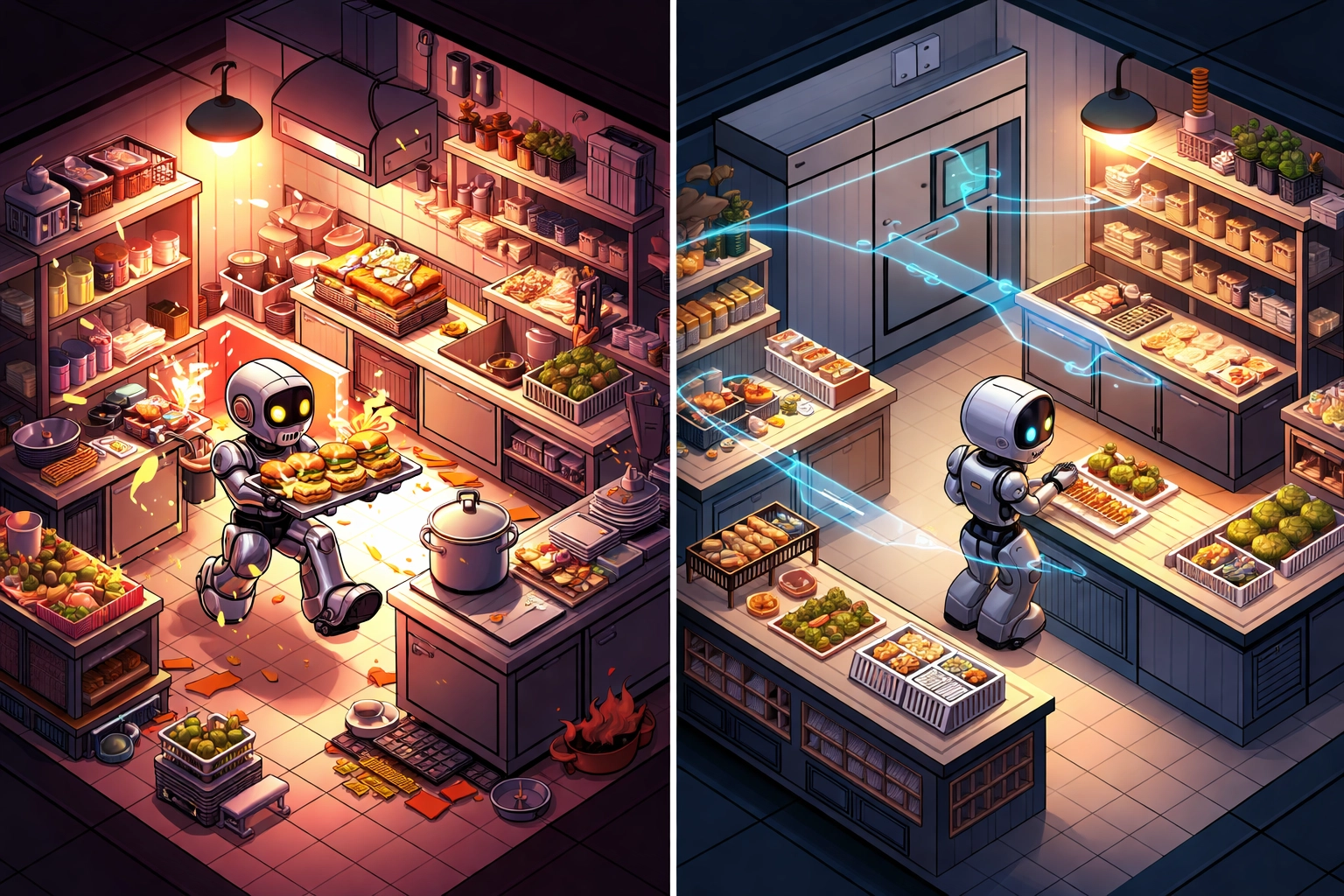
One of these is a gimmick. The other is a margin-saving machine.
Why Your BOH Is Now Smarter Than Your Best Prep Cook
Before anyone gets offended, I'm not saying your prep cook isn't a rockstar. Maria has been with you for six years, she can julienne carrots in her sleep, and she somehow always knows when you're running low on shallots.
But here's what Maria can't do: process 47,000 data points in 0.3 seconds to forecast that you'll need 23% more chicken thighs on Saturday because weather data shows a cold front moving in, your POS data shows a spike in comfort food orders during temperature drops, and Instagram just recommended your hot chicken sandwich to 15,000 local users.
That's not a knock on Maria. That's just math.
According to QSR Web, today's back-of-house AI systems can forecast sales down to the SKU, location, and hour, automatically adjusting prep lists, reordering inventory, and flagging menu items that are quietly bleeding your margins dry.
Meanwhile, Maria is working off yesterday's sales and vibes. (Respectfully, Maria's vibes are immaculate. But vibes don't scale.)
The Tuesday Night Inventory Nightmare (We've All Lived It)
Let me paint you a picture:
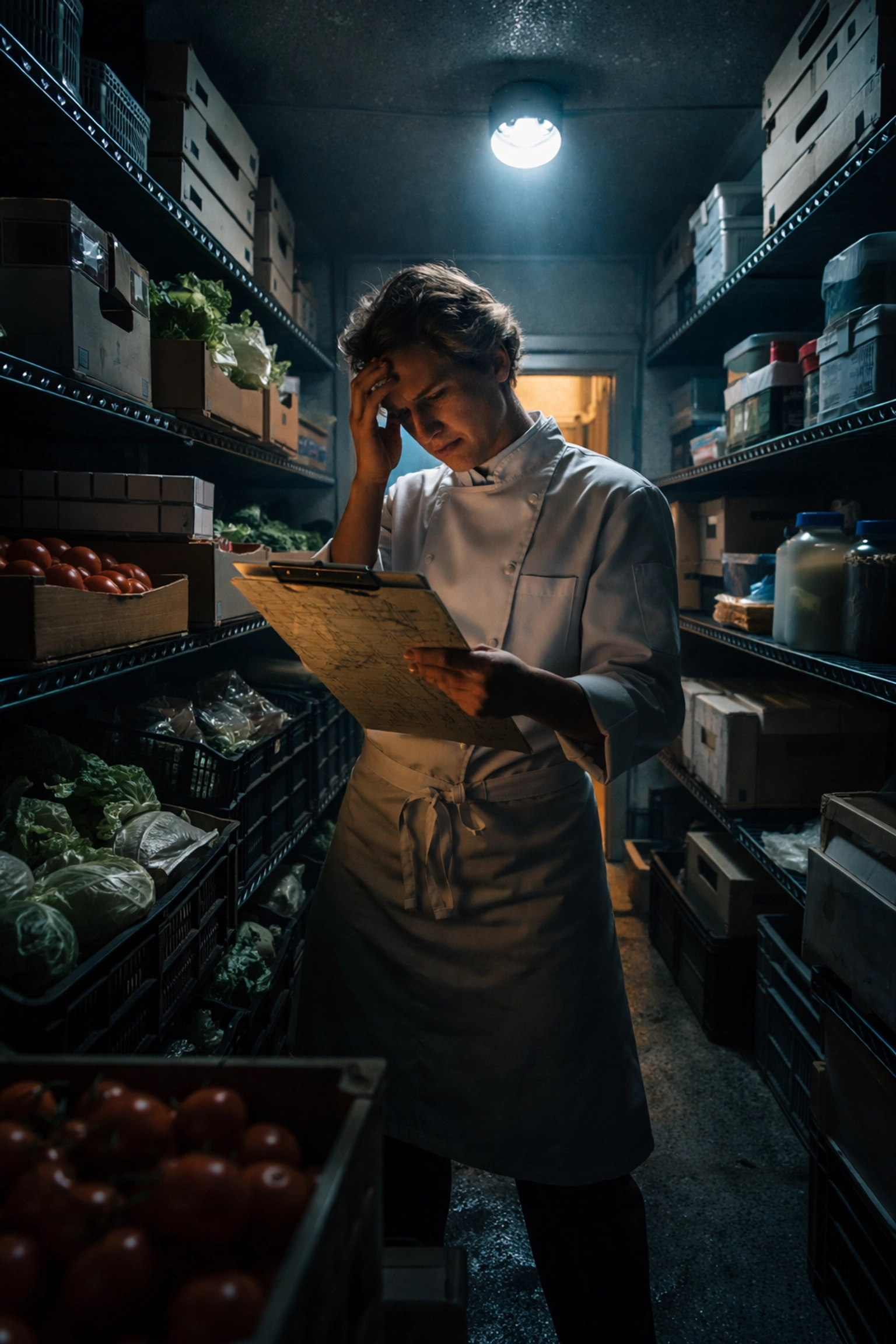
It's 10:47 PM on a Tuesday. You're standing in the walk-in with a clipboard (yes, a clipboard in 2026, I'm not judging, but also I am), counting cases of romaine hearts while your closing cook asks if they can leave early because their Uber is already outside.
You're pretty sure you had 14 cases this morning. Now you count 11. Or wait, is that 12? Did someone move the butter? Why is there an open container of ranch just… sitting there?
Your manager texts you asking about the Wednesday order. You haven't started it. You won't finish counting until 11:30. The Sysco deadline is midnight.
This is operational chaos. And it costs you money every single week.
Now imagine this instead: Your inventory system already knows what you have (because it's tracking sales in real-time, cross-referencing deliveries, and flagging discrepancies automatically). It's already drafted Wednesday's order based on projected sales, current stock levels, and your par settings. Your GM reviewed and approved it in 4 minutes on her phone while waiting for her latte.
That's not sci-fi. That's invisible AI in action.
Labor Forecasting That Doesn't Require a PhD in Spreadsheets
Remember when "labor optimization" meant your GM staring at last year's schedule and hoping for the best? Or worse, scheduling based on "who asked for hours" rather than "when we actually need humans"?
Modern AI-powered scheduling systems are doing something revolutionary: they're actually using data.
These agentic systems analyze historical sales patterns, local events, weather forecasts, and even social media buzz to predict exactly how many bodies you need, and when. When that concert gets announced or a heat wave rolls in, the system automatically suggests schedule adjustments.
The result? According to industry data from Nation's Restaurant News, restaurants using intelligent labor forecasting are seeing labor cost reductions of 3-7% without cutting service quality. In an industry where labor runs near 80% annual turnover, that's not a nice-to-have. That's survival.
The Real Win: Getting Managers Back on the Floor
Here's the part that gets me genuinely excited (and yes, I'm the kind of person who gets excited about operational efficiency, don't @ me).
When you automate the soul-crushing administrative tasks, inventory counting, order building, schedule optimization, waste tracking, you suddenly have something incredibly valuable: managers who can actually manage.

I'm talking about GMs who can walk the floor during a Saturday rush instead of hiding in the office with Excel. Managers who can greet regulars by name because they're not buried in food cost calculations. Leaders who can actually lead instead of playing data entry specialist.
In what everyone's calling the "Me-Me-Me Economy," guests expect hyper-personalization. They want to feel seen, known, remembered. You know what doesn't accomplish that? Your best manager being trapped in the back office crunching numbers until 2 AM.
Invisible AI handles the backend so your humans can handle the humanity. That's the whole point.
But Wait, Will This Replace My Team?
Short answer: No.
Longer answer: The point of invisible AI isn't to eliminate jobs. It's to eliminate the worst parts of existing jobs. Nobody got into hospitality because they love counting inventory or building schedules in a clunky interface. They got into it because they love food, people, and creating experiences.
Good BOH technology doesn't replace your prep cook: it makes your prep cook more effective by giving them accurate prep lists that don't require guesswork. It doesn't replace your manager: it frees your manager from administrative prison.
The restaurants winning in 2026 understand that technology and humanity aren't opposites. They're multipliers.
The Bottom Line (Literally)
Look, I know "invest in back-of-house AI" doesn't sound as sexy as "look at our cool robot." But you know what IS sexy?
- Lower food costs because you're not over-ordering based on hunches
- Optimized labor because you're staffing based on data, not desperation
- Higher margins because your menu is automatically adjusted for profitability
- Better guest experiences because your managers are actually present
- Less Tuesday night chaos (honestly, this alone is worth it)
The invisible AI revolution isn't about replacing the soul of hospitality. It's about protecting it: by handling the operational complexity that's been drowning operators for decades.
Your BOH is getting smarter. And that's not a threat to your team. It's a gift to them.
Now go give Maria a raise. She's still a rockstar: she just has better tools now.
#RestaurantTech #InvisibleAI #HospitalityInnovation #BackOfHouse #RestaurantManagement #RestaurantOperations #FoodCostControl #LaborOptimization #RestaurantAI #BOHTech
Keywords: invisible AI restaurants, back of house technology, restaurant inventory management AI, labor forecasting restaurants, restaurant margin control, BOH automation, restaurant tech 2026, hospitality AI solutions, restaurant operations software, intelligent scheduling restaurants
Meta Description: Discover how invisible AI is transforming restaurant back-of-house operations in 2026: from inventory management to labor forecasting: while freeing managers to focus on what matters: the guest experience.