

Let's talk about the elephant in the dining room, or rather, the $18 paper bag in the drive-thru lane.
You know the feeling. You pull up to your favorite fast-food joint, thinking you'll grab a quick combo meal, and suddenly you're staring at a price that would've bought you a full sit-down dinner just three years ago. With actual silverware. And a human being who refills your drink without judging you.
Welcome to 2026, where the restaurant industry just pulled off the most unexpected plot twist since that time someone put pineapple on pizza and survived.
When "Fast" Food Became "Expensive" Food
Here's the absurdity we're living in: According to recent Bank of America Global Research, quick-service restaurant (QSR) prices have climbed so aggressively that consumers are literally choosing casual dining for comparable, or even lower, prices.
Let me say that again for the folks in the back: The burger in a bag now costs more than the burger on a plate with a side salad and a smile.
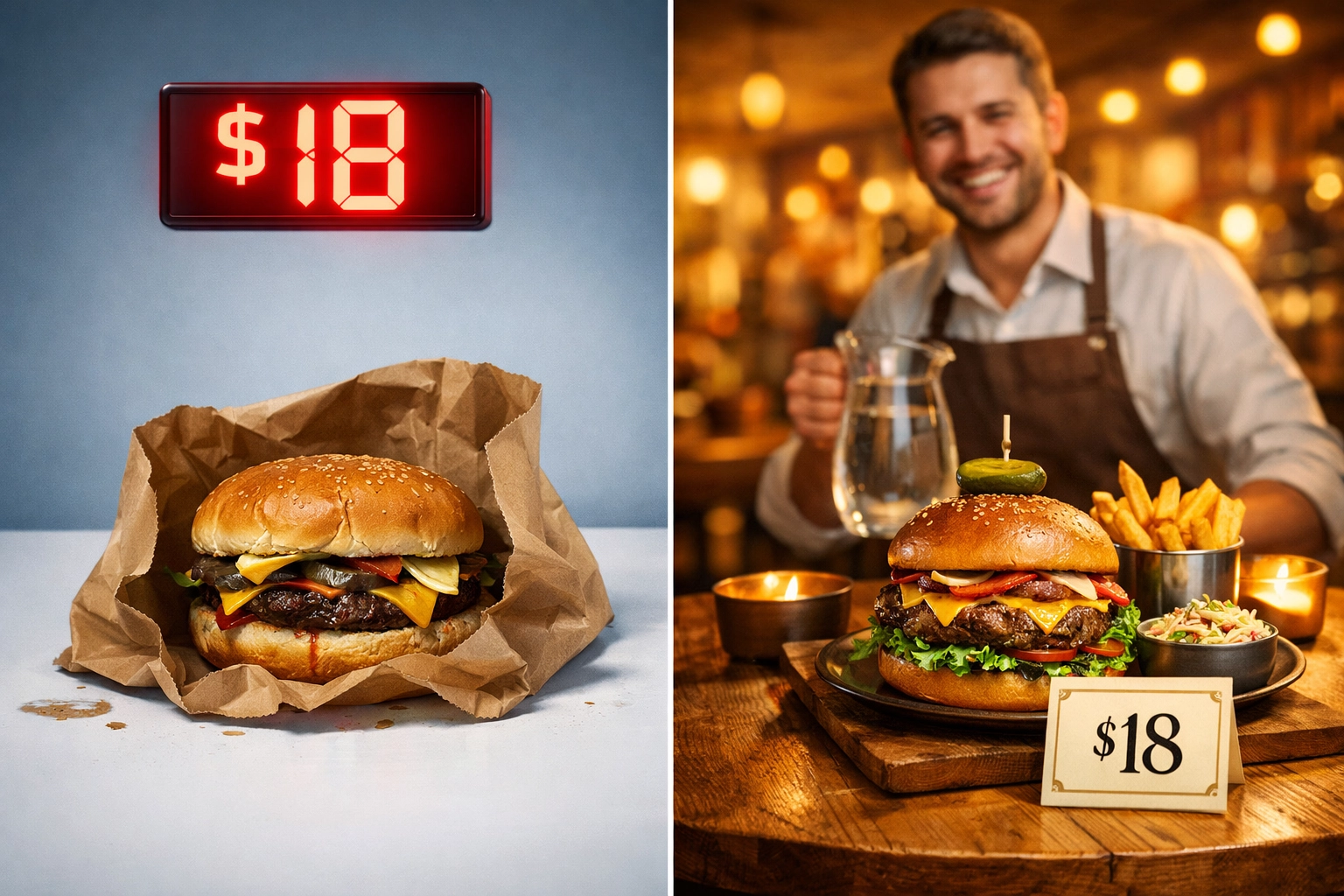
It's like we've entered some bizarre alternate universe where "convenience" comes with a luxury tax, and "sitting down for 45 minutes" is somehow the budget-friendly option. (Spoiler alert: This is not the timeline anyone predicted in 2019.)
The economics are wild. QSR operators, squeezed by labor costs, ingredient inflation, and real estate pressures, kept nudging prices up incrementally. One dollar here, fifty cents there. Nobody noticed… until everybody noticed. Suddenly, that combo meal that used to be $7.99 is pushing $18, and consumers are doing the math faster than you can say "Would you like fries with that?"
The Casual Dining Renaissance (With a Reality Check)
So casual dining is having its moment, right? Well… sort of.
According to Nation's Restaurant News, chains like Chili's, Applebee's, IHOP, First Watch, and Texas Roadhouse absolutely crushed it in 2025. They figured out the magic formula: value that goes beyond just price. They improved the actual dining experience, opened restaurants in second-generation spaces (translation: they swooped into locations where competitors failed and did it better), and remembered that people actually like being treated like humans.
But here's the nuance nobody wants to talk about: While some casual brands are thriving, the segment overall is still navigating choppy waters. We saw bankruptcies, closures, and consolidation across brands like Bar Louie, Pinstripes, Razzoo's Cajun Cafe, and Hooters. Experts are predicting "overall softening of performance in casual dining in 2026" due to economic headwinds and tough year-over-year comparisons.
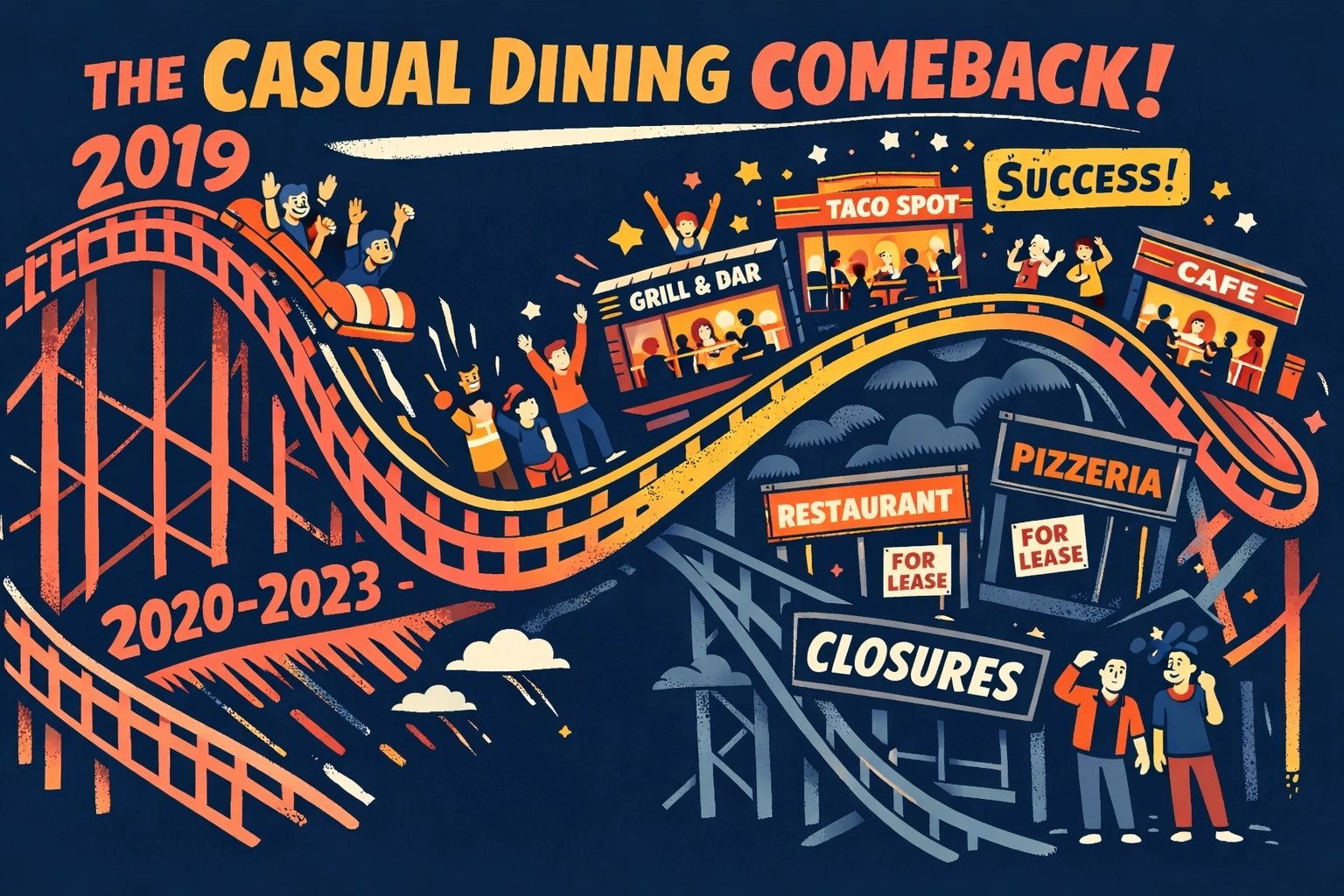
Translation? The winners are winning BIG, but the losers are closing locations faster than you can say "unlimited breadsticks."
The difference? The successful operators aren't just slapping "value menu" stickers on their windows and hoping for the best. They're investing in experience, the kind that makes customers feel like they got more than just food for their money. They got a moment. A vibe. A reason to post about it on Instagram before their appetizer arrives.
Tech Isn't Just Shiny, It's Survival
Now let's talk about the secret sauce (and I'm not talking about the kind that comes in packets).
According to the TouchBistro 2026 State of Restaurants Report, independent restaurant operators are seeing double-digit profit margins return for the first time in years. How? Technology isn't just the "nice-to-have" gadget anymore, it's the survival kit.
We're talking about 85% of restaurant operators expressing optimism about AI and automation. Not in a "robots are taking our jobs" dystopian way, but in a "holy cow, this thing just optimized my labor schedule and saved me 15 hours a week" kind of way.
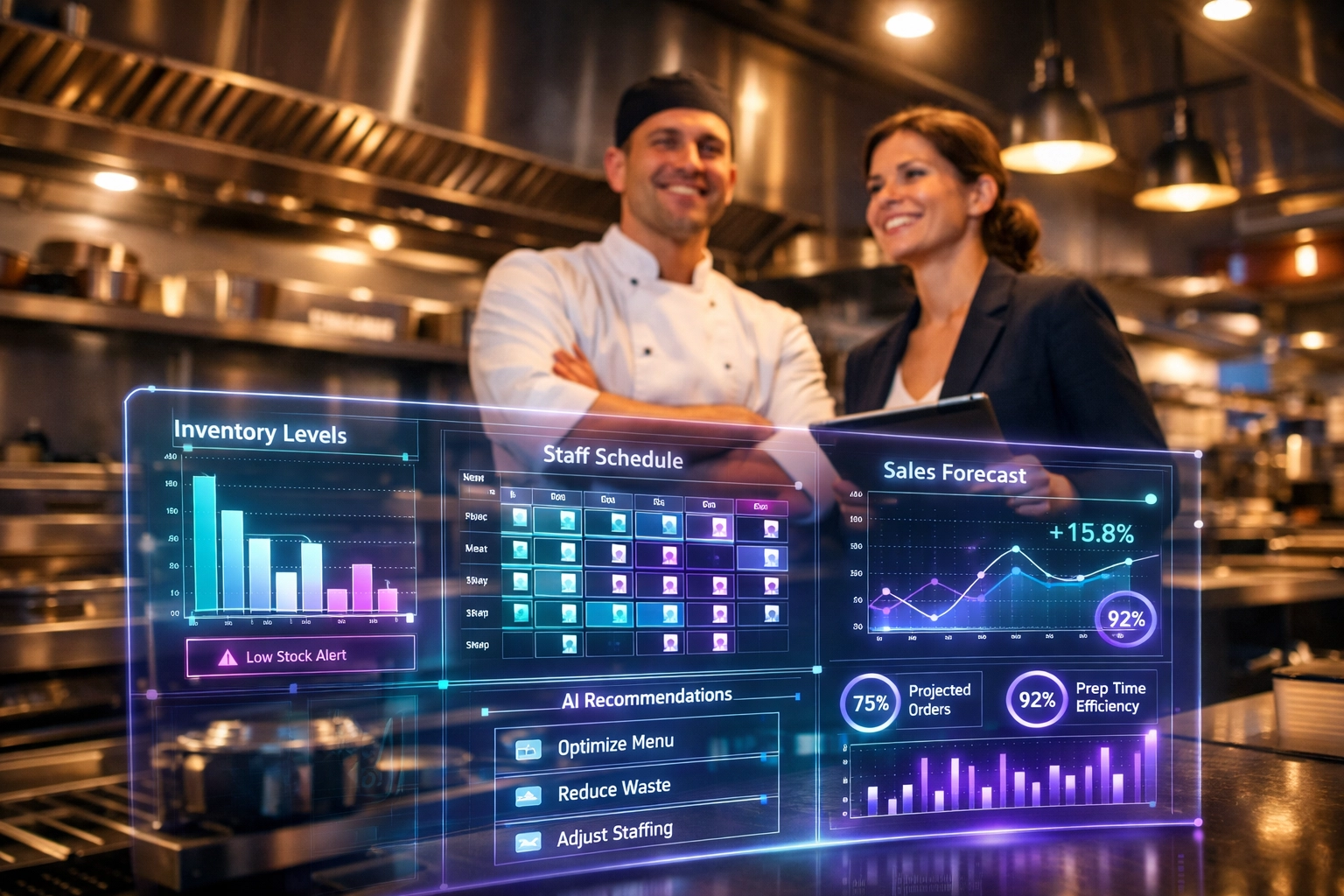
Here's what's happening behind the scenes:
- AI-powered inventory management that predicts demand so accurately you're not throwing away $2,000 in spoiled ingredients every week
- Smart scheduling systems that actually understand your rush patterns (and don't schedule your best server on their day off during Valentine's Day dinner rush)
- Dynamic pricing engines that adjust based on real-time demand without making customers feel gouged
- Predictive ordering systems that know your regulars better than they know themselves
But here's the catch: Technology only works when it feels like hospitality, not a spreadsheet with buttons.
The Maturation Moment: Picky Consumers Want Personality
2026 is what I'm calling the "Maturation Moment" of the restaurant industry. Consumers have evolved. They're not just hungry, they're discerning. They want value, sure, but they want it wrapped in an experience that feels intentional, authentic, and worth their time.
Think about it: Your customers survived a pandemic, navigated inflation, juggled remote work chaos, and watched their favorite neighborhood spots close. They're done with mediocrity. They don't want a transaction; they want a relationship.
This is where the magic happens, or where brands completely miss the boat.
Successful restaurants in 2026 are the ones that understand their customers aren't just looking for the cheapest option. They're looking for the best value, and value includes everything from the warmth of the greeting to the speed of service to whether the bathroom is clean. (Yes, we're still talking about bathrooms. They matter more than your Instagram strategy. Fight me.)
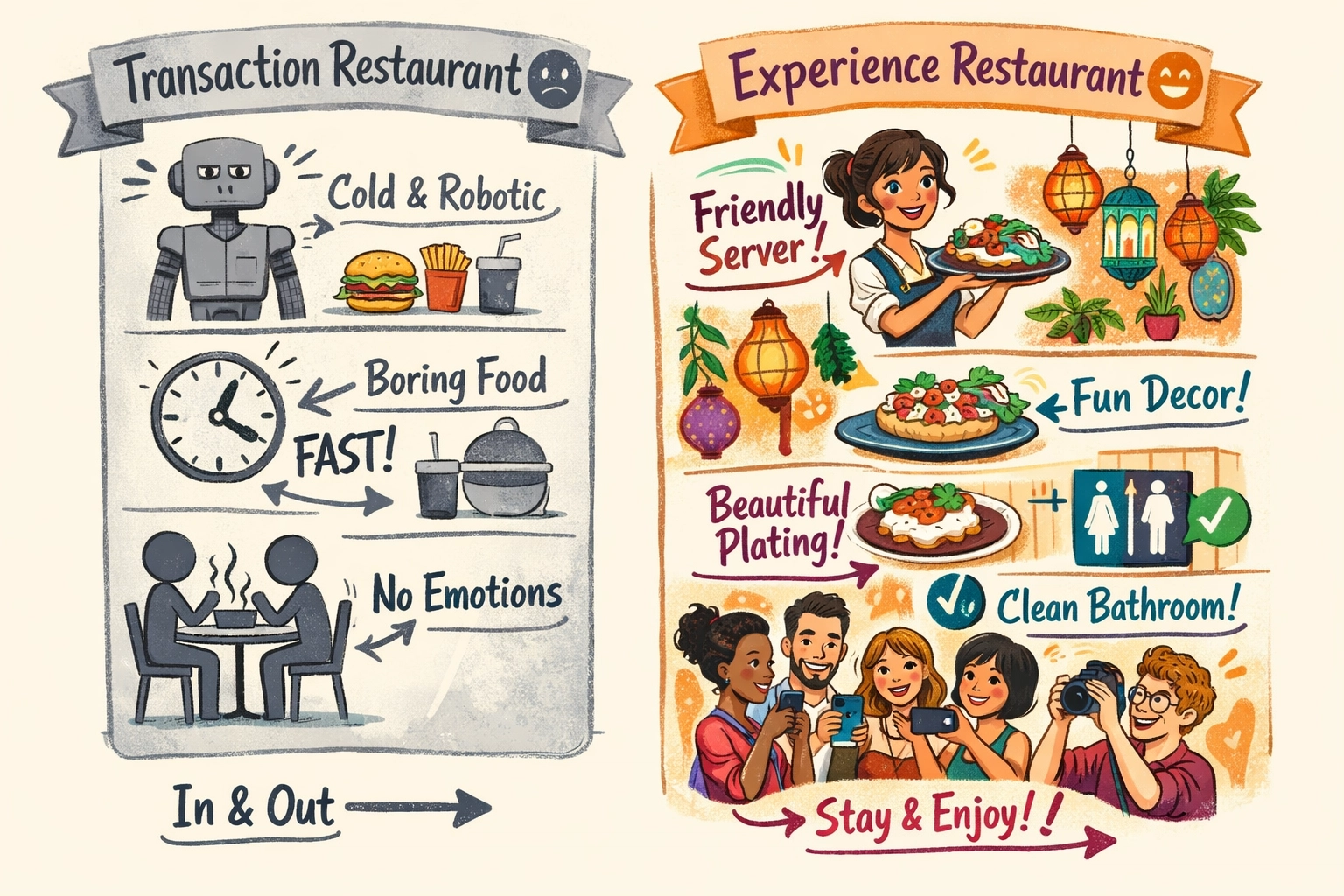
The restaurants winning right now are the ones that have personality. They know their brand voice, they understand their community, and they're not trying to be everything to everyone. They're just being themselves, really well, consistently.
Bridging the Gap: Engineering Meets Executive (Without the Jargon)
Here's where I need to talk shop for a minute: because this is where most restaurant concepts fall apart.
You've got brilliant engineers building incredible tech solutions. You've got visionary executives with big ideas about guest experience. But somewhere between the server room and the dining room, things get lost in translation. The tech becomes too complicated. The vision becomes too vague. And operators are left standing in the middle, holding a tablet they don't understand and a P&L that's bleeding red.
At Kuypers Creative, this is literally the problem we solve. We bridge that "Engineering vs. Executive" gap so technology feels like hospitality, not homework. We help restaurant brands implement systems that actually work with their workflows: not against them.
Because here's the truth: The most sophisticated AI in the world means nothing if your managers can't figure out how to use it by day three, or if it makes the guest experience feel robotic instead of refined.
The brands thriving in 2026 are the ones that understand tech should amplify the human touch, not replace it. They're using automation to handle the boring, repetitive stuff so their team can focus on creating moments that matter.
The Bottom Line (Literally)
So what's the takeaway from this Great Casual Flip of 2026?
Fast food isn't dying: it's evolving. Many QSR brands are launching fast-casual concepts (IHOP's Flip'd, Buffalo Wild Wings GO) and adopting loyalty programs that would make tech companies jealous. The smartest operators in every segment are figuring out how to blend speed, value, and experience.
But the playing field has fundamentally shifted. Price alone is no longer a competitive advantage. When your drive-thru combo costs the same as a sit-down meal with actual napkins (the cloth kind), consumers are going to choose the option that makes them feel valued.
The winners in this new landscape? They're the brands that understand technology is a tool for hospitality, not a replacement for it. They're investing in experiences that go beyond the plate. And they're building operations that are profitable and sustainable: because double-digit margins don't mean anything if you burn out your team getting there.
If you're staring at your own pricing strategy right now, wondering if you're the $18 burger in the bag or the $18 experience on the plate, you're asking the right question. The answer determines whether you're leading the flip: or getting flipped.
Keywords & Metadata:
Primary Keywords: casual dining 2026, fast food pricing, restaurant industry trends, QSR vs casual dining, restaurant technology
Long-tail Keywords: why is fast food so expensive in 2026, casual dining comeback strategies, AI in restaurant operations, restaurant profit margins 2026, value dining experience strategies
Meta Description: Fast food prices have soared so high that casual dining is becoming the budget-friendly option. Discover why the $18 combo meal is losing to the sit-down experience in 2026.
#RestaurantTrends2026 #CasualDining #RestaurantTech #HospitalityStrategy #KuypersCreative #FoodEconomy