

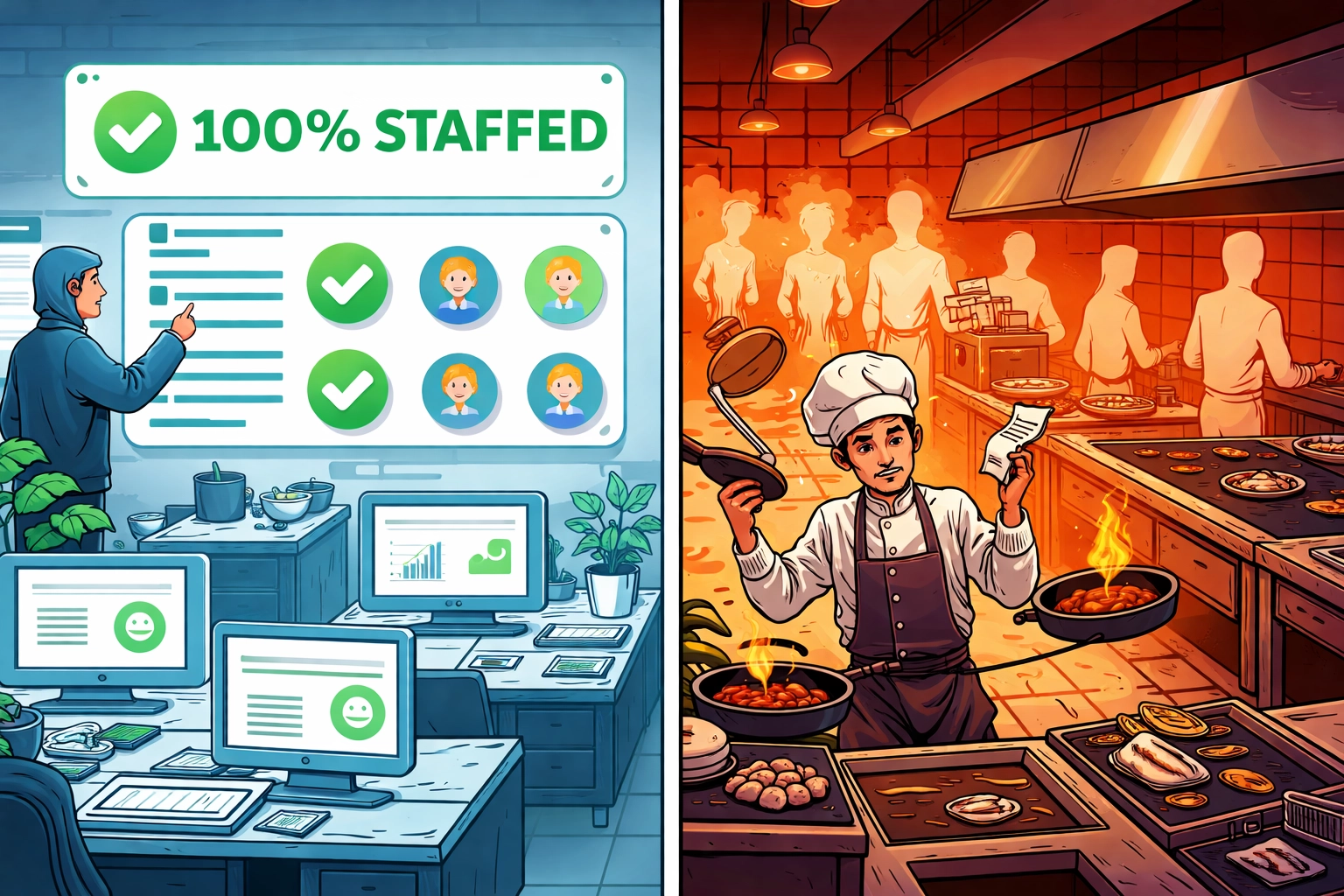
Picture this: It's 7:47 PM on a Friday. The ticket printer is screaming like a possessed fax machine from 1997. You've got 47 covers on the books, a line cook who called out "sick" (translation: he's at his other job), and your brand-new HR software is cheerfully informing you that you're fully staffed.
Cool. Cool cool cool.
Welcome to what I'm calling the 2026 Labor Paradox, the maddening, soul-crushing gap between what your technology thinks is happening and the actual chaos unfolding in your kitchen right now.
The Ghost Hiring Problem (It's Not Just Spooky, It's Expensive)
Here's the uncomfortable truth that nobody wants to talk about at industry conferences: your automated hiring systems are lying to you. Not maliciously, mind you. They're just… optimistically confused.
See, most restaurant HR platforms were built to solve a 2019 problem: too many applicants, not enough time to sort through them. So they got really, really good at filtering. Keywords. Experience thresholds. Availability checkboxes. Automated screening calls that sound like they were recorded by a robot having an existential crisis.
The result? A beautiful, pristine applicant tracking system that shows you've processed 200 applications this month. What it doesn't show you is that:
- 47 of those applicants never responded to the follow-up
- 83 were filtered out because they didn't check the "open availability" box (spoiler: nobody has open availability anymore)
- 31 ghosted after the first interview
- And the 12 people you actually hired? Three have already quit
This is ghost hiring. Your system says you're recruiting. Your kitchen says otherwise.
According to recent industry research, a whopping 54% of restaurant operators identified a shrinking labor pool as their biggest concern heading into 2026. That's not a hiring problem, that's a math problem. There literally aren't enough qualified humans to fill every open kitchen position in America right now.
Why Your "Full Staff" Is Actually a Skeleton Crew
Let's do some quick (and slightly depressing) math, shall we?
Your POS system says you have 14 back-of-house employees. Your HR platform agrees. Payroll confirms it. Everyone's high-fiving about headcount.
But here's what those numbers don't capture:
- Reliability rate: Of those 14, how many actually show up for every scheduled shift?
- Cross-training gaps: Can your prep cook jump on sauté when things get wild? (Narrator: They cannot.)
- Burnout factor: Three of your best people are working 55+ hours a week and plotting their escape to literally any other industry
- The "second job" shuffle: At least four of your team members have other gigs, and guess which one they'll call out of when there's a conflict?
Traditional HR metrics count bodies on payroll. What you actually need is consistent, trained staff capable of specialized work.
This is why your Friday nights feel like a fever dream even though, on paper, you're "fully staffed." You're measuring the wrong things.
The Burnout Spiral (Or: How to Lose Your Best People in 90 Days)
Here's where it gets really fun (read: absolutely brutal).
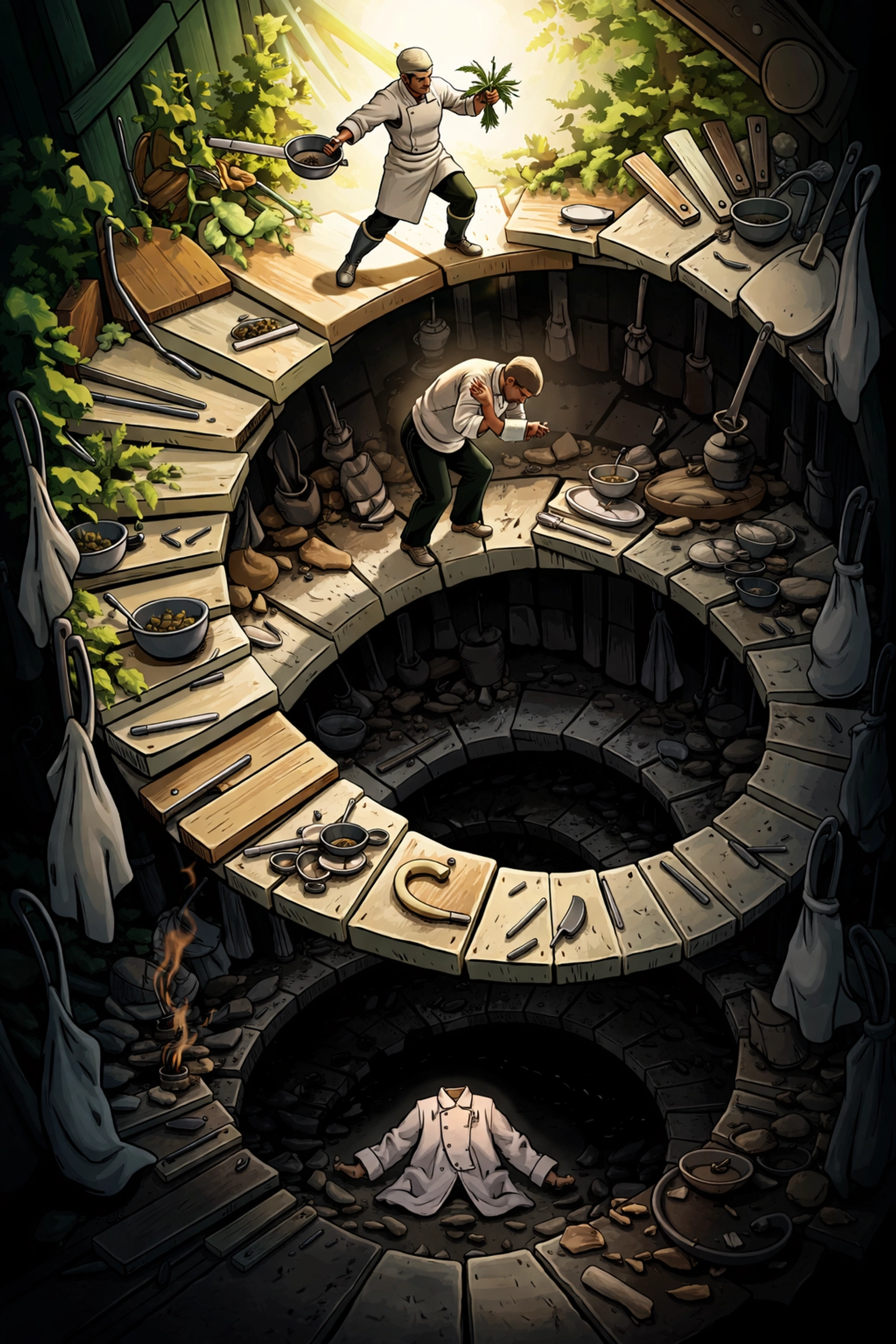
When you're short-staffed, your best people pick up the slack. They cover shifts. They stay late. They train the new hires who will probably ghost you in two weeks anyway.
And then, surprise!, they burn out and leave.
Now you're even more short-staffed, which means your remaining best people have to work harder, which means…
You see where this is going. It's a death spiral wearing a chef's coat.
The National Restaurant Association has been tracking this pattern for years now, and the data is clear: labor efficiency, training, and scheduling represent the top areas where operators believe AI could address shortages, with about 40% of surveyed operators pointing to these as priority areas.
Translation? The industry knows the problem isn't finding warm bodies. It's deploying existing staff more effectively so they don't want to throw their aprons in your face and walk out mid-service.
Real Solutions for Real Kitchens (Not Just Fancy Tech Promises)
Okay, enough doom and gloom. Let's talk about what actually works.
1. Fix Your Filters (Before They Filter Out Your Future Star)
That "5+ years experience required" checkbox? It's costing you excellent candidates who have 3 years of intense, high-volume experience that's worth more than 7 years at a sleepy lunch counter.
Action step: Audit your automated screening criteria. Remove arbitrary experience thresholds. Add skills-based assessments instead. Someone who can break down a chicken and stay calm during a rush is worth their weight in gold, regardless of how long they've technically been in the industry.
2. Measure What Actually Matters
Stop celebrating headcount. Start tracking:
- Show-up rate (scheduled shifts vs. actually worked)
- Retention at 30/60/90 days (this is where you're hemorrhaging people)
- Cross-training completion (how versatile is your crew, really?)
- Overtime hours by employee (your burnout early warning system)
If your POS and scheduling systems can't give you this data easily, it's time for an upgrade.
3. Use AI Where It Actually Helps
Here's the thing about restaurant tech: most of it is designed to solve problems you don't have while ignoring the ones that keep you up at night.
Smart AI applications for labor:
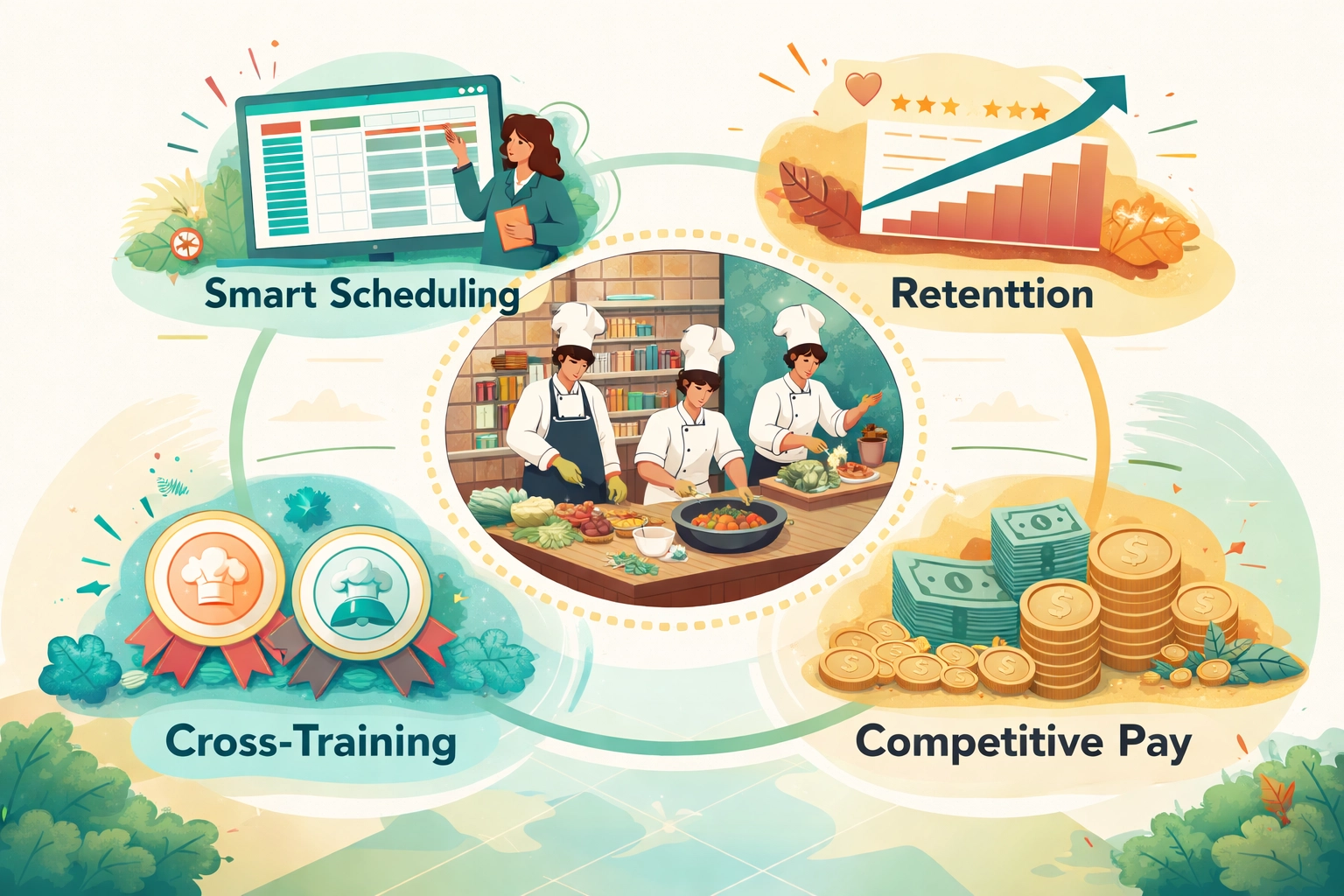
- Predictive scheduling that accounts for actual demand patterns (not just last year's numbers)
- Automated shift-swap systems that don't require you to play group-text mediator
- Skills tracking that helps you identify cross-training opportunities
- Sentiment analysis on employee feedback (yes, this is a thing, and yes, it works)
Dumb AI applications for labor:
- Chatbots that interview candidates and somehow make the experience even more impersonal
- Automated rejection emails that go out before a human ever sees the application
- Any system that promises to "eliminate the human element" (in hospitality: THE IRONY)
4. Pay People Like You Want Them to Stay
I know, I know. Margins are tight. Food costs are up. Your landlord is… being a landlord.
But here's the math that matters: the agricultural labor crisis is already forcing 15-20% wage increases that are cascading through supply chains. If your base ingredients cost more because there aren't enough people to harvest them, you can bet your bottom dollar that the same dynamic applies to the people cooking them.
The operators who figure out competitive compensation (and I mean actually competitive, not "competitive in 2019 dollars") are the ones who'll have functioning kitchens in 2027.
5. Create a Culture Worth Staying For
This is the part that doesn't fit neatly into a software dashboard, but it matters more than anything else.
Your best line cook isn't looking for a ping-pong table and free kombucha. They want:
- Predictable schedules (or at least predictable unpredictability)
- Respect from management
- A path to growth (even if it's lateral: lead line, then sous, etc.)
- To not feel like they're drowning every single service
Check out our thoughts on team leadership and culture for more on this: because no amount of tech will save you if your kitchen culture is toxic.
The Bottom Line (Besides Your Actual Bottom Line)
The 2026 Labor Paradox is real, and it's not going away just because your HR dashboard shows green checkmarks.
The restaurants that thrive will be the ones that:
- Question their automated systems instead of trusting them blindly
- Measure operational reality, not just payroll headcount
- Use technology to support humans, not replace human judgment
- Invest in retention like their business depends on it (because it does)
Your Friday night chaos? It's fixable. But not by hiring more ghosts.
Ready to stop the madness and build a team that actually shows up? Let's talk strategy.
#RestaurantLabor #KitchenCulture #RestaurantTech #HospitalityHiring #RestaurantManagement #BOH #KitchenLife #HospitalityIndustry #RestaurantOwner #WorkforceDevelopment
Keywords: restaurant labor shortage 2026, ghost hiring restaurants, kitchen staff retention, restaurant HR technology, hospitality workforce crisis, restaurant employee burnout, AI in restaurant hiring, back of house staffing, restaurant scheduling software, cook shortage solutions
Meta Description: Your HR app says you're fully staffed. Your Friday night says otherwise. Explore the 2026 restaurant labor paradox and discover real solutions to fix ghost hiring, reduce burnout, and actually keep your best kitchen talent.