
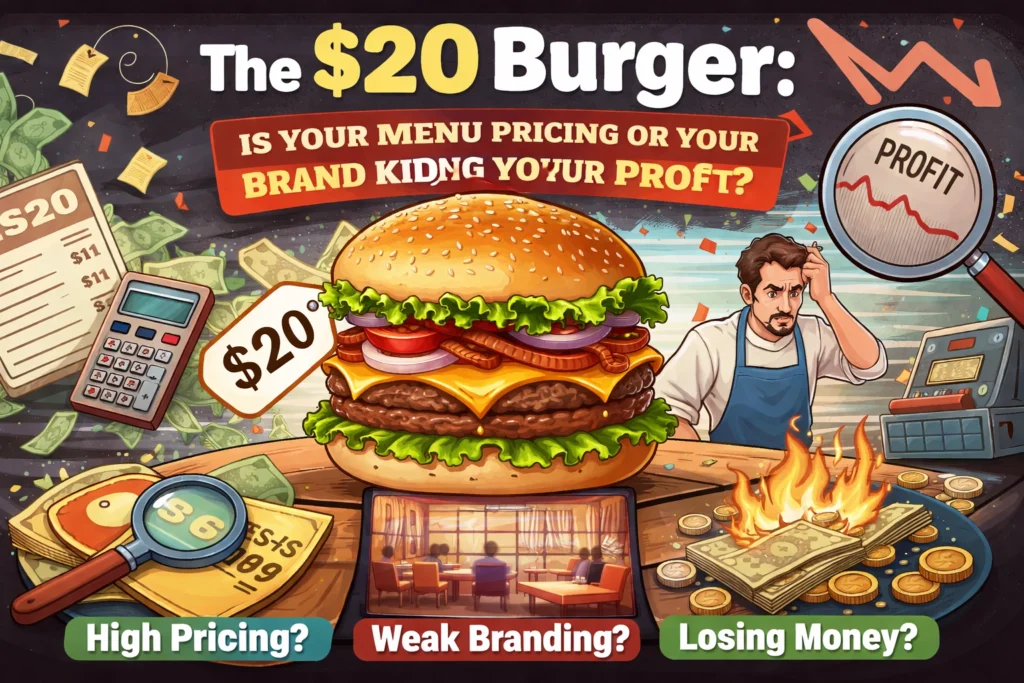
Let's talk about the elephant in the dining room. Actually, scratch that, let's talk about the $20 burger on your menu that's giving your guests sticker shock and giving you heartburn at 2 AM.
Here's the thing: it's 2026, and somewhere between the pandemic, inflation doing its best rollercoaster impression, and your landlord deciding your rent should match Manhattan prices… the humble burger crossed the $20 threshold. And now everyone's freaking out.
But here's the real question nobody's asking: Is your pricing the problem, or is your brand failing to justify it?
(Spoiler alert: It's probably both. But don't panic, we're going to fix this.)
The Great Burger Price Awakening of 2026
Remember when a $15 burger felt expensive? That was adorable. Now we're watching guests do actual math at the table, squinting at menus like they're decoding ancient scrolls.
The reality is brutal: food costs have jumped significantly, labor costs are through the roof, and if you're in any major metro area, your rent probably increased faster than your sales. According to Toast's restaurant data, the average restaurant profit margin hovers around a razor-thin 3-5%.
So yeah, that $20 burger isn't greed, it's survival math.
But here's where it gets spicy: charging $20 isn't the crime. Charging $20 without giving people a reason to feel good about it? That's the profit-killer.
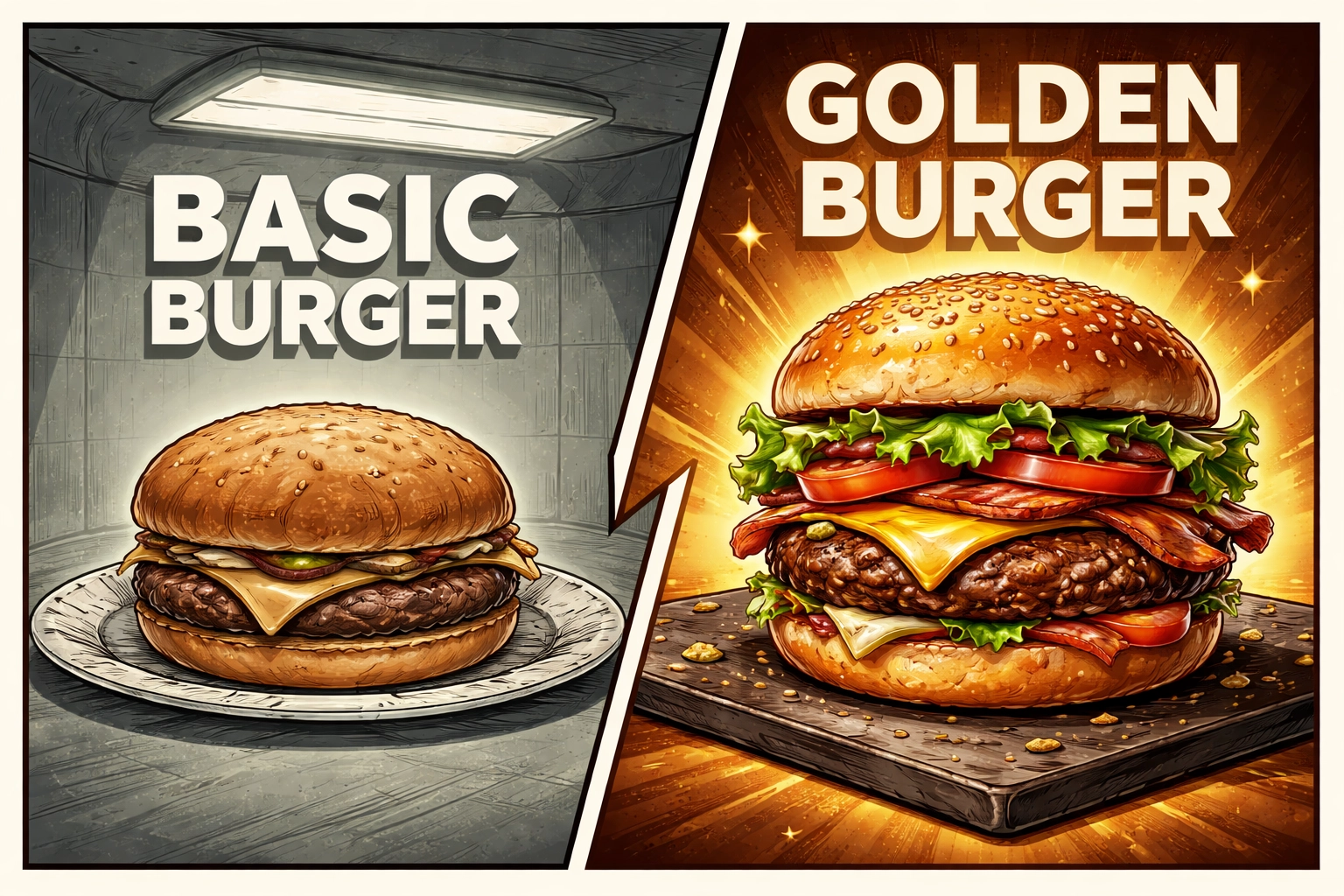
Welcome to the "Experience Tax" Era
Let's introduce a concept that's going to change how you think about your menu: The Experience Tax.
See, pricing in 2026 isn't just about food cost percentages and markups anymore (though we'll get to those numbers in a sec). It's about the entire package you're selling. The vibe. The story. The Instagram moment. The feeling someone gets when they hand over a twenty for ground beef and toppings.
Here's the breakdown:
The Old Formula:
Food Cost + Labor + Overhead + Profit Margin = Menu Price
The 2026 Formula:
Food Cost + Labor + Overhead + Profit Margin + Perceived Value = What People Will Actually Pay
That "Perceived Value" piece? That's your brand doing the heavy lifting. And if your brand is weak, unclear, or, heaven forbid, boring, then that $20 burger is going to feel like highway robbery to your guests.
Think about it: an upscale hotel can get away with charging $20 for a burger because when they hand you that leather-bound menu and you're sitting in a gorgeous space with impeccable service, your brain goes, "Yeah, this tracks."
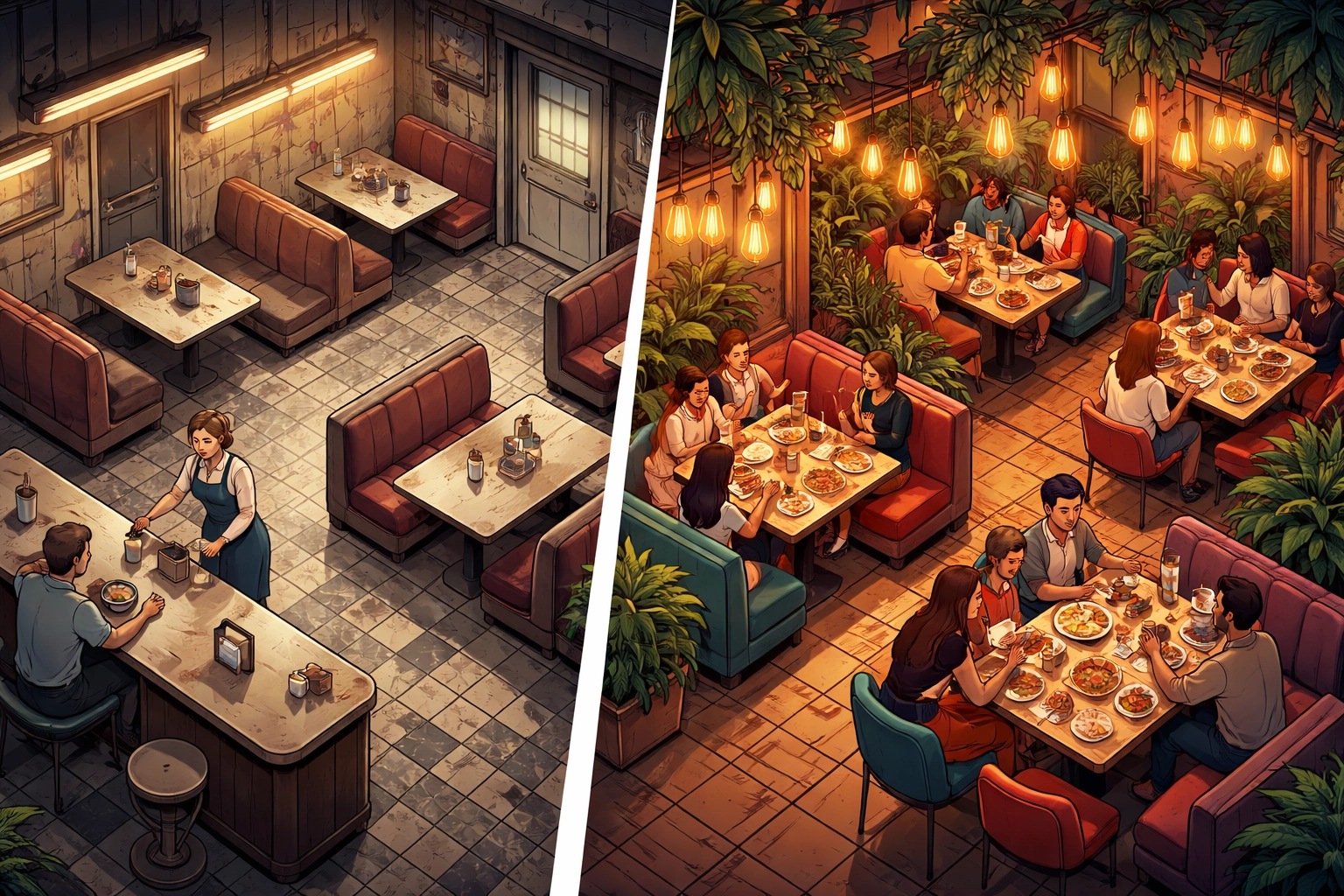
Meanwhile, if you're serving the same burger in a space with flickering fluorescent lights and sticky menus? Your guests are doing mental calculations about how many McDonald's runs that equals.
Let's Talk Numbers (Because Math Doesn't Lie)
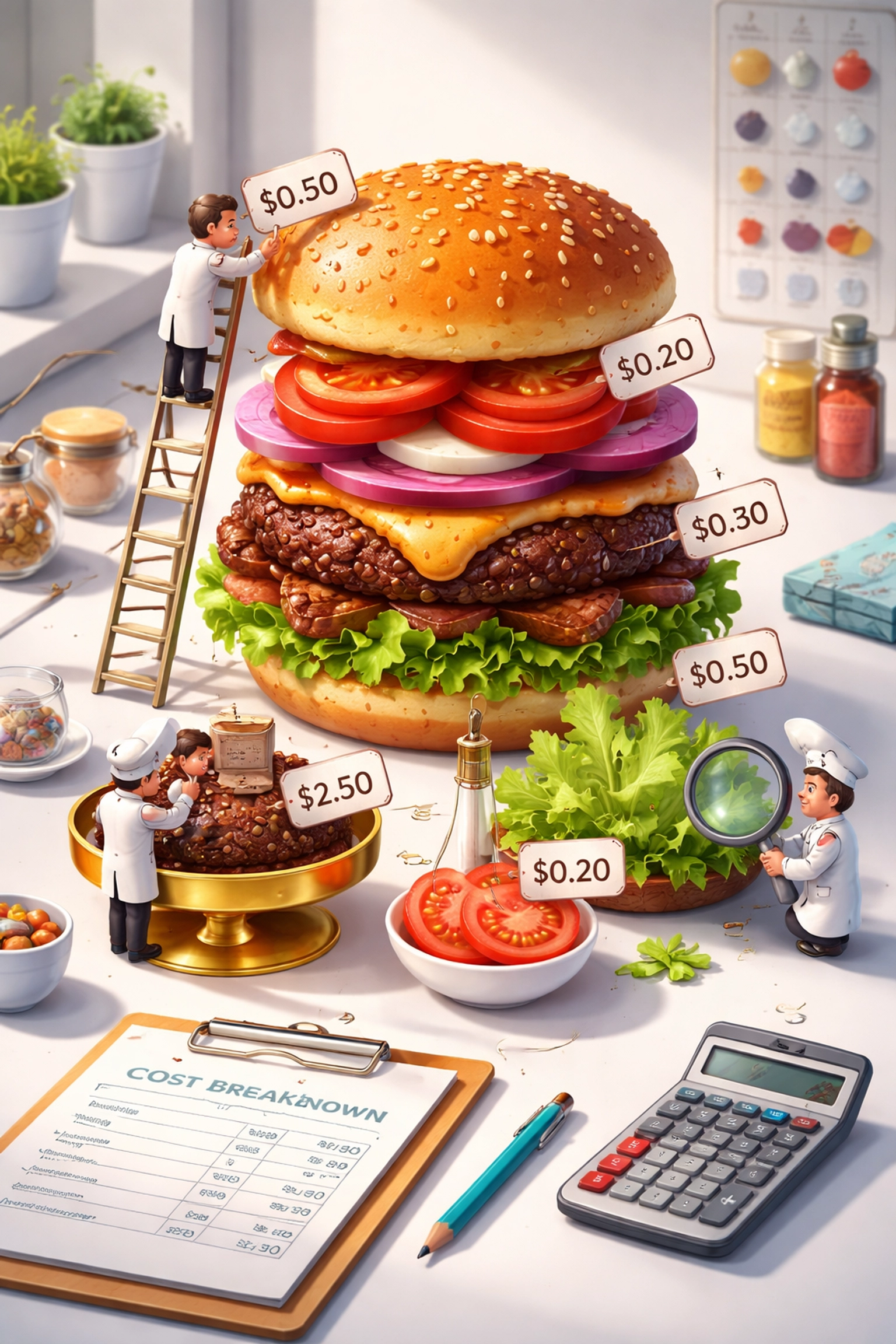
Okay, let's get nerdy for a second. The industry standard food cost percentage sits between 28-35%. If your burger costs you $3.60 to make and you're charging $12, you're running a 30% food cost. Healthy!
But if you bumped that burger to $9 trying to be "competitive"? Now you're at 40% food cost, and congratulations: you've just volunteered to work for free.
Here's the real cost breakdown for that $20 burger in 2026:
| Cost Category | Percentage | Your $20 Burger |
|---|---|---|
| Food Cost | 30% | $6.00 |
| Labor | 30-35% | $6.50 |
| Rent & Overhead | 20-25% | $4.50 |
| Profit (if you're lucky) | 5-10% | $1.50-$2.00 |
| Marketing/Tech/Everything Else | The Rest | Whatever's left |
See that profit line? That's why your accountant drinks.
The point isn't that $20 is too much: it's that $20 might not even be enough if your costs are out of control. But raising prices without addressing brand perception is like putting premium gas in a car with no wheels.
The "Vibe" Has a Price Tag
Here's something they don't teach you in culinary school: atmosphere costs money, and it better be making you money back.
Every design choice, every playlist song, every candle on every table: that's overhead. That's the "cost of vibe." And in 2026, guests expect more vibe than ever. They want the shareable moment. The aesthetic. The experience.
We've talked before about the Appetizer Economy: how strategic small plates and perceived value plays can build loyalty. The same principle applies to your burger (or any entrée).
The question isn't "How much does this burger cost to make?"
The question is "How much experience am I selling alongside this burger?"
If your answer is "not much," then your price ceiling is capped. Period.
The Deadly Sin: Pricing Misalignment
Here's where restaurants absolutely murder their margins: inconsistent pricing that confuses guests.
You cannot: and I cannot stress this enough: have a $4 sandwich sitting on the same menu as a $20 burger. Your guests will spend the entire meal questioning reality. "Why is this sandwich so cheap? Is something wrong with it? Why is the burger so expensive? What's happening here?"
This is what we call pricing misalignment, and it's the silent killer of restaurant profits. It makes every item on your menu look suspicious.
Your menu pricing needs to tell a coherent story. If you're a premium spot, price like a premium spot: across the board. If you're a casual neighborhood joint, embrace that identity fully.
The worst place to be? The mushy middle where your guests can't figure out what you're trying to be.
The "Good-Better-Best" Play
Want a ninja move for that burger? Enter the Good-Better-Best strategy.
Instead of one $20 burger sitting there looking lonely and expensive, offer three:
- The Classic – $16 (your solid, respectable option)
- The Signature – $22 (premium toppings, the "experience")
- The Over-The-Top – $28 (wagyu, truffle aioli, gold leaf if you're feeling chaotic)
Studies show most people choose the middle option. They don't want to seem cheap, but they don't want to go crazy. So your $22 Signature suddenly feels reasonable between a $16 and $28 option.
Boom. You just made that $20+ burger feel like a bargain. Menu engineering is psychological warfare, friends, and you might as well win.
So What's Actually Killing Your Profit?
Let's bring it home. Is your menu pricing killing your profit? Maybe. Is your brand killing your profit? Probably also yes.
The truth is they're dance partners. Premium pricing without premium brand positioning = guest revolt. Strong branding without strategic pricing = you working for free.
Here's your homework:
- Audit your menu for pricing consistency – Does everything tell the same story?
- Calculate your actual food costs – No guessing. Math it out.
- Evaluate your "vibe investment" – Is your atmosphere earning its keep?
- Consider the Good-Better-Best approach – Make your pricing work psychologically.
- Invest in your brand story – Give people a reason to pay premium prices happily.
The $20 burger isn't going away. Costs aren't going down. The restaurants that win in 2026 are the ones that figure out how to make guests excited to pay premium prices: not resentful.
Your brand is the permission slip for your pricing. Make it worth signing.
Need help aligning your pricing strategy with a brand that actually justifies it? Let's talk. Because your margins deserve better than guesswork.
Meta Data
Keywords: Restaurant pricing strategy, menu engineering, hospitality brand value, food cost 2026, restaurant profit margins, menu psychology, brand positioning restaurants
Hashtags: #RestaurantPricing #BrandValue #MenuEngineering #KuypersCreative #RestaurantStrategy #FoodCost2026 #HospitalityBusiness #MenuPsychology