

Let's talk about the silent revenue killer sitting right there in your dining room: time.
Not labor time (though that's its own beast). Not prep time. I'm talking about table time, the minutes ticking away between when one guest's butt leaves the seat and the next one lands in it. In 2026, with inflation still squeezing margins and diners scrutinizing every dollar they spend eating out, those minutes aren't just inconvenient. They're expensive.
Here's the uncomfortable truth: if you're not actively managing your table turns, you're essentially burning money while your competitors pocket it.
The Math That Should Keep You Up at Night
Let's get nerdy for a second (stay with me, this is the fun kind of math).
Say your average check is $45 and you've got 20 tables. If you can shave just 10 minutes off each table turn during a busy dinner service, you're potentially adding one extra turn per table. That's an additional $900 in a single night. Multiply that across a week, a month, a year… and suddenly we're talking about the difference between scraping by and actually building something.
According to recent restaurant industry research, organized seating and reservation systems produce considerable differences in sales. Not marginal. Not incremental. Considerable.
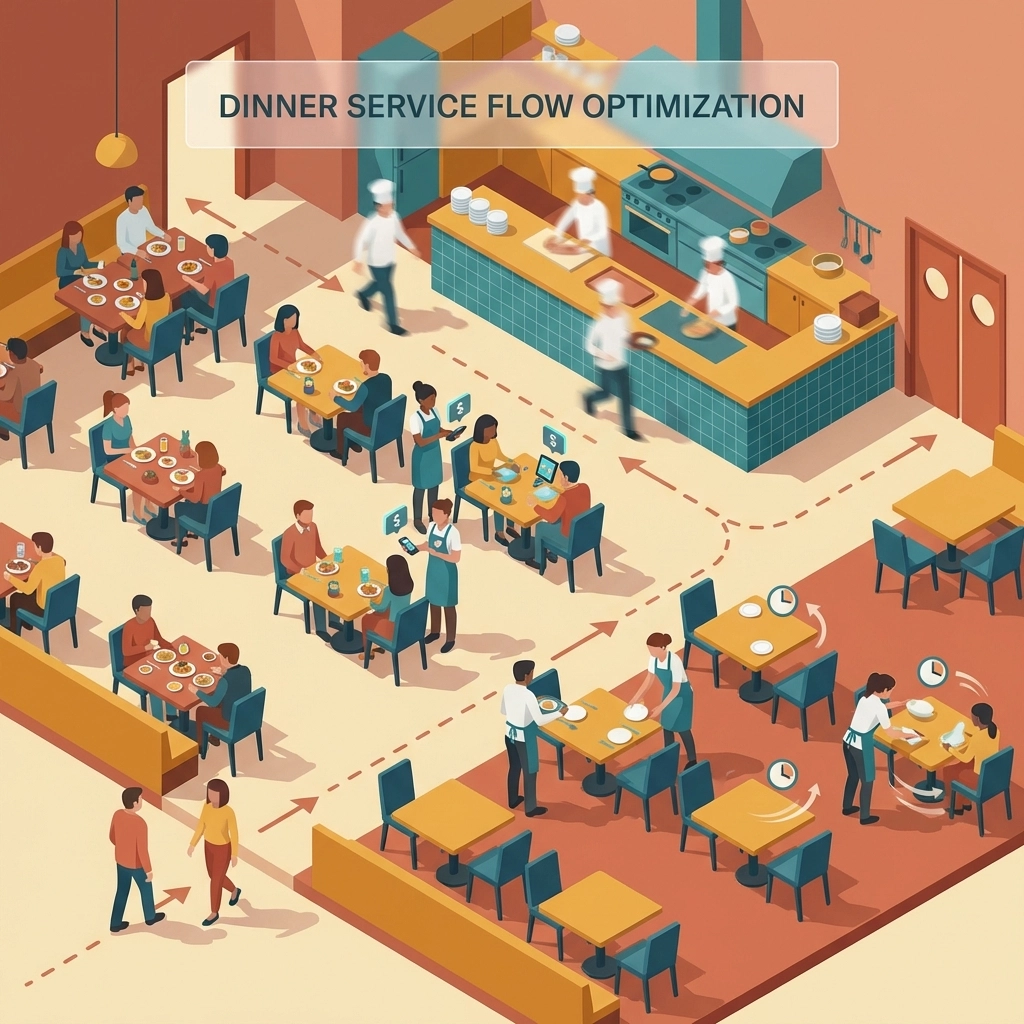
And here's another data point that'll make you rethink your floor plan: Cornell University found that midsize restaurants with dedicated large tables (rather than a bunch of smaller ones you push together) generate the most revenue. Why? Because customers hate waiting for that awkward table-combining dance, and that wait time kills conversion.
The 2026 Reality Check
The U.S. restaurant sector is facing what experts are calling "plateauing growth." Translation: the easy money is gone. Every guest who walks out because your wait time was too long represents a lost opportunity you might not get back.
And let's be honest, today's diners have zero patience. They've got apps showing them every restaurant within a five-mile radius, complete with wait times, reviews, and that little "order ahead" button that lets them skip you entirely.
So the question isn't whether you should optimize table turns. It's whether you can afford not to.
What Smart Operators Are Actually Doing
I've been watching the restaurants that are winning right now, and they're not reinventing the wheel. They're just spinning it faster and smarter.
1. Pay-at-Table Technology (Finally)
Remember when tableside payment felt like a luxury? In 2026, it's table stakes (pun absolutely intended).
Full-service restaurants deploying pay-at-table and handheld payment systems are seeing direct improvements in table turn times. Guests expect tap-to-pay, mobile wallets, and frictionless bill splitting as baseline functionality now. If your server is still walking checks back and forth across the dining room, you're adding 5-10 minutes per table that you'll never get back.
2. Strategic Table Configuration
This one's free, and most operators completely ignore it.
Bright colors, yellow, orange, green, red, actually stimulate appetite and encourage faster eating. Centralized tables in high-traffic areas subtly signal "efficiency" to diners. Meanwhile, those cozy booths you love? They encourage lingering. Great for bar tabs, terrible for turns.
The fix isn't ripping out your furniture. It's being intentional about where you seat whom. That four-top of business lunchers who need to get back to work? Central table, bright area. The anniversary couple planning to savor every moment? Give them the booth.
3. Host-Server Communication That Actually Works
Here's where most restaurants fall apart: the handoff.
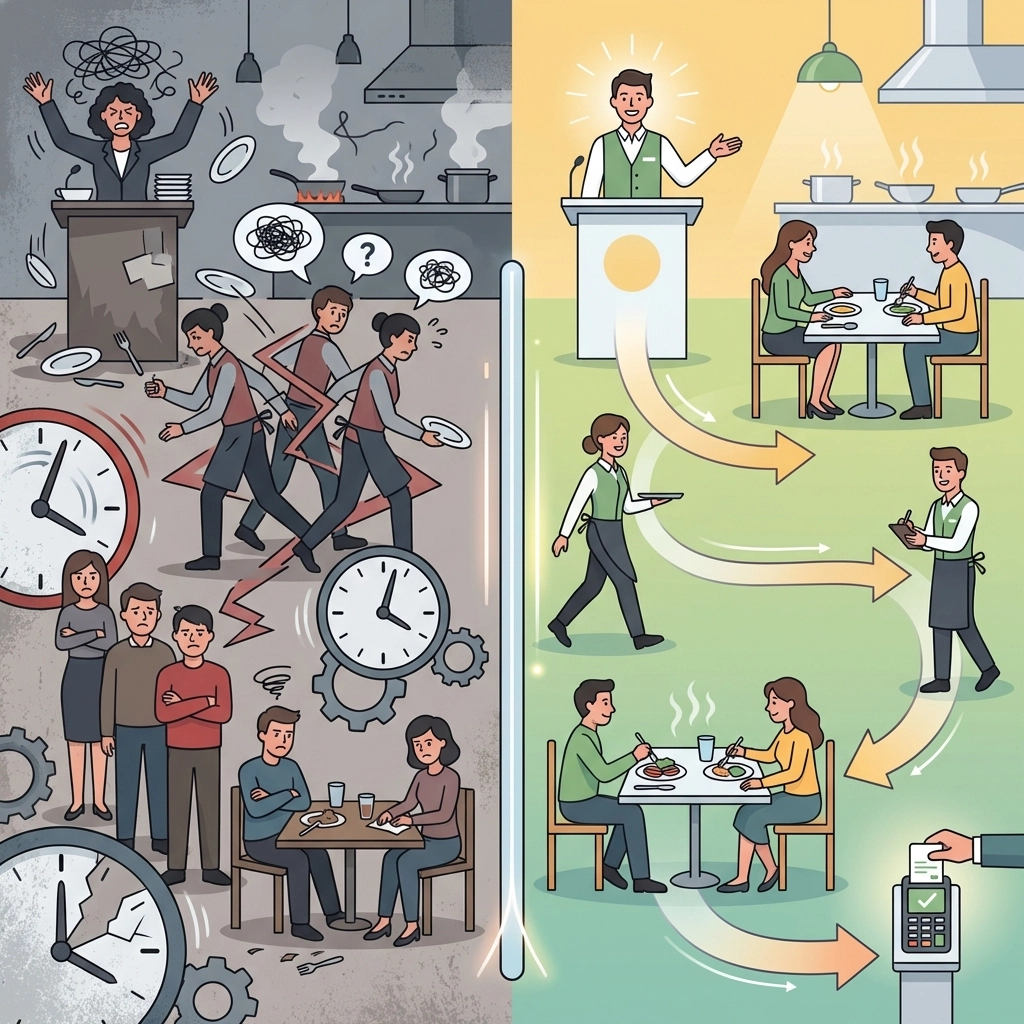
A table gets cleared, but the host doesn't know. The host seats a party, but the server is slammed. The new guests wait 10 minutes just to get water while the table behind them waits 10 minutes for their check. It's a cascade of inefficiency, and it starts with broken communication.
The operators crushing it right now have real-time systems, whether that's a dedicated table management platform or just a disciplined check-in rhythm, that keep front and back of house synced.
A Voice From the Trenches
I came across a great perspective on LinkedIn recently from Danny Meyer (yes, that Danny Meyer), who posted:
"Hospitality doesn't mean slow. It means intentional. The best service makes guests feel cared for AND respects their time. When you optimize one without the other, you lose."
That's the balance, right? You're not running a fast-food joint. But you're also not running a charity. The sweet spot is making people feel valued while keeping the operation humming.
Breaking the Old Habits
Let's call out the elephant in the dining room: a lot of table turn problems aren't tech problems. They're people problems.
- Servers who camp out at tables because they're angling for a bigger tip (spoiler: faster turns often mean more tips overall)
- Hosts who panic-seat without thinking strategically
- Managers who've always done it this way and refuse to look at the data
If any of that sounds familiar, no judgment. But 2026 isn't the year to coast on "good enough." The restaurants that thrive will be the ones willing to challenge their own assumptions and try something different.
For more strategies on building a high-performing team that executes, check out our resources on team leadership and culture.
The One Thing You Should Do This Week
Here's your actionable tip: Time your tables.
Not in a creepy, hovering way. Just track it. Pick three shifts this week and note:
- Average time from seating to first order
- Average time from check drop to payment
- Average time from payment to table clear
You'll be shocked at where the time actually goes. And once you see it, you can't unsee it. That's when the real optimization begins.
Meta Keywords: table turnover, restaurant table management, reduce wait times, table turn optimization, restaurant efficiency 2026, pay-at-table technology, waitlist management, restaurant operations strategy
#RestaurantOps #TableTurns #HospitalityTech
Looking to dig deeper into the tech transforming restaurant operations? Explore our latest posts on tech innovation or reach out to chat strategy.