
Look, I spend a lot of time talking to restaurant owners who are obsessed with "scale." They want 50 units, a private equity exit, and a yacht named Net Margins. But here’s the cold, hard truth (the kind that tastes like unwashed lettuce): most of them are building their brands on sand. They want the growth without the soul.
If you want to see how brand growth actually works, the kind that creates a cult-like following and survives a decade of industry chaos, you need to look at Little Moir’s.
Based out of Jupiter, Florida, Mike Moir didn’t just build a restaurant; he built an ecosystem. He took a strip-mall location that should have been a "cheap eats" joint and turned it into a culinary destination. Whether you’re running a single food truck or a national chain, there are lessons here that will save your skin.
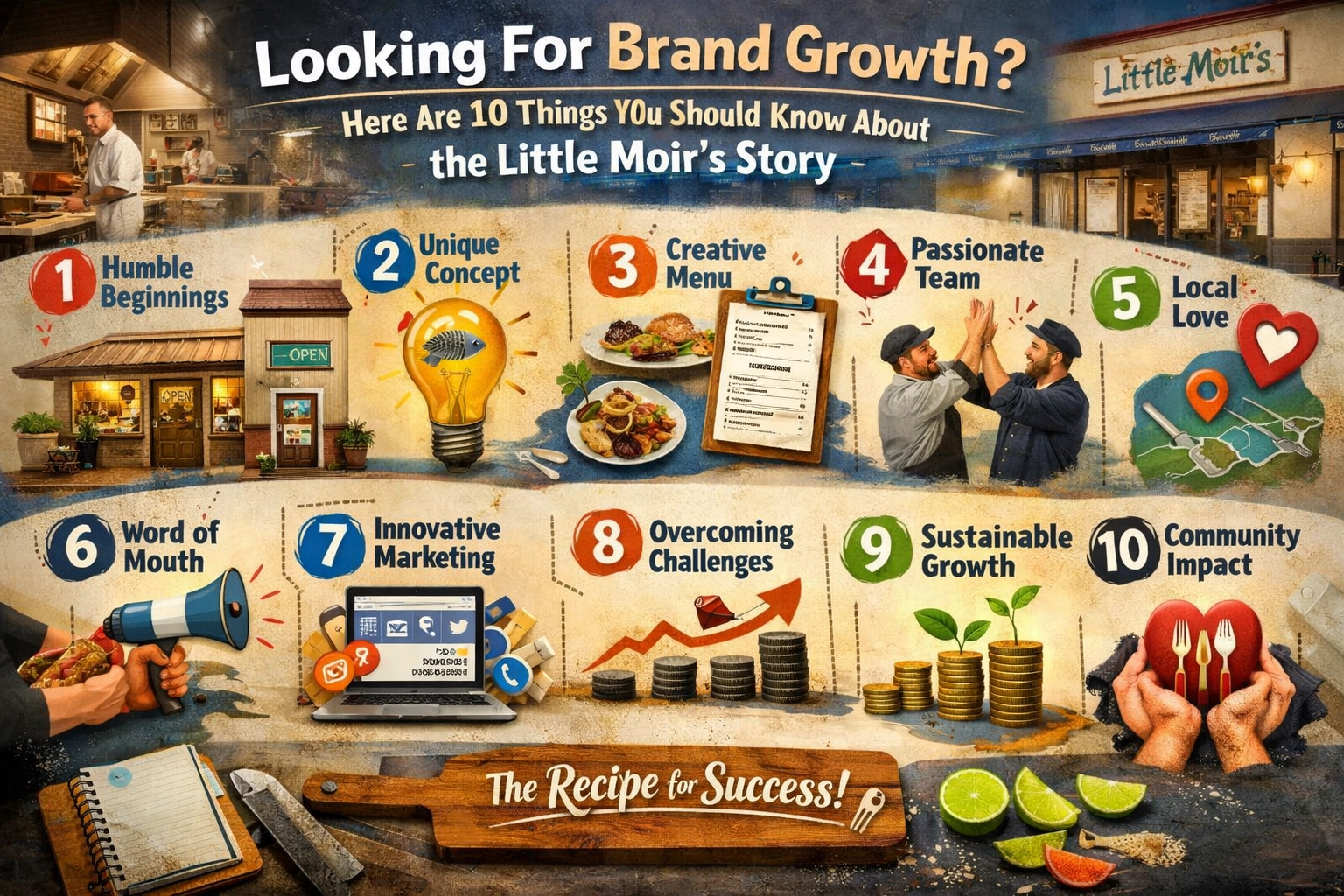
Ready? Aprons on. Here are 10 things you need to know about the Little Moir’s story and how it applies to your restaurant growth strategy.
1. Your Origin Story is Your Gravity
Mike Moir didn’t just wake up and decide to sell fish. He was a Canadian-born, Humber College-trained chef who also happened to be a surf addict. His nickname, "Little Moir," came from being the youngest of eight kids and, well, not being a giant.
The Lesson: Authenticity isn't a marketing buzzword; it’s gravity. It pulls people in. Mike’s blend of high-end culinary training and "dirtbag" surf culture created a brand identity that was impossible to fake. If you don't know who you are, your customers won't either.
2. The "Blue Collar Scholar" Philosophy
The brand’s slogan is: "From top scholar to blue collar. Food for all walks of life."
I love this. It’s brilliant. It tells the guy in the $200,000 Porsche and the guy who just finished a shift mowing lawns that they are both welcome. In an industry that often tries to gatekeep "fine dining," Little Moir’s blew the doors off the hinges.
The Lesson: Don't alienate your audience by trying to be "exclusive" if your food is meant to be enjoyed by everyone. Inclusivity, when executed with high quality, is a massive growth lever.

3. Turn Your "Waste" Into Your USP
This is my favorite part of the story. Leftovers Cafe (their second concept) wasn’t named by a focus group of suits in a boardroom. It came from a late-night session between Mike and co-founder Frank Murgio. They realized they had incredible, high-end ingredients left over from the day’s specials at the original Food Shack.
Instead of tossing them or hiding them in a "soup of the day," they made the concept of "creative leftovers" the brand.
The Lesson: Stop looking at your operational challenges as anchors. They are your secret sauce. If you have a supply chain quirk or a weird inventory issue, innovate around it. Resourcefulness is a competitive advantage.
4. Build the Brand Around a "Hero Dish"
You can’t talk about Little Moir’s without talking about the Sweet Potato Crusted Fish. It is the North Star of their menu. It’s consistent, it’s unique, and it’s what people tell their friends about.
The Lesson: You need a "lullaby" dish. Something so good and so consistent that customers can close their eyes and taste it from five miles away. If you don't have a signature item that people would fight a stranger for, you don't have a brand yet.
5. Don’t Just Replicate: Innovate
When it was time to grow, Mike didn’t just open "Food Shack #2" and "Food Shack #3." That’s what the "scale at all costs" crowd does, and that’s how brands become diluted and boring. Instead, he created Leftovers Cafe, Maxi’s Lineup, and Little Moir’s Catering.
The Lesson: Expansion doesn't always mean "more of the same." Sometimes, it means creating complementary concepts that share the same DNA but offer a different vibe. This keeps the brand fresh and prevents internal competition. Check out our branding and identity services to see how to diversify without losing your soul.
6. Solve Your Own Problems (The Maxi's Lineup Story)
In 2010, Food Shack had a problem: the lines were too long. People were leaving because they couldn't get a seat. Instead of just apologizing, Mike opened Maxi’s Lineup (named after his son, Maximus) right next door. It started as a place to grab a beer and wait for a table, but it evolved into its own destination for live music and craft brews.
The Lesson: Every "pain point" in your business is a hidden revenue stream. Use data analytics to find where you're losing people and build a bridge to keep them.

7. Culture Isn't a Poster on the Wall
Michael Moir has been quoted saying that their culture: humility, equality, and celebrating uniqueness: wasn't "planned." It was just a reflection of the people they hired. They didn't want corporate drones; they wanted people who cared about the food and the community.
The Lesson: You can’t "install" culture like a software update. It starts with team leadership. If the leader is a jerk, the culture will be toxic. If the leader is humble and works the line, the team will run through brick walls for them.
8. Operational Agility is Your Shield
Because the Little Moir’s menu is built on what is fresh and available (that "leftovers" mindset), they are incredibly resilient. When the pandemic hit, they didn't just fold. They pivoted into a bodega-style market, selling fresh fish and staples to the community.
The Lesson: If your menu is too rigid, you’re vulnerable. Build a model that allows for flexibility. It’s the difference between a tree that snaps in a storm and a reed that bends.
9. Diversify the Revenue (The Catering Play)
Little Moir’s launched a catering wing early on (back in 2003). It wasn't just a side hustle; it became a professional operation that serves events across the country. They took the "Food Shack vibe" and made it mobile.
The Lesson: Don't keep all your eggs in the four-walls-of-the-restaurant basket. Look at digital marketing and off-site opportunities to expand your reach.
10. The Customer is Your Only True Asset
Little Moir’s treats their regulars like royalty. During disasters or local crises, they are the first ones out there providing meals and support. They know that a loyal customer isn't just someone who buys a sandwich; they are a brand ambassador.
The Lesson: In the age of DoorDash and ghost kitchens, the "human" element is your greatest defense. If you want to grow, stop looking at your POS system and start looking at the faces in your dining room.
Brand Resources & Links
Follow the Flavor:
- Official Website: Little Moir's Food Shack
- Instagram: @littlemoirs
- Facebook: Little Moir's Food Shack Official
Founder Spotlight:
- Mike Moir's Story: Palm Beach Post Feature
- LinkedIn: Michael Moir (Connect with the vision)
Recent Press:
- Eater Miami: Where to Eat in Jupiter
- Humber College Alumni: Chef Michael Moir Profile
Final Thoughts from the Director's Chair
Growth isn't about how many locations you can open before your quality falls off a cliff. It's about how deep your roots go. Little Moir’s grew because they were too good to ignore and too authentic to replicate.
If you're ready to stop playing small and start building a brand that actually matters, contact us at Kuypers Creative. We don't do "cookie-cutter" strategies. We do growth that lasts.
Robert Kuypers
Sales Director, Kuypers Creative
#RobertKuypers #RobertWilliamKuypers #WilliamKuypers #RobKuypers #RestaurantGrowth #BrandStrategy #LittleMoirs #FoodShack #HospitalityLeadership
SEO Keywords: Restaurant Brand Growth, Little Moir's Story, Mike Moir Jupiter, Restaurant Consulting Services, Food Shack Jupiter Florida, Restaurant Operational Agility, Culinary Branding Strategy, Restaurant Success Tips.
Metadata:
- Title: Looking For Brand Growth? 10 Lessons from the Little Moir’s Story
- Description: Discover how Mike Moir built a restaurant empire in Jupiter, Florida through authenticity, innovation, and "blue-collar" philosophy. 10 growth tips for restaurant owners.
- Author: Robert Kuypers
- Category: Restaurant Growth Strategy