
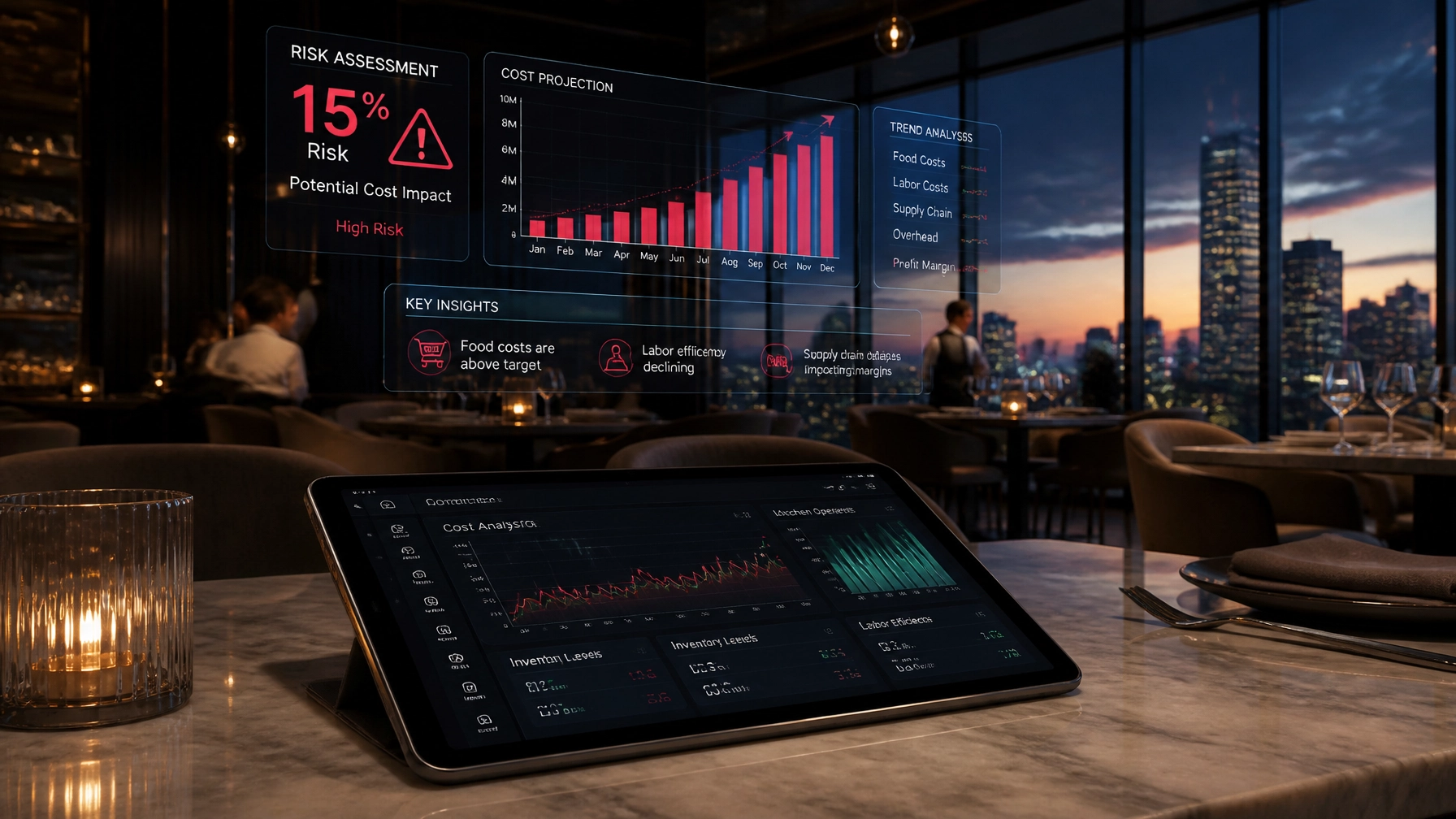
The restaurant industry in 2026 is witnessing a Great Decoupling. On one side of the divide, a resilient majority of operators are finding ways to thrive despite the most challenging economic landscape in a generation. On the other side, approximately 15% of U.S. restaurants are currently "at risk" of permanent closure.
This figure isn't just a projection; it is a statistical reality derived from the National Restaurant Association’s 2026 State of the Industry report and a deep-dive analysis by Black Box Intelligence. For the first time since the 2008 financial crisis, the industry is seeing a structural shift where traditional operational methods are no longer sufficient to offset the margin squeeze.
To understand why do restaurants fail in this new era, we must look beyond "bad food" or "poor service." The failures of 2026 are systemic. Conversely, the survivors are those who have transitioned from being "food operators" to becoming a restaurant systems pro.
The 2026 Margin Squeeze: By the Numbers
According to the latest data from the National Restaurant Association, the cost of doing business has reached a tipping point. Cumulative inflation since 2019 has raised restaurant operating costs by nearly 33%, while food costs alone sit at 35% above pre-pandemic levels.
Black Box Intelligence (BBI) recently conducted a study comparing current unit sales to their peak performance years since 2019. The findings are sobering:
- 10–15% of all U.S. restaurants are currently operating at 70% or less of their peak sales volume.
- In the full-service segment, the risk is higher, with 9% of units categorized as "critically at risk."
- In limited-service (QSR and Fast Casual), the risk is lower but still present at 4%.
Table 1: Restaurant Profitability and Risk Metrics (2026)
| Metric | Full-Service (Casual/Fine) | Limited-Service (QSR/Fast Casual) |
|---|---|---|
| At Risk of Closing (BBI) | 9.0% | 4.0% |
| Reported Unprofitable in 2025 | 46% | 38% |
| Cost Increase since 2019 | 34% | 31% |
| Traffic Trend (YoY) | -3.2% | +0.8% |
When you analyze why do restaurants fail today, the math is inescapable. In an environment where costs have risen 35%, a unit that loses 30% of its peak sales volume becomes "virtually impossible" to sustain.
The Three Horsemen: Labor, Inflation, and the GLP-1 Factor
The 15% at-risk group isn't just unlucky. They are facing a "perfect storm" of three converging factors that have redefined the hospitality market.
1. The Death of the "Cheap Labor" Model
Labor costs have ceased to be a variable expense that can be easily managed through scheduling tweaks. With the normalization of $20+ hourly wages in major metros and the rising costs of healthcare and benefits, labor now consumes a larger slice of the revenue pie than ever before. Operators who haven't integrated tech-driven labor optimization are finding themselves underwater.
2. Cumulative Inflation vs. Guest Price Elasticity
While menu prices have risen, they haven't kept pace with the 35% spike in food and supply costs. The "NRA 2026 State of the Industry" notes that 42% of operators reported they were not profitable in the last fiscal year. Guests have reached a ceiling on what they are willing to pay for a burger or a bowl of pasta, leading to "trading down" behavior where families move from casual dining to fast-casual or home-cooked meals.
3. The GLP-1 Demand Shift
A new variable in 2026 is the widespread adoption of GLP-1 medications. Black Box Intelligence has identified a direct correlation between high-risk markets and high GLP-1 usage rates. These medications are not just changing waistlines; they are changing appetite and frequency of dining out. Restaurants that rely on high-volume, high-calorie "shareables" and appetizers are seeing a measurable dip in per-check averages.

System 1: The Full-Stack Tech Integration (The Tech-First Pivot)
The first system that separates the survivors from the statistics is Tech Integration. At Kuypers Creative, we specialize in bridging the gap between engineering and executive vision.
In 2026, a "POS system" is no longer just a way to take orders. It is the central nervous system of the business. A restaurant systems pro ensures that their tech stack is fully integrated: meaning the POS, inventory management, labor scheduling, and guest loyalty data all speak the same language.
Why this saves you:
- Automated Inventory: When margins are 3-5%, a 1% waste factor can be the difference between profit and loss.
- Dynamic Labor Scheduling: Using AI-driven predictive analytics to schedule staff based on real-time traffic forecasts rather than "gut feeling."
- Unified Data: Understanding the Lifetime Value (LTV) of a guest across all channels (dine-in, app, and delivery).
For those still struggling with legacy systems, our 2025 Restaurant POS Buyers Guide remains a foundational resource for navigating these tech transitions.
System 2: Conversion-Optimized Digital Presence
The question of why do restaurants fail often finds its answer in the digital graveyard. If your website is just a PDF menu and a phone number, you are losing the 15% of the market that is still actively spending.
Modern survivors treat their digital presence as a conversion funnel. This involves:
- Custom App Development: Owning the guest data instead of giving a 30% cut to third-party delivery apps.
- Performance Marketing: Using targeted digital ads to drive traffic during "lull" periods.
- Search Engine Dominance: Ensuring that when a guest searches for your category, you are the first, most appetizing option they see.
A restaurant systems pro knows that a "pretty" website isn't enough. It must be optimized for conversions. Check out our latest insights on Digital Marketing Strategy to see how we help brands build scalable digital funnels.

System 3: Creative Brand Resilience
The final system is often the most overlooked: Brand Identity and Creative Direction. In an oversaturated market, "boring" is a death sentence.
Data from the 2026 reports shows that restaurants with a strong, distinct brand identity have 25% higher guest loyalty scores. Brand resilience isn't just about a logo; it's about the entire guest experience: from the menu design to the physical atmosphere and the "voice" of the brand on social media.
The "Systematic" Approach to Branding:
- Menu Engineering: Designing menus that guide guests toward high-margin items using psychological cues and strategic layout.
- Strategic Storytelling: Giving guests a reason to choose you over a cheaper, generic competitor.
- Scalable Creative Assets: Having a library of high-quality content that can be deployed across multiple locations and platforms instantly.
Explore how we help brands stand out through Brand & Identity Consulting.
Case Study: The Pivot from At-Risk to Resilient
Consider a 12-unit casual dining chain in the Midwest. In early 2025, they were seeing a 28% drop from their 2021 peak. They were firmly in the 15% "at-risk" category.
By implementing a restaurant systems pro approach, they:
- Consolidated their tech stack, saving 4% in labor costs through AI scheduling.
- Launched a custom mobile app that moved 40% of their off-premise orders away from third-party apps, recouping $200k in annual commissions.
- Rebranded their menu to focus on "resilience items": lower-cost ingredients with high perceived value and high-margin potential.
By mid-2026, their sales were back to 95% of their peak, and their profitability was higher than it was in 2019.

Conclusion: The Path Forward
The projection that 15% of restaurants will close in 2026 is a warning, not a prophecy. The industry isn't dying; it is evolving. The "old way" of running a restaurant: relying on passion and a great recipe alone: is no longer a viable business model in a high-cost, high-tech world.
To avoid the pitfalls of why do restaurants fail, operators must embrace the role of the restaurant systems pro. This means investing in tech, mastering digital conversion, and building a brand that can withstand the "margin squeeze."
At Kuypers Creative, we’ve spent 26+ years helping restaurant leaders bridge the gap between where they are and where the market is going. Whether you are a single location or a multi-unit operation, the time to build your systems is now.
Ready to secure your future? Explore our Tech Innovation and Restaurant Growth Strategy services to see how we can help you stay in the 85% of resilient winners.
Meta Data
Title: Why 15% of U.S. Restaurants Are at Risk of Closing in 2026 | Kuypers Creative
Description: Discover why 15% of restaurants are at risk of closing in 2026 according to NRA and Black Box Intelligence data, and the 3 systems every restaurant systems pro needs to survive.
Keywords: why do restaurants fail, restaurant systems pro, restaurant trends 2026, restaurant margin reports, restaurant tech integration, restaurant consulting.