
Listen, I’m going to give it to you straight: the restaurant industry is a graveyard of "good ideas" that didn't have a backbone. You’ve seen it, I’ve seen it, and frankly, we’ve probably all had a drink at the wake of a neighborhood bistro that "just couldn't make it work."
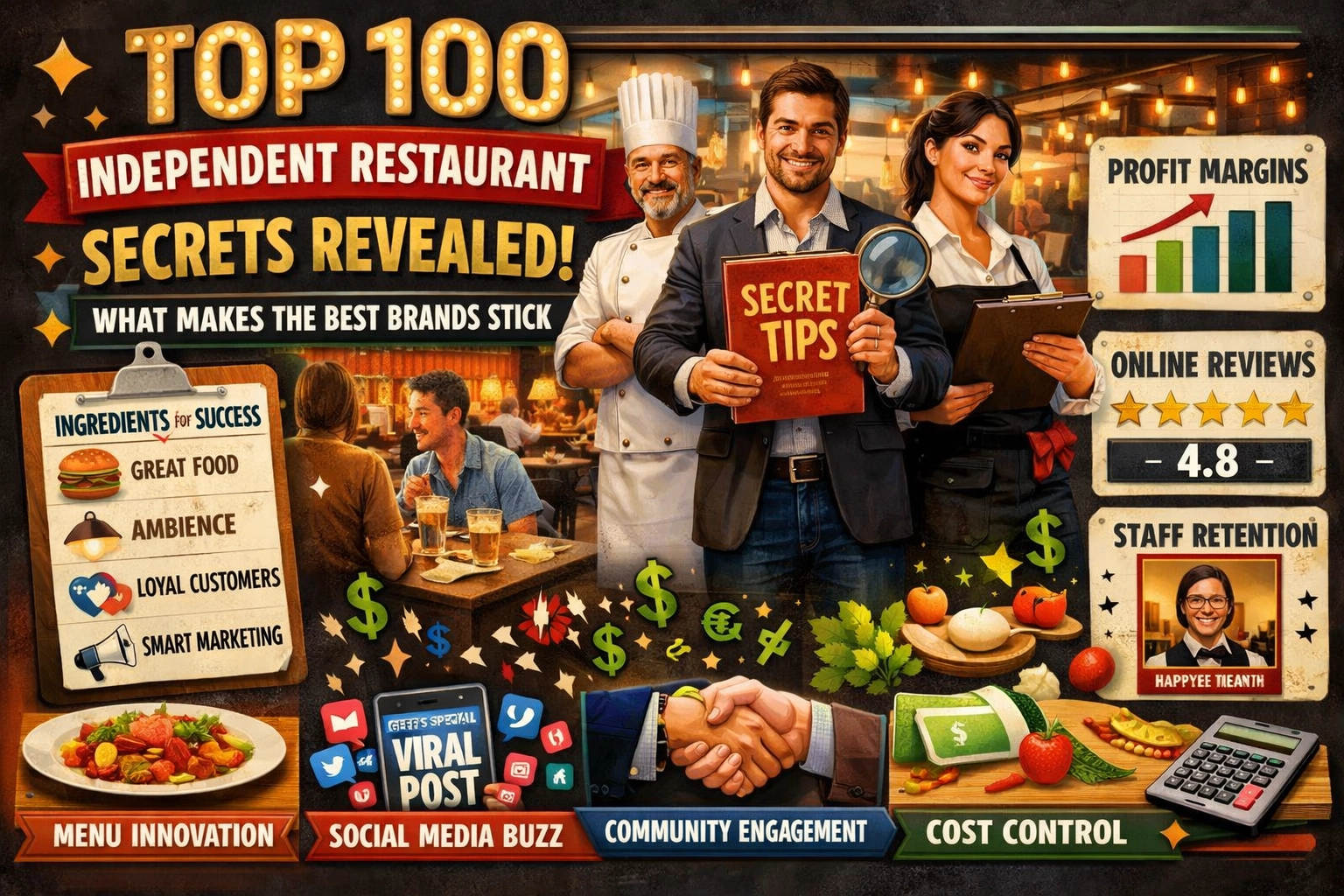
But then, there are the outliers. The ones that don't just survive: they dominate. They have lines out the door while the guy across the street is counting the floor tiles. Today, we’re peeling back the curtain on the Top 100 Independent Restaurant secrets. We’re looking at what makes a brand "stick" in a world where consumers have the attention span of a caffeinated squirrel.
At Kuypers Creative, we spend our days obsessing over why some brands explode and others just… fizzle. It usually comes down to a blend of strategic identity, operational discipline, and a little bit of that "magic" that you can't buy (but you can build).
Ready? Aprons on. Let’s get into the guts of it.
Today’s Brand Spotlight: Bacari (The Kronfli Brothers & Chef Lior Hillel)
If you want to talk about "stickiness," you have to talk about Bacari. This isn't just a restaurant; it’s a masterclass in "vibe dining" that actually has the operational chops to back it up.
The History of Bacari
It started back in 2008 with a tiny, shoebox-sized wine bar called Bacaro W. 3rd in Los Angeles. Founded by brothers Robert and Danny Kronfli, along with their partner Chef Lior Hillel, Bacari was born out of a desire to create a "Venetian-style" cicchetti (small plates) experience that felt like a neighborhood secret.
They didn't start with a $10 million budget. They started with a clear vision: Mediterranean-influenced food, an approachable but high-energy wine list, and a hospitality model that felt like a giant hug (with a side of great lighting). Today, the Bacari group has expanded across Southern California: from the lush, hidden patio of Bacari Silver Lake to the stunning, historic vibes of Bacari W. Adams.

Caption: The signature high-energy, candle-lit "vibe dining" atmosphere that defines the Bacari brand.
Why They Stick: The Bacari Secrets
- The "Open Bar" Strategy: While most independents are terrified of their margins (and rightly so), Bacari leaned into a 90-minute "open bar" special. It’s a genius digital marketing and psychological tool. It drives foot traffic during off-peak hours and creates an immediate "party" atmosphere.
- Location as a Character: They don't just rent generic white boxes. They find locations with "bones": courtyards, historic buildings, and hidden nooks: and then they layer on the branding.
- The "Cicchetti" Model: Small plates mean high variety. High variety means high engagement. It encourages sharing, which naturally fosters the "community connection" we mentioned earlier.
Follow the Brand:
- Instagram: @eatwithbacari
- Facebook: Bacari on Facebook
- Website: bacari.com
Meet the Founders:
- Robert Kronfli: LinkedIn Profile
- Danny Kronfli: LinkedIn Profile
In the Press:
- Eater LA: How Bacari Became the Ultimate LA Vibe
- Forbes: The Business of Small Plates: How the Kronfli Brothers Built an Empire (Search: Kronfli Brothers Bacari)
Secret #1: Know Your "North Star" (And Don't Budge)
The best independent restaurants: the ones on that "Top 100" list: don't try to be everything to everyone. If you’re a vegan taco shop, don't start selling cheeseburgers because "some people asked for them." (That’s a one-way ticket to a "For Lease" sign on your front window).
Successful brands exploit their uniqueness. They take that one thing they do better than anyone else and they scream it from the rooftops. At Kuypers Creative, we call this the "Identity Anchor." If you don't have one, you’re just another place to get a salad. Boring wins in some industries, but in restaurants? Boring is a slow death.
Secret #2: Systems Are the Sexy Part of the Business
I know, I know. You got into this because you love food or you love people. You didn't get into it to look at spreadsheets or write SOPs (Standard Operating Procedures). But guess what? The best independents run like high-performance Swiss watches.
They use data analytics to understand their labor costs. They have systems for how the napkins are folded and how the phone is answered. This doesn't kill the "soul" of the restaurant; it protects it. When the systems are working, the staff isn't stressed, and when the staff isn't stressed, the guests feel the love. (See how that works? It’s like magic, but with more math.)
Secret #3: Build a Cult, Not a Customer Base
People don't go back to a restaurant just for the food. They can get good food delivered to their couch by a guy on a scooter. They go back for the feeling.
The top brands build deep community connections. They know their regulars' names, their kids' names, and which table they prefer. They foster a team leadership culture where the staff feels like owners. If your dishwasher thinks of themselves as a "Guardian of the Guest Experience," you’ve already won.

Caption: A close-up of a signature dish that balances aesthetic "Instagrammability" with high-quality, fresh ingredients.
Secret #4: The Lullaby of Dying Margins (Avoid It!)
You need to be brutally honest about your numbers. Most independents fail because they treat their bank account like a personal piggy bank. The "Top 100" secrets revealed that the best brands have a hawk-eye on their prime costs.
- Food Cost: Are you weighing your proteins?
- Labor Cost: Are you overstaffed at 2:00 PM on a Tuesday?
- Waste: Is your "curtain on fire" because your prep cook is throwing away 20% of the produce?
If you don't know these numbers, you don't have a business; you have an expensive hobby. (Ouch. Drink some water. You’ll be fine.) If you're looking for funding for restaurants, investors want to see that you know your "boring" numbers. Because, as we like to say: Boring pays. Boring is the new sexy.
Secret #5: Adapt or Evaporate
The final secret is tech innovation. The "Best Brands" are early adopters. Whether it’s AI-driven inventory management or high-end loyalty apps, they use technology to enhance the human experience, not replace it.
Quick Checklist for Your Brand "Stickiness":
- Does my brand have a clear "voice"?
- Do I have written systems for every role in the building?
- Is my staff empowered to make a guest’s day?
- Do I know my exact food cost for my top 5 selling items?
- Am I active on social media in a way that feels human?
The Bottom Line
Building a restaurant brand that sticks isn't about luck. It’s about the relentless pursuit of excellence in the things people see (the vibe, the food, the service) and the things they don't (the systems, the margins, the culture).
If you feel like your brand is losing its "stick," it might be time to take a step back and look at your growth strategy. You don't have to do it alone. We’re here to help you navigate the chaos and turn your restaurant into a legacy.
Now, get back out there. That dining room isn't going to fill itself.
: Robert
Tags:
Robert Kuypers, Robert William Kuypers, William Kuypers, Rob Kuypers, Restaurant Strategy, Bacari, Restaurant Branding, Independent Restaurants, Hospitality Leadership.
Keywords:
Independent restaurant success, restaurant branding secrets, Bacari restaurant history, Kronfli brothers, restaurant operational systems, hospitality marketing, restaurant growth strategy, restaurant consulting.
Metadata:
- Title: Top 100 Independent Restaurant Secrets: Why Brands Stick
- Description: Learn the secrets of the world's most successful independent restaurants. From Bacari's vibe dining to operational systems that drive profit.
- Author: Robert Kuypers
- Category: Restaurant Consulting & Creative Services
External Outbound Links: