

Pour yourself a coffee (or something stronger) because we're diving deep into the restaurant apocalypse that wasn't: and the surprising winners emerging from 2025's industry chaos.
If you're reading this between meetings (or in that other place where executives get their best thinking done), congratulations: you've survived another year in the restaurant business. And honestly? That's an achievement worth celebrating, because 2025 has been one hell of a ride.
The headlines scream doom: "Restaurant Bankruptcy 2025," "Chain Restaurant Failures," "The Death of Dining." But here's what the clickbait won't tell you: while some brands are indeed circling the drain, others are printing money faster than a Vegas casino. The difference? They figured out the new rules while their competitors were still playing yesterday's game.
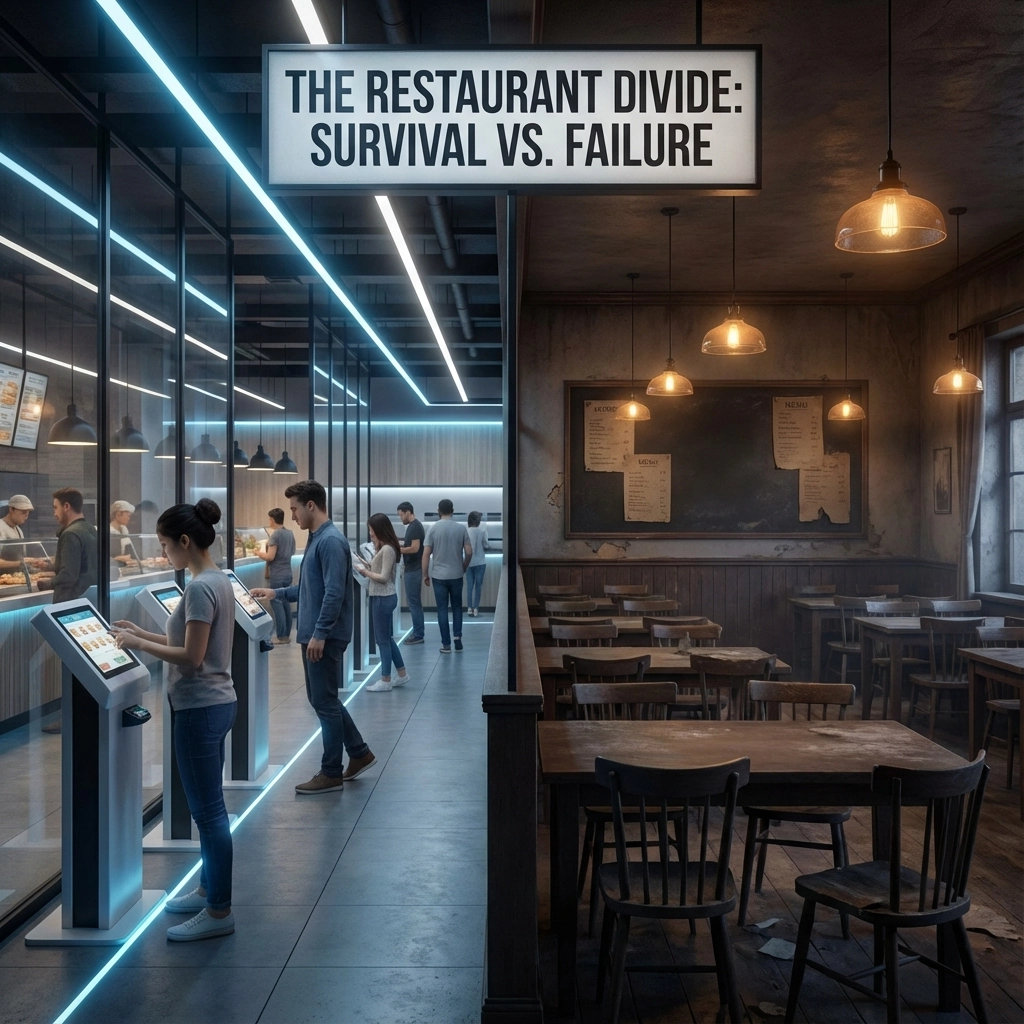
The Great Shakeout: Who's Actually Going Under (And Why)
Let's cut through the noise. The restaurant bankruptcy wave everyone's been predicting? It's more selective tsunami than industry apocalypse. According to recent industry analysis from KPMG, the casualties share predictable patterns: over-leveraged concepts caught between premium and value positioning, legacy brands that treated technology like an optional side dish, and operators who confused "authentic experience" with "refusing to adapt."
The math is brutal but simple. Restaurants that couldn't answer the fundamental question: "Why should a consumer choose you over cooking at home or ordering from a ghost kitchen?": are the ones filing Chapter 11. Meanwhile, Yelp data shows that searches for budget-friendly dining have surged, while solo dining trends have exploded by 271%. Translation: consumers are voting with their wallets for value and convenience, not nostalgia.
The Value Wars: Where Every Dollar Counts
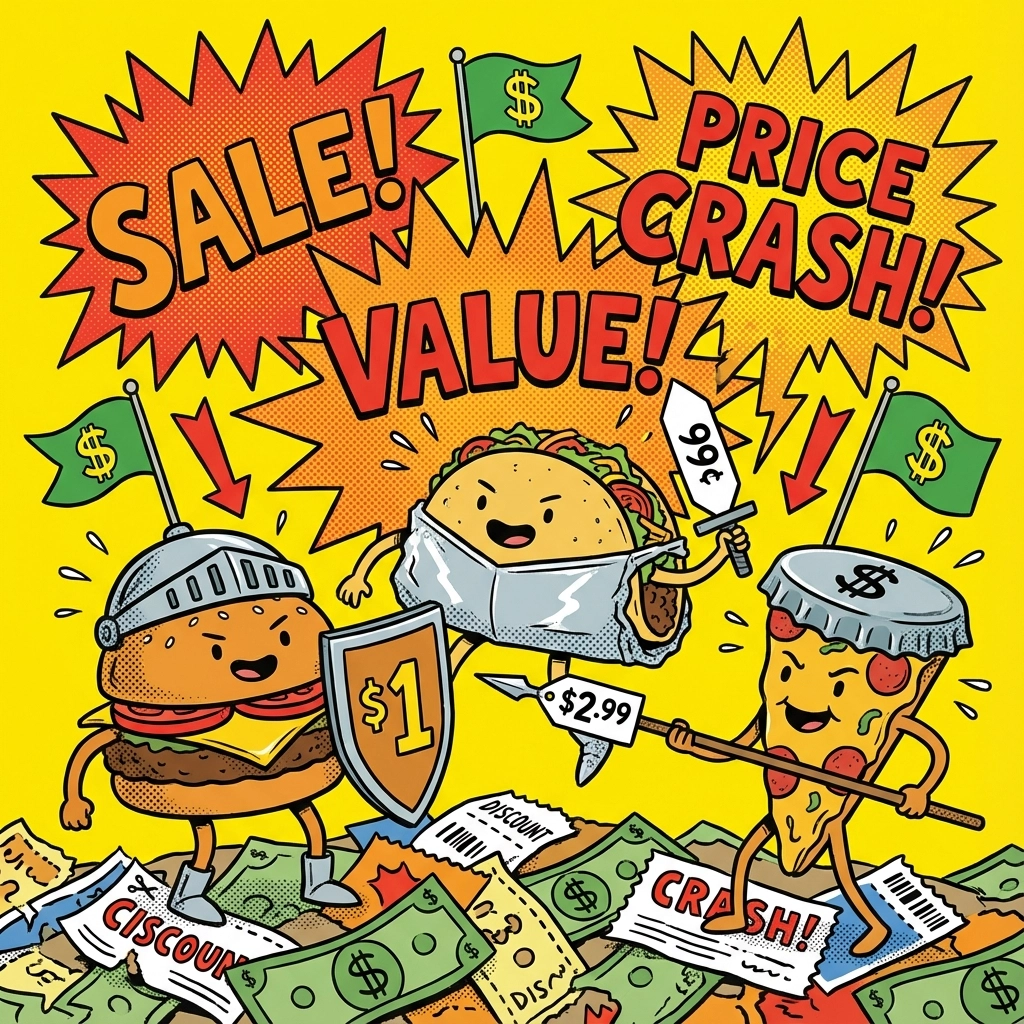
Here's where it gets interesting. The so-called "value wars" aren't really wars: they're evolution in action. Chains like McDonald's, Taco Bell, and Wendy's didn't just survive the inflation squeeze; they thrived by turning constraints into competitive advantages.
The data tells the story: nearly 40% of restaurant orders now include some form of discount or promotional pricing, according to recent industry tracking by Black Box Intelligence. But here's the kicker: the winners aren't just slashing prices. They're using AI-powered dynamic pricing, loyalty program optimization, and supply chain mastery to offer genuine value while protecting margins.
Take Papa John's recent tech investments. While competitors were crying about labor costs, they doubled down on AI-driven ordering systems and predictive analytics. Result? They can offer better deals because they waste less food and optimize staffing in real-time. That's not a race to the bottom: that's strategic evolution.
The losers? Brands that confused "premium" with "expensive" and "value" with "cheap." They're discovering that today's consumers are sophisticated enough to spot the difference between authentic quality and inflated pricing based on yesterday's market positioning.
The Survival Playbook: Brands Built for 2025
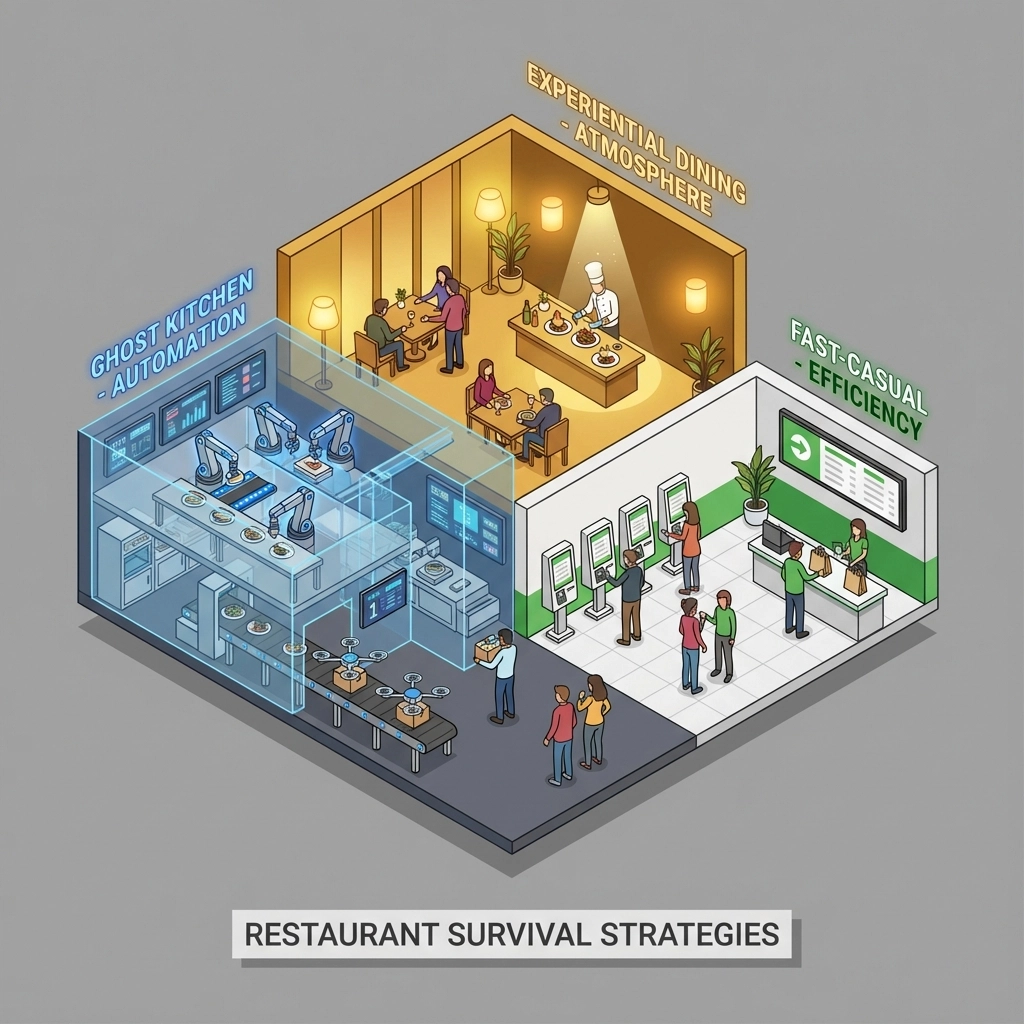
Want to know who's not just surviving but thriving? Look for three characteristics:
Technology-First Operations: According to Eisner Amper's recent survey, 73% of restaurant operators increased technology investments in 2024. But the smart money went beyond basic POS upgrades. Winners invested in AI-powered inventory management, predictive staffing algorithms, and customer behavior analytics that drive real operational efficiency.
Ghost kitchens aren't just pandemic pivots anymore: they're permanent fixtures. Lower overhead, faster scaling, and the ability to test new concepts without massive capital outlays. Brands like CloudKitchens and Kitchen United are proving that invisible restaurants can generate very visible profits.
Experience-Led Differentiation: While everyone's talking about value, Yelp's data reveals something fascinating: searches for immersive dining experiences like "Le Petit Chef" jumped 509%, "chef's table" climbed 36%, and "pop-up restaurant" rose 14%. Consumers will pay for experiences they can't replicate at home.
The lesson? Boring menu execution at value prices wins the volume game. Memorable experiences win the margin game. Pick your lane and dominate it.
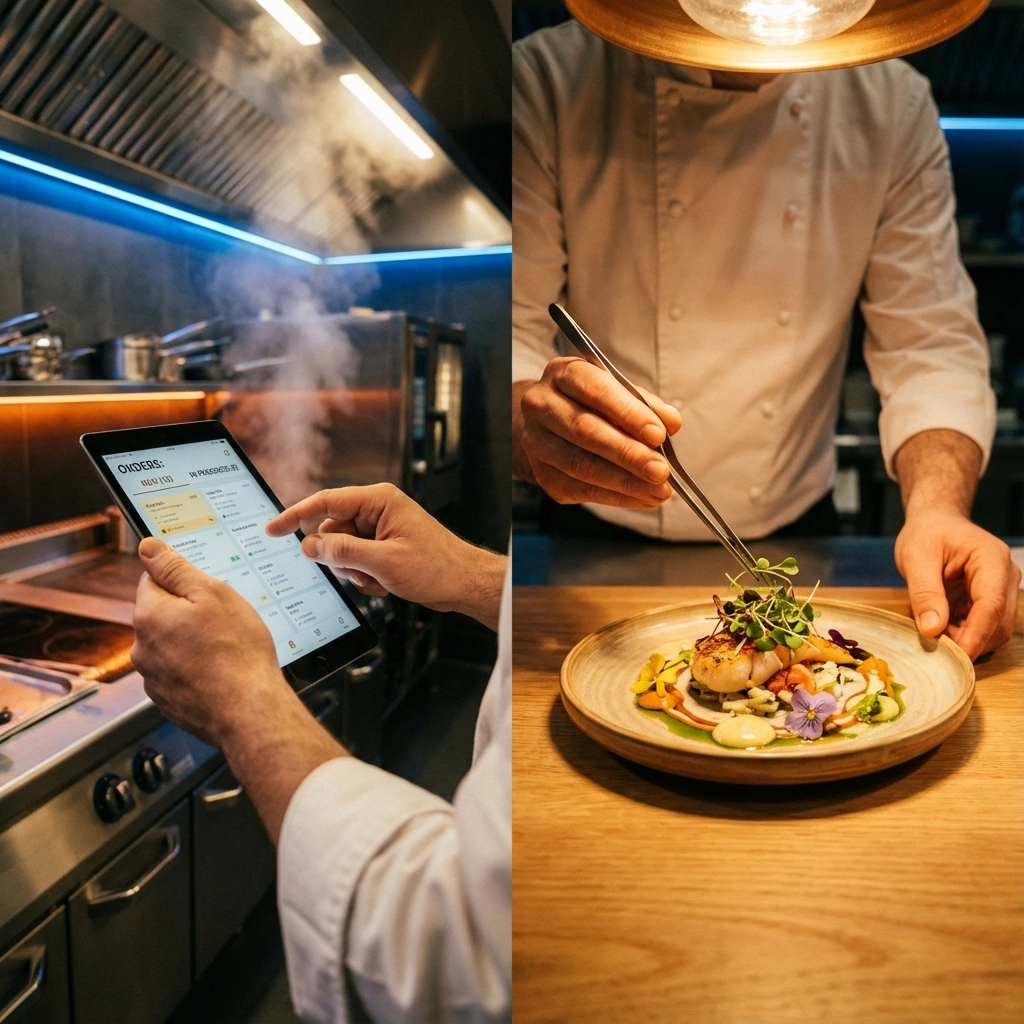
Operational Flexibility: The brands crushing 2025 treat their operations like software: constantly iterating, testing, and optimizing. They use automation not to eliminate humans but to amplify human capability. Self-service kiosks handle routine transactions while staff focuses on experience delivery. Robotic kitchen equipment maintains consistency while chefs concentrate on innovation.
The LinkedIn Reality Check: What Executives Actually Think
Here's something your industry reports won't tell you: I spend way too much time on LinkedIn reading posts from restaurant executives, and the tone has shifted dramatically in 2025. Six months ago, it was all doom and gloom: "We're all going to die!" and "The industry is broken!"
Now? The smart operators are sharing success stories about AI implementation, celebrating staff retention wins, and posting about same-store sales growth. The conversation has evolved from survival to strategy.
The difference between the panicked posts and the confident ones? The winners stopped treating 2025 like 2019 with obstacles and started treating it like a completely new business environment with new opportunities.
Data Deep Dive: The Numbers That Matter
Suggested Data Visualization: A dual-axis chart showing restaurant bankruptcy filings vs. technology investment levels by quarter through 2025, with successful brand case studies highlighted.
The correlation is striking. Brands that increased tech spending by 25%+ in 2024 show 15% better survival rates and 12% higher customer satisfaction scores. Meanwhile, operators who cut technology budgets to preserve short-term cash flow are 3x more likely to appear in distress sale rumors.
But here's the nuance the charts don't capture: it's not about spending more on technology: it's about spending smarter. The winners invested in tools that directly impact customer experience and operational efficiency. The losers bought shiny objects that looked good in press releases but didn't move the needle on daily operations.
The Kuypers Creative Take: Strategy Over Sympathy

Look, we've worked with restaurants from single-location mom-and-pops to multi-billion-dollar chains, and here's what we've learned: the 2025 restaurant reset isn't happening TO the industry: it's happening BECAUSE the industry finally got serious about business fundamentals.
The brands thriving right now didn't get lucky. They got strategic. They looked at changing consumer behavior, economic pressure, and technological possibilities and said, "How do we build something that works in THIS environment?"
That means hard choices. Brand reinvention isn't about fresh paint and new logos: it's about fundamental operational philosophy. It means asking whether your current model serves 2025 customers or 2019 memories.
The exciting part? We're just getting started. Restaurant tech innovation is moving faster than ever, consumer expectations are crystallizing around value and experience, and the operators who embrace change are discovering there's never been a better time to build a restaurant business: if you know what you're building.
What's Next: The Post-Reset Landscape
By the time you finish reading this (whether in your office or… elsewhere), another restaurant concept will have secured funding, and another will have quietly closed its doors. That's not industry instability: that's healthy market dynamics finally working the way they should.
The survivors of 2025's restaurant reset aren't the luckiest or the biggest: they're the most adaptable. They figured out how to deliver what consumers actually want (value, convenience, experience) instead of what the industry thought they should want (tradition, premium pricing, manual service).
The brands built to survive understand that restaurant success in 2025 requires the operational discipline of a tech company, the customer obsession of a retailer, and the experience creation skills of an entertainment business. It's a higher bar, but the rewards for clearing it are substantial.
The Bottom Line: Stop reading about the restaurant apocalypse and start building for the restaurant renaissance. Because while everyone's arguing about who's failing, the smart operators are busy succeeding.
Want to discuss how your restaurant brand can join the winners? Let's talk strategy.
#RestaurantTrends2025 #RestaurantStrategy #RestaurantTech #ValueWars #BrandReinvention #RestaurantConsulting #FoodserviceInnovation #RestaurantLeadership #DigitalDining #GhostKitchens #RestaurantBankruptcy2025 #ChainRestaurantFailures #RestaurantTechNews2025